
Not every piping layout needs a sharp 45° or 90° turn. Fire protection, HVAC, and industrial piping setups often require minor directional shifts. These small shifts help clear beams, air ducts, cable trays, or heavy equipment. An 11.25° or 22.5° grooved elbow can easily make these slight corrections. At the same time, they keep the overall pipe route highly practical. The two angles solve very similar routing problems. However, they yield completely different offset amounts over the exact same travel distance. Picking the proper one relies heavily on the required correction. It also depends on available space, pipe support, and the specific project layout.
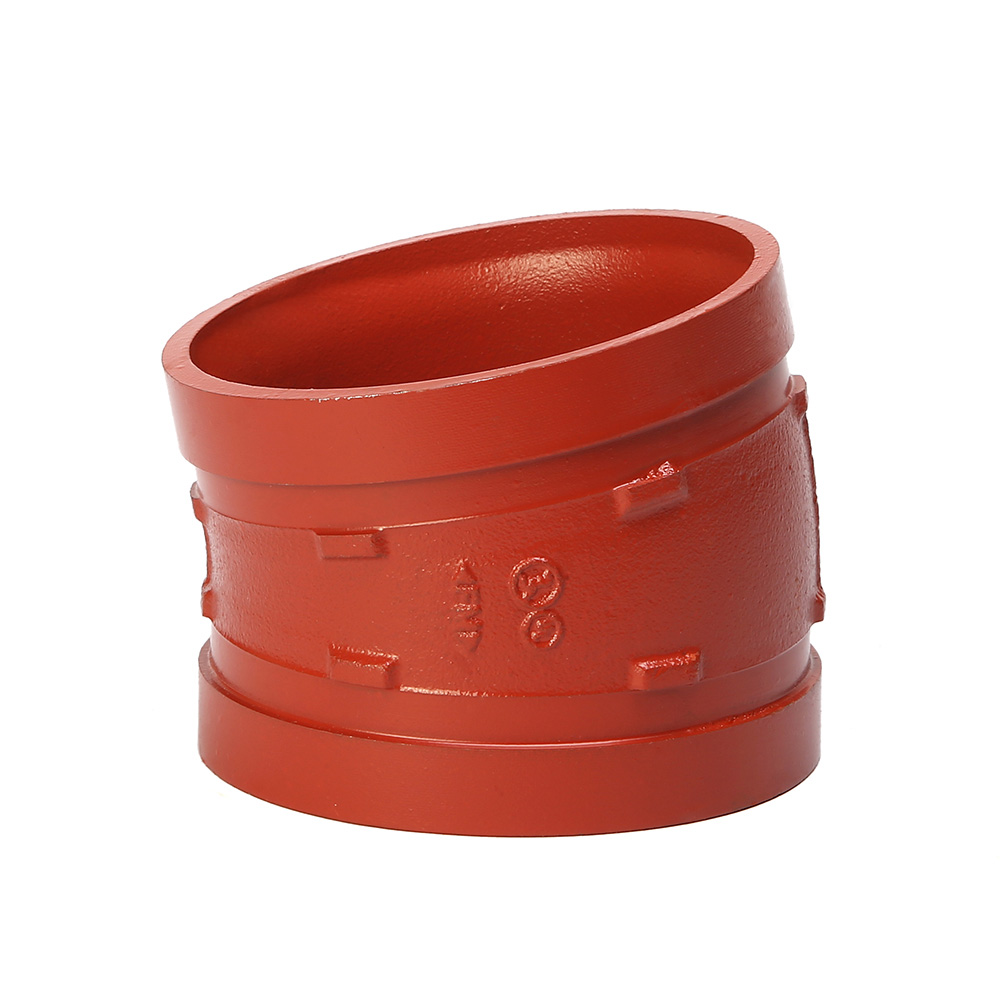
What Is the Difference Between 11.25° and 22.5° Grooved Elbows?
The primary difference is the total amount of directional change. An 11.25° elbow produces a very slight shift in pipe direction. Meanwhile, a 22.5° elbow provides exactly twice that angle.
This detail greatly impacts how fast the pipe moves away from its starting centerline. It also determines how much pipe length is necessary to achieve a specific offset.
When Is an 11.25° Elbow More Suitable?
An 11.25° grooved elbow works perfectly for tiny route corrections. It helps a pipe slowly bypass a small obstacle. It can also help the pipe approach a branch, riser, valve assembly, or equipment connection much more naturally.
Because the angle remains quite shallow, the pipe demands extra travel distance. This extra distance is needed to generate a large lateral offset. Therefore, 11.25° is significantly better for long, smooth transitions rather than sudden shifts in position.
When Is a 22.5° Elbow More Suitable?
A 22.5° elbow produces a clearly noticeable directional shift. Yet, it stays much gentler than a standard 45° fitting. It proves highly useful when the pipe must navigate around an obstacle within a brief distance. It also helps when the needed correction is simply too large for an 11.25° elbow to manage well.
The steeper angle effectively reduces travel length. However, designers must still verify adequate clearance for couplings, supports, and nearby building services.
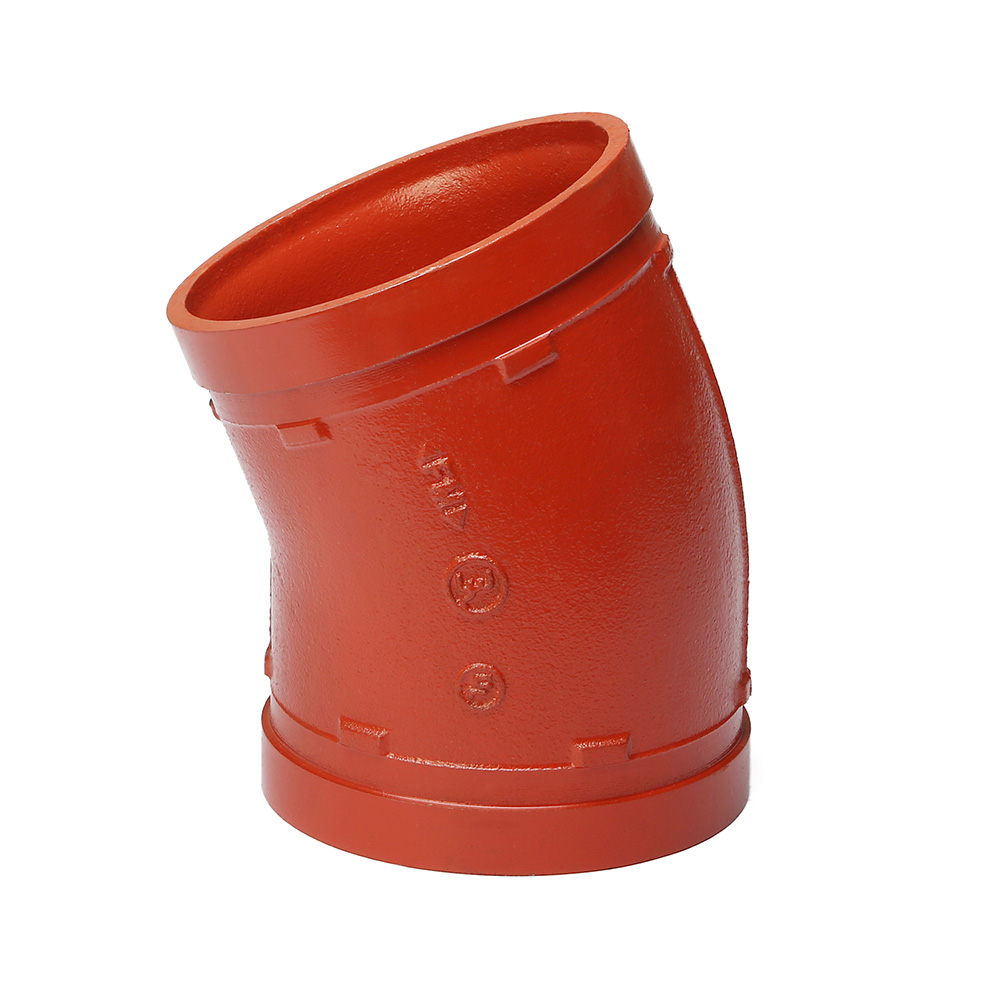
Which Angle Is Better for Creating a Pipe Offset?
A standard parallel pipe offset usually utilizes two elbows of the exact same angle. The first elbow shifts the pipe onto a diagonal path. Then, the second elbow brings it back to a direction parallel to the initial run.
For the identical distance between the elbows, a pair of 22.5° fittings generates a much larger offset than a pair of 11.25° fittings.
Why Use 11.25° for a Long, Gentle Offset?
Where ample space is available, two 11.25° elbows can form a very smooth shift. They do this without making the route appear sudden or harsh. This approach works exceptionally well in open ceilings or lengthy mechanical runs. In these spaces, the designer usually prefers a seamless transition around a minor interference.
The main tradeoff is the extra travel distance. Reaching a wider offset with this shallow angle frequently requires extra straight pipe between the elbows.
Why Use 22.5° When Space Is Tighter?
Two 22.5° elbows can produce the exact same lateral movement over a much shorter span. This feature makes them highly valuable when a pipe must route around a beam, air duct, cable tray, or another structural service within a restricted route section.
A tight offset is not always the optimal layout. Installers still require sufficient working space for coupling bolts, visual inspection, pipe supports, and upcoming maintenance tasks.
Can These Elbows Correct Pipe Misalignment?
They can certainly help when the directional shift is purposely planned into the route. However, they must never be used to force poorly fabricated or badly supported pipe into place.
If two pipe sections are supposed to share the exact same centerline, installers must first inspect pipe cuts, hangers, supports, and overall fabrication dimensions.
When Can 11.25° Help With Alignment?
An 11.25° elbow can offer a tiny planned correction. This is ideal where the line merely needs a very slight change in direction. It proves highly useful when the route is mostly accurate but requires a gentle approach toward its ultimate connection point.
When Is 22.5° More Practical?
A 22.5° elbow becomes much more practical when the route obviously demands a wider directional shift. It can shift the pipe toward equipment situated further from the starting centerline. It also helps bypass a much larger obstacle.
The updated route must always be verified against approved drawings and nearby building services.
What Specifications Should Buyers Check Before Ordering?
The angle is merely one aspect of proper product selection. Buyers must also verify nominal pipe size, actual pipe outside diameter, and groove compatibility. Furthermore, they should check the material, temperature range, pressure requirements, surface finish, and specific project approvals.
VICAST provides the XGQT06 11.25° grooved elbow y XGQT05 22.5° grooved elbow in sizes ranging from 1 to 12 inches, or DN25 to DN300. Both options feature a rated temperature range of -20°F to +180°F (-29°C to +82°C). The verified material standards include ASTM A536 Grade 65-45-12 and ASTM A395 Grade 65-45-15. Additionally, ISO 6182, AWWA C606, and GB 5135.11 are properly referenced as design standards.
Why Does Groove Compatibility Matter?
The elbow, coupling, rubber gasket, and prepared pipe end must function perfectly as one unified joint. A basic nominal size match alone never guarantees proper assembly. This is especially true if the groove profile or pipe outside diameter remains incompatible.
Verifying these exact details before placing a large bulk order can greatly reduce field fitting issues and costly rework.
Does Elbow Angle Affect Flow Resistance?
Every single elbow generates some flow resistance because it alters the flow direction. A smoother turn can produce less local resistance than a sharper bend. However, an offset might require two elbows and extra straight pipe.
Therefore, designers must carefully evaluate the entire route. This evaluation should include the total fitting count, pipe length, available space, and the specific hydraulic calculation required for the project.
Why Consider VICAST as a Grooved Elbow Supplier?
VICAST delivers premium accesorios de tuberías ranuradas for fire protection, HVAC, and industrial piping applications. Its well-documented product range includes both the XGQT06 11.25° elbow and XGQT05 22.5° elbow across DN25 to DN300 sizes.
For professional contractors, distributors, and project buyers, VICAST offers reliable smaller-angle grooved elbow options. These come with fully documented materials, clear temperature limits, and strictly referenced standards.
Conclusión
The 11.25° and 22.5° grooved elbows are both highly effective for pipe offsets and proper alignment. Yet, they serve distinctly different routing needs. An 11.25° elbow perfectly suits smooth corrections and longer, shallow offsets. Conversely, a 22.5° elbow generates a wider directional shift. It can easily achieve the exact same lateral movement in much less distance.
The ultimate choice must carefully consider the needed offset, available space, and groove compatibility. It must also factor in supports, pressure requirements, and overall installation access. Picking the angle based on the actual physical layout is vastly more effective than merely selecting the larger or smaller fitting by default.
Preguntas frecuentes
Can Two 11.25° Grooved Elbows Create a Parallel Offset?
Yes. Two identical 11.25° elbows can form a very smooth offset. They will successfully return the downstream pipe to a direction parallel to the initial run.
Is a 22.5° Elbow Better in Tight Spaces?
Frequently, yes. This is because it generates more lateral movement over a notably shorter distance. However, the layout still requires adequate room for couplings, pipe supports, and routine maintenance.
What Should Buyers Provide When Ordering These Elbows?
Always provide the needed angle, exact pipe size, and pipe outside diameter. Also include the groove standard, pressure requirement, temperature range, desired finish, total quantity, and any project-specific approval needs.