
Abstract
Hot-dip galvanized malleable iron threaded pipe fittings count on accurately managed zinc coating thickness to deliver consistent, long-lasting corrosion resistance through harsh operating conditions—steam distribution lines cycling between ambient and 421°F/216°C, compressed air networks carrying ongoing moisture with pressure pulsation, fire protection sprinkler systems facing hydraulic transients along with occasional stagnant water periods, outdoor industrial piping exposed to marine or heavy industrial atmospheres, and buried or insulated district heating lines dealing with soil corrosion plus seasonal thermal swings. ISO 1461 establishes minimum average coating thicknesses that scale according to steel section thickness—45 μm for ≤1.5 mm, progressing to 85 μm for >6 mm—together with local minimums 5–10 μm below the average and repair coating thresholds set at 100 μm, whereas ASTM A153 Class A for malleable iron castings mandates an average of 3.4 mils (86 μm / 610 g/m²) and an individual minimum of 3.1 mils (79 μm / 550 g/m²), with Classes B through D supplying lower thresholds appropriate for smaller hardware and fasteners. Both standards secure the creation of a continuous, strongly bonded zinc-iron alloy arrangement composed of eta (pure Zn), zeta, delta, and gamma intermetallic phases that supply effective barrier protection combined with sacrificial cathodic action at any point where the coating is compromised. Thicker coatings extend service life in direct proportion following the approximate relationship L ≈ h / R, where h stands for coating thickness (μm) and R represents the atmospheric corrosion rate (μm/year)—rates that span 0.1–1.0 μm/year in rural settings to 2.0–6.0 μm/year in severe marine or industrial exposures. Meeting global compliance frequently calls for dual or bridged certification, as ASTM A153 Class A commonly surpasses ISO 1461 minimums for matching sections, while EN 10242, GB/T 3287, AS/NZS 4680, and CSA G164 bring in additional regional specifications. The whitepaper presented here offers a complete technical review of galvanizing reaction kinetics, coating microstructure development, thickness measurement precision and sampling approaches, comparative standard requirements, environmental degradation rates and service life prediction models, application-specific performance considerations for threaded fittings, strict testing and quality assurance protocols, and practical compliance strategies—furnishing manufacturers, engineers, specifiers, and end-users with the solid technical detail required to maximize corrosion durability while preserving thread functionality and joint integrity under demanding service conditions.
Key Takeaways
- ISO 1461 minimum coating thickness — Average values: 45 μm (steel ≤1.5 mm), 55 μm (>1.5–3 mm), 70 μm (>3–6 mm), 85 μm (>6 mm); local minimums 5–10 μm below average; centrifuged threaded fittings often qualify for lower average due to excess zinc removal.
- ASTM A153 Class A for malleable iron castings — Average zinc coating 3.4 mils (86 μm / 610 g/m²), individual specimen minimum 3.1 mils (79 μm / 550 g/m²); Classes B/C/D range 1.7–2.6 mils average for smaller hardware or fasteners.
- Zinc-iron alloy layer structure — Typical sequence: eta (pure Zn, 10–50 μm), zeta (FeZn₁₃, needle-like), delta (FeZn₇–₁₀, compact), gamma (Fe₃Zn₁₀, thin); thicker coatings increase intermetallic thickness, enhancing long-term barrier performance.
- Service life estimation — Approximate L ≈ h / R (years), where h = average thickness (μm), R = zinc corrosion rate (μm/year); e.g., 85 μm coating in suburban atmosphere (R ≈ 1.0–2.0 μm/year) yields 42–85 years; marine environments (R ≈ 3–6 μm/year) reduce life to 14–28 years unless heavier coatings are specified.
- Measurement methods — Magnetic induction (ISO 2178 / ASTM E376, non-destructive), gravimetric mass loss (ISO 1460, highest accuracy for average), metallographic cross-section (direct layer visualization); sampling follows ISO 2859-1 AQL or lot-based plans.
- Global compliance strategy — ASTM A153 Class A frequently exceeds ISO 1461 minimums for fittings; EN 10242 threaded fittings commonly galvanized to ISO 1461; dual certification common for export markets; heavier coatings (80–120 μm) recommended for severe environments to achieve 30–50+ year service life.
Tabla de Contenidos
- Introduction to Hot-Dip Galvanizing for Malleable Iron Threaded Pipe Fittings
- Fundamentals of the Hot-Dip Galvanizing Process and Coating Microstructure Formation
- ISO 1461: Detailed Requirements, Thickness Tables, and Acceptance Criteria
- ASTM A153: Classification, Coating Mass/Thickness, and Hardware-Specific Provisions
- Comparative Technical Analysis: ISO 1461 vs. ASTM A153 vs. Regional Equivalents
- Zinc Corrosion Kinetics and Environmental Degradation Rates
- Service Life Prediction Models and Coating Thickness Optimization
- Coating Thickness Measurement Methods, Accuracy, and Sampling Strategies
- Application-Specific Performance Considerations for Threaded Fittings
- Quality Assurance, Testing Protocols, and Certification Practices
- Manufacturing Excellence at Hebei Jianzhi Foundry Group Co., Ltd. (Vicast)
- Conclusion: Achieving Long-Term Corrosion Protection Through Standards Compliance
- References
- Preguntas frecuentes
Introduction to Hot-Dip Galvanizing for Malleable Iron Threaded Pipe Fittings
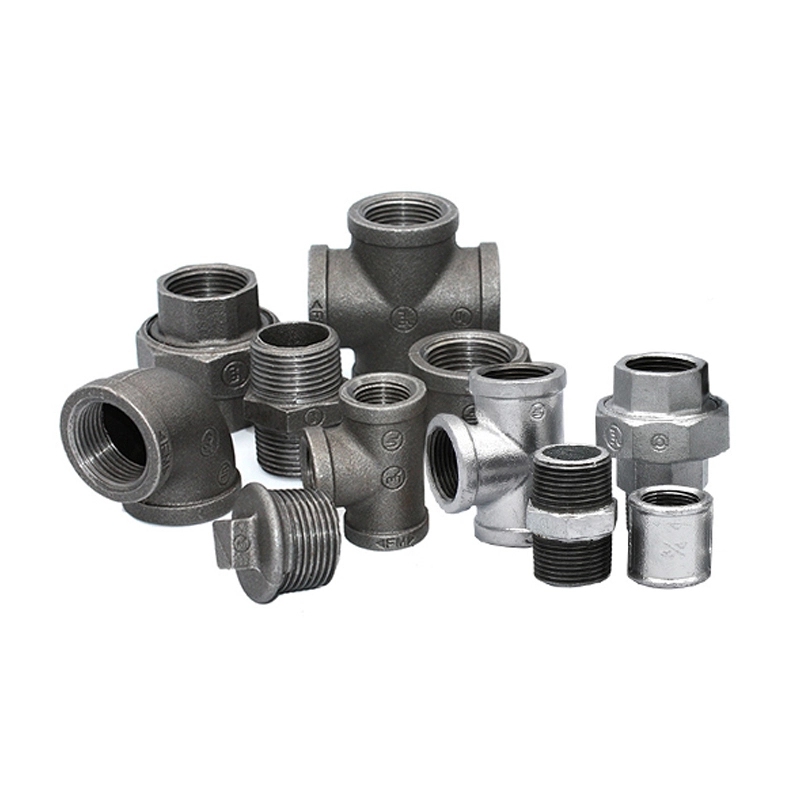
Hot-dip galvanizing holds its place as the most trusted, long-standing corrosion protection approach for malleable iron threaded pipe fittings in every setting where extended service life, limited maintenance needs, and solid joint reliability stay at the top of the priority list. The process builds a metallurgically bonded zinc coating by dipping the fittings into molten zinc kept at 440–460°C, forming a multi-layered structure that delivers both robust physical barrier protection and sacrificial cathodic action at any spot where the coating takes a hit. For threaded fittings—elbows, tees, unions, couplings, crosses, caps, plugs, and mechanical joint components—the coating has to strike a balance between two opposing demands: enough thickness to handle aggressive atmospheres (steam condensation, compressed air moisture, fire sprinkler stagnant water, outdoor marine or industrial exposure, buried soil contact), and controlled buildup to keep threads from bridging, galling during make-up, or losing effective engagement length.
Standards supply the necessary framework for resolving these conflicting demands. ISO 1461 governs hot-dip galvanized coatings on fabricated iron and steel articles, laying down minimum average and local thicknesses scaled to base metal thickness, local minimum thresholds, appearance expectations, adhesion verification methods, and repair guidelines. ASTM A153 concentrates specifically on zinc coatings for iron and steel hardware—including malleable iron castings—defining Classes A through D with corresponding average and individual minimum coating masses/thicknesses, centrifugation allowances tailored to threaded items, and safeguards against hydrogen embrittlement. These two documents, together with regional equivalents such as EN 10242 for threaded malleable fittings in Europe, GB/T 3287 in China, and AS/NZS 4680 in Australia/New Zealand, provide the technical foundation for uniform, repeatable performance across different markets.
In everyday production, coating thickness on malleable iron fittings (ASTM A197 cupola grade, ferritic-pearlitic matrix containing temper carbon nodules) is heavily shaped by silicon content (typically 1.0–1.8%), which controls zinc reactivity and the rate of alloy layer development. Excessive silicon can trigger the Sandelin effect—rapid, uncontrolled growth that results in thick, brittle coatings—while carefully managed chemistry and process parameters produce uniform, tightly adherent layers. Thicker coatings in the 80–120 μm range are routinely specified for severe environments to secure 30–60+ year service life, whereas adherence to minimum requirements ensures code compliance without sacrificing thread functionality or joint reliability.
The whitepaper that follows delivers a detailed technical reference on coating thickness standards, delving into process metallurgy, the quantitative requirements of ISO 1461 and ASTM A153, side-by-side comparisons across global norms, corrosion rate data from real-world atmospheres, service life prediction models, thickness measurement techniques and sampling approaches, application-specific performance considerations for threaded fittings, rigorous testing protocols, and practical compliance strategies. The intent is to equip piping engineers, specification writers, quality managers, manufacturers, and end-users with comprehensive, standards-grounded information that supports selection and verification of galvanized malleable iron fittings capable of delivering decades of dependable corrosion protection under actual service conditions.
Fundamentals of the Hot-Dip Galvanizing Process and Coating Microstructure Formation
The hot-dip galvanizing sequence for malleable iron threaded pipe fittings begins with surface preparation to ensure complete zinc wetting and metallurgical bonding. Fittings are first degreased in alkaline solutions (NaOH-based, 50–80°C) to remove cutting oils and lubricants from threading operations. Acid pickling (typically 10–20% HCl at ambient temperature or 10% H₂SO₄ at 60–80°C) removes mill scale, rust, and temper carbon residues from the casting surface. Fluxing with zinc ammonium chloride (ZnCl₂·NH₄Cl) solution (double salt, 10–30% concentration) promotes wetting by dissolving surface oxides and leaving a thin salt film that prevents re-oxidation during drying.
After drying (120–150°C oven or air dry), fittings are immersed in molten zinc (440–460°C, typical composition 98.5–99.99% Zn with 0.01–0.1% Al for spangle control, trace Pb or Sn for fluidity). Immersion time for threaded fittings is usually 3–8 minutes, depending on section thickness and desired alloy layer development. Upon withdrawal, fittings are centrifuged (spun at 300–600 rpm) to remove excess zinc from threads, recesses, and internal passages, preventing bridging or excessive buildup that would interfere with assembly.
The coating forms through interdiffusion: iron from the substrate dissolves into liquid zinc, and zinc diffuses inward, creating a sequence of intermetallic phases:
- Gamma phase (Fe₃Zn₁₀, ~11% Fe): thinnest layer (1–3 μm), forms first at the steel interface, very hard and brittle.
- Delta phase (FeZn₇–FeZn₁₀, 7–11% Fe): compact columnar grains, 5–20 μm thick, provides the primary barrier strength.
- Zeta phase (FeZn₁₃, ~6% Fe): needle-like or feather-like crystals, 5–30 μm thick, transitional layer.
- Eta phase (pure or near-pure Zn): outer layer, 10–60 μm thick, soft, bright, and sacrificial.
Total thickness is the sum of these layers. In malleable iron, silicon content (1.0–1.8%) promotes moderate reactivity, producing 50–120 μm total coatings depending on immersion time and bath temperature. Higher silicon can accelerate growth (Sandelin peak at 0.08–0.22% Si), leading to thick, brittle delta/zeta layers; controlled chemistry avoids this.
Centrifuging reduces eta phase thickness while preserving alloy layers, ensuring thread clearance. Quenching (water or chromate solution) can refine grain structure and passivate the surface, reducing white rust formation during storage.
The final duplex coating provides:
- Barrier protection from eta and compact delta layers.
- Sacrificial protection: zinc corrodes preferentially (E°_Zn = –0.76 V vs. E°_Fe = –0.44 V), maintaining cathodic protection at coating defects or cut edges.
In threaded fittings, coating integrity at thread roots is critical; insufficient thickness there accelerates localized pitting or crevice corrosion in moist environments.
ISO 1461: Detailed Requirements, Thickness Tables, and Acceptance Criteria
ISO 1461:2022 “Hot dip galvanized coatings on fabricated iron and steel articles — Specifications and test methods” remains the international reference standard for hot-dip galvanized coatings applied to fabricated products, including malleable iron threaded pipe fittings that are galvanized after casting, threading, and assembly of any sub-components. The standard deliberately avoids imposing a maximum coating thickness limit, recognizing that heavier coatings are frequently required in severe corrosivity categories (C4 high, C5 very high per ISO 9223) or for extended design service life (30–75+ years). Instead, it focuses on minimum performance thresholds that ensure adequate barrier and sacrificial protection while allowing flexibility for purchaser-specified enhancements.
Scope and Applicability to Malleable Iron Threaded Pipe Fittings
ISO 1461 applies to iron and steel articles that are hot-dip galvanized after fabrication, encompassing castings (such as ASTM A197 malleable iron elbows, tees, unions, couplings, crosses, caps, plugs, and mechanical joint components), welded assemblies, and threaded items. For threaded fittings, the standard implicitly acknowledges the need for centrifugation or spinning to remove excess zinc from internal threads and recesses, which typically results in lower average coating mass than non-centrifuged articles of equivalent steel thickness. The standard explicitly states that centrifuged articles may be assigned lower minimum average thicknesses when agreed between purchaser and galvanizer, reflecting the mechanical removal of free zinc (eta phase) while preserving the underlying zinc-iron alloy layers critical for long-term durability.
Malleable iron fittings generally fall into the >3 mm to ≤6 mm or >6 mm steel thickness categories (depending on wall thickness and nominal size), making the 70 μm or 85 μm average minimums the most relevant benchmarks. The standard’s emphasis on “fabricated articles” distinguishes it from ASTM A153 (hardware-specific) and allows it to cover the full range of threaded malleable iron products exported globally.
Minimum Coating Thickness Requirements – Tables and Local vs. Average Distinction
The core of ISO 1461 is Table 1 (Minimum coating thickness and mass on samples), which scales requirements with the thickness of the base steel article:
- Steel thickness ≤1.5 mm: average coating thickness ≥45 μm (corresponding to ≥320 g/m² zinc mass), local minimum ≥35 μm.
- Steel thickness >1.5 mm and ≤3 mm: average ≥55 μm (≥390 g/m²), local minimum ≥45 μm.
- Steel thickness >3 mm and ≤6 mm: average ≥70 μm (≥500 g/m²), local minimum ≥55 μm.
- Steel thickness >6 mm: average ≥85 μm (≥610 g/m²), local minimum ≥70 μm.
For centrifuged articles (common practice for threaded pipe fittings to clear internal threads and prevent bridging):
- The purchaser and galvanizer may agree to apply the requirements for the next lower thickness category or a reduced average value, provided the coating remains continuous and protective. In practice, centrifuged malleable iron fittings with nominal wall thicknesses of 4–8 mm frequently target 55–75 μm average to balance corrosion protection with thread functionality.
Local thickness is measured over discrete reference areas (typically 1 cm² or 5 cm² patches) and must not fall below the local minimum anywhere on the article. This requirement guards against thin spots at edges, recesses, or thread roots where zinc drainage or centrifugal force may reduce coating mass. The difference between average and local minimum is deliberately limited (5 μm for ≤6 mm steel, 10 μm for >6 mm) to prevent significant variability that could compromise sacrificial protection at vulnerable locations.
Mass equivalents (g/m²) are calculated assuming zinc density 7.14 g/cm³, so 1 μm ≈ 7.14 g/m². The standard allows conversion between thickness and mass measurements, with gravimetric results taking precedence in disputes.
Appearance, Continuity, and Adhesion Requirements
The coating must be continuous and reasonably smooth, free from gross lumps, ash inclusions, blisters, or uncoated areas that would impair serviceability or appearance. Minor roughness, dull gray matte finish, or slight spangle variation is acceptable; bright spangle is not required. For threaded fittings, small accumulations of zinc at thread crests or roots are permitted provided they do not interfere with joint assembly or sealing.
Adhesion is verified by practical tests: no peeling or flaking when a small article is bent around a 4t mandrel (t = steel thickness) or when struck with a 500 g hammer. The standard does not require a formal adhesion test if visual and hammer inspection confirms uniformity.
Repair of Damaged Areas and Touch-Up Procedures
Damaged areas (e.g., coating removed during threading touch-up, handling damage, or post-galvanizing machining) must be repaired using zinc-rich paint (≥92% Zn dust by weight in dry film), zinc spray (metallizing), or zinc solder. The minimum repair coating thickness is 100 μm unless the purchaser agrees to a lower value in writing. Repair areas must overlap sound coating by at least 25 mm to ensure continuity of cathodic protection. The standard references ISO 12944-5 for paint systems and ISO 2063 for thermal spraying as guidance.
Testing Methods, Reference Areas, and Acceptance Criteria
Thickness measurement:
- Magnetic method (ISO 2178 / ASTM E376 equivalent) — non-destructive, using probe calibrated on uncoated substrate; minimum 5 readings per reference area, average reported.
- Gravimetric method (ISO 1460) — acid dissolution of zinc, mass loss determination; highest accuracy for average mass per unit area.
- Metallographic cross-section — destructive, optical microscopy measurement of local thickness; used for dispute resolution or alloy layer analysis.
Reference areas — Defined as the smallest area over which average thickness is determined (typically 1–5 cm²); local thickness measured at multiple points within each area.
Sampling — Per ISO 2859-1 attribute sampling plans (normal inspection level 2, AQL 1.5–4.0 for major defects); lot size determines sample quantity.
Acceptance — Lot accepted if average thickness ≥ table value, no local thickness below local minimum, no gross defects affecting use.
Heavy coating allowance — Purchaser may specify thicker coatings (e.g., 100–150 μm average) for severe environments (C4/C5 corrosivity), with galvanizer required to demonstrate compliance.
ISO 1461’s performance-based approach makes it particularly suitable for threaded malleable iron fittings, where process adjustments (centrifugation, immersion time) are used to meet minimums while preserving thread clearance.
ASTM A153: Zinc Coating (Hot-Dip) on Iron and Steel Hardware
ASTM A153/A153M-23 “Standard Specification for Zinc Coating (Hot-Dip) on Iron and Steel Hardware” is the primary North American standard governing hot-dip galvanizing of hardware items, including malleable iron castings, threaded pipe fittings, rolled threaded rods, forged flanges, pressed washers, and small fasteners. Unlike ISO 1461, which applies broadly to fabricated articles galvanized after assembly, ASTM A153 is hardware-specific and explicitly allows (and often requires) centrifugation or spinning to remove excess zinc from threads, recesses, and internal passages—critical for threaded malleable iron fittings to maintain joint functionality and avoid galling or reduced thread engagement during assembly.
The standard classifies products into four classes (A through D) based on product type, size, and thickness, with each class defining distinct average coating thickness (in mils and equivalent μm/g/m²) and individual specimen minimums. These values reflect the practical reality that smaller or thinner hardware items receive proportionally less zinc retention after spinning, while larger castings retain thicker coatings.
Classification System and Coating Thickness Requirements
Class A — Applies to castings (including malleable iron threaded pipe fittings), forged articles, and rolled threaded products greater than 15 inches in length or thicker than 5/8 inch:
- Average coating thickness: 3.4 mils (86 μm / 610 g/m² zinc mass).
- Individual specimen minimum thickness: 3.1 mils (79 μm / 550 g/m²).
This class is directly applicable to most malleable iron pipe fittings (elbows, tees, unions, couplings, crosses, caps, plugs, mechanical tees), which are typically cast with wall thicknesses in the 4–12 mm range and spun after galvanizing to clear internal threads.
Class B — Rolled, pressed, or forged articles (e.g., threaded rods, bolts, nuts):
- B-1: Articles >5/8 inch thick and >15 inches long — average 3.4 mils (86 μm), minimum 3.1 mils (79 μm).
- B-2: Articles <3/16 inch thick and >15 inches long — average 2.6 mils (66 μm), minimum 2.1 mils (53 μm).
- B-3: Articles of any thickness <15 inches long — average 2.2 mils (56 μm), minimum 1.9 mils (48 μm).
Class C — Fasteners >3/8 inch diameter and washers 3/16–1/4 inch thick — average 2.1 mils (53 μm), minimum 1.7 mils (43 μm).
Class D — Fasteners <3/8 inch diameter, rivets, nails, washers <3/16 inch thick — average 1.7 mils (43 μm), minimum 1.4 mils (36 μm).
Centrifuged hardware — Threaded items must be spun after withdrawal from the zinc bath to remove surplus zinc. The standard notes that centrifuged products may have lower average coating mass than non-centrifuged equivalents, but Class A minimums remain the benchmark for malleable iron castings.
Appearance, Continuity, Adhesion, and Embrittlement Provisions
The coating must be reasonably smooth and continuous, free from uncoated areas, gross lumps, blisters, or ash inclusions that would impair serviceability or appearance. Dull gray matte finishes are acceptable; bright spangle is not required. Minor roughness at thread crests or roots is permitted provided it does not interfere with joint make-up or sealing performance.
Adhesion is verified by practical means: no flaking or peeling when the article is deformed (small items bent) or struck with a hammer. The standard does not mandate a formal pull-off or bend test if visual and hammer inspection confirms uniformity.
Hydrogen embrittlement is explicitly prohibited. The specification requires that pickling and galvanizing processes do not introduce hydrogen that causes embrittlement in susceptible steels; for malleable iron, this is rarely an issue due to the ferritic-pearlitic matrix, but the requirement ensures process control.
Repair Procedures and Touch-Up Requirements
Damaged areas (coating removed during threading touch-up, handling nicks, or post-galvanizing machining) must be repaired in accordance with ASTM A780/A780M “Standard Practice for Repair of Damaged and Uncoated Areas of Hot-Dip Galvanized Coatings”. Acceptable methods include:
- Zinc-rich paint (≥92% Zn dust by weight in dry film), applied to ≥3–4 mils (76–102 μm) dry film thickness.
- Zinc spray (metallizing) per ASTM B833 or B852, minimum 3 mils (76 μm).
- Zinc-based solder or powder.
Repair areas must overlap sound coating by at least 1 inch (25 mm) to maintain cathodic continuity. The standard allows purchaser agreement on reduced repair thickness, but A780 minimums are the default.
Testing Methods, Sampling, and Acceptance Criteria
Thickness measurement:
- Magnetic method (ASTM E376 / ISO 2178 equivalent) — non-destructive, calibrated probe on uncoated substrate; minimum 5 readings per specimen, average reported.
- Gravimetric method — acid dissolution and mass loss determination; highest accuracy for average coating mass per unit area.
- Metallographic cross-section — destructive, optical microscopy of polished sections; used for layer structure verification or dispute resolution.
Sampling — Lot-based or statistical sampling per purchaser agreement; often follows MIL-STD-105E (now superseded by ANSI/ASQ Z1.4) or AQL plans.
Acceptance — Lot accepted if average thickness ≥ class value, no individual specimen below minimum, no gross defects affecting use.
Heavy coating allowance — The standard permits thicker coatings when specified by the purchaser (common for severe environments), with galvanizer responsible for demonstrating compliance without compromising thread function.
ASTM A153 Class A is the de facto requirement for malleable iron threaded pipe fittings in North American markets and many international projects specifying U.S. standards, providing a higher minimum thickness than ISO 1461 for comparable sections while explicitly accommodating centrifugation for threaded products.
Comparative Technical Analysis: ISO 1461 vs. ASTM A153 vs. Regional Equivalents
Scope and Applicability Comparison
ISO 1461 is written for fabricated articles galvanized after assembly or fabrication, making it broadly applicable to malleable iron threaded fittings that are cast, threaded, and then galvanized as complete components. ASTM A153 is hardware-specific, explicitly covering castings, fasteners, and threaded items, with provisions for centrifugation that directly address the needs of threaded pipe fittings. The scope difference means ISO 1461 is more general (covers large fabricated structures), while ASTM A153 is more tailored to small hardware and castings.
Coating Thickness Comparison for Malleable Iron Fittings
Typical malleable iron fitting wall thickness falls in the 4–10 mm range:
- ISO 1461 (centrifuged articles): 55–85 μm average (depending on exact thickness and agreement), local minimum 45–70 μm.
- ASTM A153 Class A: 86 μm average, 79 μm individual minimum.
ASTM A153 Class A generally exceeds ISO 1461 minimums for fittings in the >3–6 mm category, providing a higher baseline protection level. In practice, many global suppliers target 80–100 μm average to satisfy both standards simultaneously.
Measurement, Sampling, and Acceptance Differences
- ISO 1461 emphasizes local average thickness over reference areas and local minimums; sampling per ISO 2859-1 AQL.
- ASTM A153 requires average and individual specimen minimums; sampling lot-based or statistical.
Both allow magnetic, gravimetric, and metallographic methods; gravimetric takes precedence in disputes.
Appearance, Adhesion, Repair, and Embrittlement
Appearance and adhesion requirements are nearly identical: continuous, adherent, no gross defects. Repair methods align (zinc-rich paint/spray), with ISO 1461 setting 100 μm minimum and ASTM A153 referencing A780 (3–4 mils).
Embrittlement prevention is explicit in ASTM A153; ISO 1461 addresses it indirectly through process control.
Regional Equivalents and Global Compliance Strategies
- EN 10242 (Europe): Threaded malleable iron fittings; galvanizing specified per EN ISO 1461 when required.
- GB/T 3287 (China): Malleable iron fittings; galvanizing often per ISO 1461 or ASTM A153 equivalents.
- AS/NZS 4680 (Australia/New Zealand): Thickness tables mirror ISO 1461.
- CSA G164 (Canada): Aligns with ASTM A123/A153 for hardware.
Global suppliers frequently dual-certify to ASTM A153 Class A + ISO 1461 to meet North American and European/Asian requirements. Heavier coatings (100–150 μm average) are common for severe environments (C4/C5) to achieve 40–75+ year service life.
Zinc Corrosion Kinetics and Environmental Degradation Rates
Zinc corrosion in hot-dip galvanized coatings proceeds primarily through electrochemical dissolution in the presence of moisture, oxygen, and atmospheric pollutants, with the rate governed by time of wetness, temperature, pH of surface electrolyte, and concentration of corrosive species (SO₂, Cl⁻, NOₓ, CO₂). The corrosion product layer—initially zinc hydroxide Zn(OH)₂, followed by basic zinc carbonate Zn₅(OH)₆(CO₃)₂ (hydrozincite), zinc sulfate ZnSO₄·nH₂O in sulfur-rich atmospheres, and zinc chloride complexes in marine conditions—forms a passive film that progressively reduces further attack. This passivation is the principal reason real-world zinc loss rates are often lower than short-term laboratory immersion tests predict.
Corrosion Rate Classification per ISO 9223 and Real-World Observations
ISO 9223:2012 “Corrosion of metals and alloys — Corrosivity of atmospheres — Classification, determination and estimation” categorizes atmospheric corrosivity into five classes (C1 to C5) based on first-year zinc corrosion rate measured on standard zinc panels:
- C1 (very low corrosivity): heated and air-conditioned interiors with low humidity — zinc loss 0.1–0.5 μm/year.
- C2 (low corrosivity): rural and suburban atmospheres, unheated interiors with occasional condensation — zinc loss 0.5–2.0 μm/year.
- C3 (medium corrosivity): urban and industrial atmospheres with moderate SO₂ pollution, coastal areas with low salt exposure — zinc loss 2.0–4.0 μm/year.
- C4 (high corrosivity): industrial areas with high SO₂ pollution, coastal/industrial with moderate salt — zinc loss 4.0–8.0 μm/year.
- C5 (very high corrosivity): aggressive industrial atmospheres with high pollutant levels, severe marine (offshore, splash zone) — zinc loss 8.0–25 μm/year (C5-I industrial) or 8.0–25 μm/year (C5-M marine).
These rates represent first-year corrosion on bare zinc; long-term rates on galvanized steel or malleable iron are typically 20–50% lower due to protective corrosion product accumulation and alloy layer contribution. The delta and gamma intermetallic phases are significantly more resistant to dissolution than pure eta zinc, so once the eta layer is consumed (typically 10–30 years depending on thickness), the remaining alloy layers continue to protect at reduced rates (often 0.2–1.0 μm/year even in C3–C4 atmospheres).
Environmental Factors Influencing Zinc Corrosion Kinetics
Time of wetness (TOW) — The fraction of time the surface is wet (RH >80% or condensation occurs) is the dominant driver. TOW values range from <10% in arid interiors (C1) to >60% in coastal/industrial zones (C4/C5). Higher TOW accelerates dissolution by maintaining an electrolyte film.
Temperature — Corrosion rate increases with temperature up to ~60°C (Arrhenius behavior), then decreases at higher temperatures due to reduced oxygen solubility and faster passivation. In steam or hot water systems (intermittent exposure to 100–200°C), zinc-iron alloy layers remain stable, but prolonged exposure above 200°C can cause intermetallic growth and potential cracking.
Atmospheric pollutants:
- Sulfur dioxide (SO₂) — Forms zinc sulfate, which is soluble and accelerates attack; dominant in C3–C4 industrial atmospheres.
- Chlorides (Cl⁻) — From marine aerosols or de-icing salts; highly aggressive in C5-M, causing pitting and undermining of alloy layers.
- NOx and CO₂ — Contribute to acidic surface films (pH 4–6), increasing zinc dissolution rate.
pH of surface electrolyte — Zinc is amphoteric; corrosion accelerates at pH <4 or >10. Neutral to slightly alkaline conditions (pH 6–9) favor passivation via hydrozincite formation.
Alloy layer contribution — After eta depletion, delta phase (FeZn₇–₁₀) corrodes at ~0.2–0.8 μm/year in C3 atmospheres; gamma phase even slower. This extends effective life beyond simple linear models.
Long-Term Corrosion Behavior and Alloy Layer Protection
Short-term immersion tests (e.g., salt spray ASTM B117) overestimate field rates because they lack wetting/drying cycles and natural passivation. Real-world data from exposure programs (e.g., American Galvanizers Association test sites, ISO CORRAG program) show:
- Rural/suburban (C2): 0.7–1.5 μm/year long-term average.
- Urban/industrial (C3): 1.5–3.0 μm/year.
- Coastal/industrial (C4): 3.0–6.0 μm/year.
- Severe marine (C5-M): 5.0–12.0 μm/year.
Alloy layers account for 30–60% of total protection after eta depletion; in fittings with initial 80–120 μm coatings, alloy layer thickness (20–50 μm) can provide 10–30 additional years of protection after eta is consumed.
Practical Implications for Threaded Malleable Iron Fittings
In threaded fittings, corrosion at thread roots and internal surfaces is critical due to crevice geometry and limited oxygen access. Centrifugation reduces eta thickness in recesses, making alloy layer integrity even more important. Thicker initial coatings (100–150 μm average) are recommended for C4/C5 environments to ensure sufficient alloy layer retention after 20–30 years. Field inspections of aged fittings often show preferential attack at thread roots when initial thickness falls below 60–70 μm, highlighting the value of exceeding minimums in aggressive service.
Service Life Prediction Models and Coating Thickness Optimization
Linear Service Life Model and Limitations
The simplest prediction model is L ≈ h / R, where:
- L = service life to first maintenance (years)
- h = average initial zinc coating thickness (μm)
- R = zinc corrosion rate (μm/year)
Examples:
- Suburban atmosphere (R ≈ 1.2–1.8 μm/year), 85 μm coating → L ≈ 47–71 years.
- Industrial atmosphere (R ≈ 2.5–3.5 μm/year), 85 μm → L ≈ 24–34 years.
- Marine atmosphere (R ≈ 4.5–6.0 μm/year), 85 μm → L ≈ 14–19 years; 120 μm → L ≈ 20–27 years; 150 μm → L ≈ 25–33 years.
This linear model is conservative because:
- Corrosion rate decreases over time as protective corrosion products accumulate.
- Alloy layers (delta + gamma) corrode at 20–50% the rate of eta phase.
- Intermittent wetting/drying cycles allow passivation periods.
Non-Linear Models and Alloy Layer Contribution
More accurate models incorporate two-stage corrosion:
- Eta phase depletion stage — R_eta ≈ 1.0–6.0 μm/year depending on environment.
- Alloy layer stage — R_alloy ≈ 0.2–1.0 μm/year after eta is consumed.
Total life L ≈ (h_eta / R_eta) + (h_alloy / R_alloy), where h_eta is initial eta thickness (typically 20–60% of total h), h_alloy is intermetallic thickness (30–80% of total h).
Example (C3 industrial, R_eta = 3.0 μm/year, R_alloy = 0.8 μm/year, initial h = 100 μm, h_eta = 40 μm, h_alloy = 60 μm):
- Eta depletion time ≈ 40 / 3.0 ≈ 13 years.
- Alloy protection time ≈ 60 / 0.8 ≈ 75 years.
- Total L ≈ 13 + 75 = 88 years (vs. linear 100 / 3.0 ≈ 33 years).
This two-stage approach better matches long-term exposure data.
Coating Thickness Optimization for Threaded Fittings
C1/C2 environments (rural/suburban, heated interiors): 55–70 μm average sufficient for 40–80+ year life.
C3 environments (urban/industrial): 70–100 μm for 30–60 year life; 120 μm for 50–80+ years.
C4/C5 environments (high marine/industrial): 100–150 μm recommended, or duplex system (galvanizing + epoxy/polyurethane topcoat) for 50–100+ year life.
For threaded fittings, optimization must consider:
- Thread clearance — Centrifugation targets 70–100 μm average while keeping thread roots ≥60 μm.
- Internal surfaces — Recesses receive less zinc; heavier initial coating compensates.
- Cost vs. life — Incremental cost of 30–50% thicker coating is low compared to replacement labor and downtime.
Coating Thickness Measurement Methods, Accuracy, and Sampling Strategies
Magnetic Induction Method (Non-Destructive)
ISO 2178 and ASTM E376 describe magnetic induction gauges using a probe that generates an electromagnetic field; coating thickness is derived from field perturbation. Accuracy ±5–10% for 50–150 μm range; calibration on uncoated substrate of same material and geometry is essential. Minimum 5–15 readings per reference area; average and standard deviation reported. Limitations: less accurate on curved surfaces (thread crests/roots) or near edges; probe size affects resolution.
Gravimetric Method (Highest Accuracy for Average Mass)
ISO 1460: sample is weighed, zinc dissolved in inhibited HCl, re-weighed; mass loss converted to thickness assuming zinc density 7.14 g/cm³ (1 μm ≈ 7.14 g/m²). Accuracy ±2–5%; used for average mass per unit area. Destructive, so applied to representative samples or sacrificial parts.
Metallographic Cross-Section (Direct Layer Visualization)
Cut, polish, etch (e.g., 2% nital), examine under optical microscope at 100–500×. Measures local thickness of eta, zeta, delta, gamma layers. Highest resolution for alloy structure analysis; destructive but essential for process optimization and dispute resolution.
Sampling Strategies and Acceptance Criteria
Sampling plans — ISO 2859-1 attribute sampling (normal inspection level 2, AQL 1.5–4.0 for major defects); lot size determines sample quantity (e.g., lot of 501–1200 pieces → sample size 32–50).
Reference areas — Smallest area for average thickness (1–5 cm²); multiple areas per article.
Acceptance — Average thickness ≥ minimum, no local below local minimum, no defects impairing use (e.g., uncoated thread roots).
Thread-specific measurement — Thread roots and internal surfaces measured separately; minimums apply to critical areas.
Application-Specific Performance Considerations for Threaded Fittings
Hot-dip galvanized malleable iron threaded pipe fittings are deployed across a wide spectrum of industrial, commercial, and infrastructure applications, each imposing unique combinations of environmental exposure, mechanical loading, thermal cycling, hydraulic transients, and chemical interactions. The coating thickness, alloy layer development, and overall coating integrity play decisive roles in determining service life, maintenance intervals, and failure risk. Below is a detailed examination of performance considerations in the most common and demanding applications, with quantitative guidance on minimum and recommended coating thicknesses, corrosion rate adjustments, and practical measures to maintain joint reliability.
Steam and Hot Water Systems – Condensation, Thermal Cycling, and Intermittent Wetting
Saturated steam systems (typically 15–300 psig, 250–421°F / 121–216°C) and hot water circulation lines (80–180°C) subject fittings to frequent thermal transients during startup, shutdown, and load changes. Condensation inside the piping creates prolonged time of wetness (TOW) in the 40–80% range, accelerating zinc dissolution at thread roots and internal surfaces where drainage is restricted. In condensing steam service, zinc corrosion rates can reach 2.0–4.0 μm/year (C3–C4 equivalent) due to the combination of high TOW, slightly acidic condensate (pH 5–6 from dissolved CO₂), and temperature fluctuations that disrupt passivation film stability.
Coating thickness guidance:
- Minimum per ASTM A153 Class A (86 μm average / 79 μm local) or ISO 1461 (>6 mm: 85 μm average) is acceptable for low-pressure, low-cycle systems.
- Recommended for medium- to high-pressure steam (100–300 psig): 100–130 μm average to ensure sufficient eta phase retention and alloy layer thickness after 15–20 years of service.
- Alloy layer contribution: delta and gamma phases remain protective after eta depletion, adding 15–30 years of residual life at reduced rates (~0.5–1.0 μm/year).
Practical considerations:
- Thread root coating must remain ≥60–70 μm after centrifugation to prevent crevice corrosion in stagnant condensate pockets.
- Periodic inspection (ultrasonic thickness or visual borescope) recommended every 5–10 years in high-cycle systems.
- Duplex coating (galvanizing + high-temperature silicone or epoxy topcoat) extends life to 50+ years in superheated steam headers.
Field data from refinery and power plant steam mains show galvanized malleable fittings with 100–120 μm initial coatings achieving 25–40 years without significant thread leakage, whereas standard minimum coatings often require replacement at 15–20 years due to localized pitting at thread roots.
Fire Protection Sprinkler Networks – Stagnant Water, Hydraulic Transients, and Water Hammer
Fire protection piping experiences long periods of stagnation (TOW near 100% when filled) interspersed with sudden hydraulic transients during pump startup, valve closure, or system activation. Water hammer surges can reach 5–10 times steady-state pressure (up to 1000–1500 psi momentarily), imposing dynamic mechanical stress on joints and coating. Stagnant water chemistry varies (pH 7–9, low oxygen, possible microbiologically influenced corrosion), leading to zinc corrosion rates of 1.0–3.0 μm/year (C2–C3) in oxygenated zones and localized pitting in low-oxygen crevices.
Coating thickness guidance:
- ASTM A153 Class A (86 μm average / 79 μm local) meets most codes (NFPA 13, FM Global) and provides adequate protection for dry-pipe and pre-action systems.
- Recommended for wet-pipe systems and high-rise installations: 90–120 μm average to ensure coating integrity at thread roots after decades of stagnation and occasional surge events.
- Internal coating must remain continuous in recesses and thread valleys to prevent crevice corrosion and red rust formation.
Practical considerations:
- Centrifugation must be controlled to avoid over-removal of zinc from internal threads; minimum internal thickness ≥70 μm recommended.
- Surge protection (water hammer arrestors) reduces mechanical stress on coating.
- Periodic system flushing and internal inspection (borescope or ultrasonic) every 5–10 years to detect early pitting or coating loss.
Case histories from commercial high-rise wet-pipe systems show galvanized fittings with 90–110 μm coatings maintaining leak-free performance after 25–35 years and multiple flow tests, while fittings at the lower end of ASTM A153 minimums occasionally develop thread leaks after 15–20 years due to crevice corrosion.
Compressed Air and Pneumatic Systems – Moisture Carryover, Pulsation, and Vibration
Compressed air systems, particularly those fed by reciprocating compressors, introduce oil, moisture, and pulsation (5–20 Hz) into the piping network. Moisture carryover creates intermittent wetting inside the lines, while pulsation induces cyclic mechanical stress (alternating hoop stress amplitude 10–50 psi). Corrosion rates range from 0.8–2.5 μm/year (C2–C3) in well-maintained systems with dryers, but can reach 3.0–5.0 μm/year in systems with poor moisture control.
Coating thickness guidance:
- ASTM A153 Class A minimum (86 μm average) is sufficient for dry compressed air with effective dryers.
- Recommended for systems with moisture carryover or high pulsation: 90–130 μm average to ensure long-term protection in internal recesses and thread roots.
- Alloy layer integrity critical after eta phase depletion, providing 20–40 years of residual protection at reduced rates.
Practical considerations:
- Internal coating uniformity is essential; centrifugation must balance excess removal with adequate retention in dead-legs and branch connections.
- Vibration dampers and pulsation bottles reduce mechanical stress on coating.
- Periodic internal inspection (borescope) recommended every 5–8 years in high-moisture systems.
Industrial compressed air headers with 100–120 μm coatings have demonstrated 30–45 years of leak-free service in automotive assembly plants, while standard minimum coatings often show internal rust and thread seepage after 15–25 years in systems with intermittent moisture.
Outdoor and Industrial Exposure – Atmospheric Corrosivity Categories C3–C5
Outdoor industrial piping (chemical plants, refineries, coastal facilities) faces C3–C5 atmospheres with SO₂, Cl⁻, and high TOW. Corrosion rates range from 2.0–8.0 μm/year initially, decreasing to 0.5–2.0 μm/year long-term as corrosion products accumulate.
Coating thickness guidance:
- C3 (urban/industrial): 80–110 μm average for 30–50 year life.
- C4 (high industrial/coastal): 100–140 μm average for 30–50+ years.
- C5 (severe marine/industrial): 120–180 μm average or duplex system for 50–75+ years.
Practical considerations:
- Thicker coatings compensate for accelerated attack at thread roots and external surfaces.
- Duplex systems (galvanizing + epoxy/polyurethane topcoat) recommended for C5 environments to achieve 75–100+ year life.
- Periodic external inspection (ultrasonic or visual) every 5–10 years to monitor coating loss.
Field data from coastal refineries show galvanized fittings with 120–150 μm coatings remaining fully functional after 35–50 years, while minimum coatings often require touch-up or replacement at 20–30 years.
Buried and District Heating Applications – Soil Corrosivity and Thermal Cycling
Buried piping in district heating networks or geothermal systems experiences soil corrosivity (pH 5–9, varying Cl⁻, SO₄²⁻, moisture), thermal cycling (seasonal 20–120°C), and external mechanical stress from soil settlement. Zinc corrosion rates in soil range from 1.0–5.0 μm/year depending on resistivity and aeration.
Coating thickness guidance:
- Typical soil (resistivity >1000 Ω·cm): 100–140 μm average for 40–60 year life.
- Aggressive soil (low resistivity, high Cl⁻): 140–200 μm or duplex with polyethylene wrap for 60–100+ years.
Practical considerations:
- External coating must be uniform and free of holidays; thicker coatings provide corrosion allowance against soil attack.
- Thermal insulation reduces external temperature swings but traps moisture at coating interface.
- Cathodic protection supplements galvanizing in very aggressive soils.
European district heating systems with 150–200 μm galvanized coatings + wrap have achieved 50–70 years of service with minimal external corrosion.
Quality Assurance, Testing Protocols, and Certification Practices
In-Process Controls
- Zinc bath chemistry monitored daily (Zn purity ≥98.5%, Al 0.005–0.01% for spangle control, Fe <0.03% to avoid dross).
- Flux concentration (ZnCl₂·NH₄Cl) maintained at 10–30% for optimal wetting.
- Immersion time 3–8 minutes, withdrawal rate controlled (0.5–1.5 m/min), centrifuge speed 300–600 rpm for thread clearance.
Final Inspection and Testing
- 100% visual inspection for continuity, lumps, ash inclusions.
- Thickness sampling per ISO 2859-1 or lot-based plan.
- Hydrostatic test (2–3× rated pressure) and thread gauging (Go/No-Go per ASME B1.20.1).
- Adhesion verification (hammer strike or bend test on samples).
Certification and Third-Party Verification
- Certificate of compliance per ISO 10474 / ASTM format, including batch number, coating thickness results, and standard reference.
- Third-party audits (American Galvanizers Association, UL, FM Approvals for fire protection) for critical applications.
Manufacturing Excellence at Hebei Jianzhi Foundry Group Co., Ltd. (Vicast)
Hebei Jianzhi Foundry Group Co., Ltd. (Vicast), established in 1982, operates a 1.4 million m² facility with 4500 employees, including over 350 engineers and technical specialists. Certified to ISO 9001 quality management and ISO 14001 environmental management, the company holds more than 200 patents related to casting, heat treatment, threading, and galvanizing processes. Vicast contributes to national standards GB/T 3287 (malleable iron pipe fittings) and GB/T 9440 (malleable cast iron), and maintains galvanizing lines that comply with both ASTM A153 Class A and ISO 1461 requirements. Automated centrifuge systems, continuous zinc bath monitoring (temperature, chemistry, dross removal), multi-point magnetic thickness verification, and 100% hydrostatic/thread gauging ensure uniform, adherent coatings with excellent thread clearance and long-term corrosion performance for global export markets.
Conclusion: Achieving Long-Term Corrosion Protection Through Standards Compliance
Hot-dip galvanized malleable iron threaded pipe fittings, when specified and processed to meet or exceed the requirements of ISO 1461, ASTM A153 Class A, and equivalent regional standards, provide reliable, predictable, and cost-effective corrosion protection across a broad range of service conditions. Proper selection of coating thickness—guided by corrosivity category, expected service life, and application-specific demands—combined with rigorous process control, measurement accuracy, and quality assurance protocols, ensures decades of leak-free performance, minimal maintenance, and low lifecycle cost. Dual certification strategies and heavier coatings in severe environments further enhance reliability and global market acceptance.
Engineers, specifiers, and procurement teams are encouraged to reference the detailed thickness tables, corrosion rate data, service life models, measurement methods, and application considerations presented in this whitepaper when developing specifications or evaluating suppliers. For project-specific compliance documentation, test reports, or engineering support, contact Vicast directly.
Explore Vicast’s full range of hot-dip galvanized malleable iron threaded pipe fittings at https://www.cnvicast.com/products/ or reach out via https://www.cnvicast.com/about-us/ for technical datasheets, material certifications, and application guidance.
References
- ISO 1461:2022 Hot dip galvanized coatings on fabricated iron and steel articles — Specifications and test methods.
- ASTM A153/A153M-23 Standard Specification for Zinc Coating (Hot-Dip) on Iron and Steel Hardware.
- ASTM A780/A780M-23 Standard Practice for Repair of Damaged and Uncoated Areas of Hot-Dip Galvanized Coatings.
- ISO 9223:2012 Corrosion of metals and alloys — Corrosivity of atmospheres — Classification, determination and estimation.
- ISO 2178:2016 Non-magnetic coatings on magnetic substrates — Measurement of coating thickness — Magnetic method.
- ASTM E376-17 Standard Practice for Measuring Coating Thickness by Magnetic-Field or Eddy-Current (Electromagnetic) Testing Methods.
- American Galvanizers Association: Zinc Coatings Guide and Performance in Different Environments (2023 edition).
- ASM Handbook Volume 13A: Corrosion: Fundamentals, Testing, and Protection (Galvanizing and Zinc Coatings chapter).
- EN 10242:1994 Threaded pipe fittings in malleable cast iron.
- GB/T 3287-2019 Malleable cast iron pipe fittings.
Preguntas frecuentes
What is the minimum average coating thickness for malleable iron fittings under ASTM A153 Class A?
3.4 mils (86 μm / 610 g/m²), with individual specimen minimum 3.1 mils (79 μm / 550 g/m²).
How does ISO 1461 coating thickness vary with steel thickness for non-centrifuged articles?
≤1.5 mm: 45 μm average; >1.5–3 mm: 55 μm; >3–6 mm: 70 μm; >6 mm: 85 μm average.
Can ASTM A153 Class A galvanized fittings satisfy ISO 1461 requirements?
Yes; ASTM A153 Class A average 86 μm typically exceeds ISO 1461 minimums for fittings in the 3–6 mm thickness range, enabling dual compliance in most cases.
Why are thicker zinc coatings recommended for marine or industrial atmospheres?
Higher corrosion rates (2–6 μm/year) reduce service life; thicker coatings (100–150 μm) extend protection proportionally (L = h / R) and ensure adequate alloy layer retention after eta phase depletion.
How is zinc coating thickness measured on threaded fittings?
Magnetic induction gauges (non-destructive, ISO 2178/ASTM E376), gravimetric mass loss (ISO 1460, highest accuracy for average), metallographic cross-section (destructive, layer visualization); thread roots, internal recesses, and external surfaces measured separately due to centrifugation effects.