
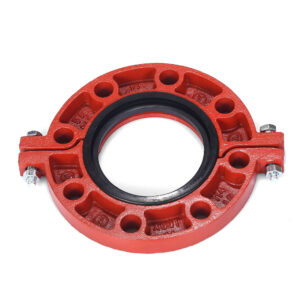
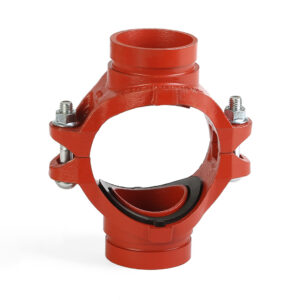


Riftierte Kupplungen connect grooved-end pipes using a housing, a gasket, and bolts. The main decision is whether the connection needs to stay completely fixed or allow some controlled movement. Rigid couplings keep pipe ends firmly in place. Meanwhile, flexible couplings permit a small amount of linear and angular shifting. Picking the right option can enhance alignment. It also protects machinery, manages vibration, and ensures long-lasting piping performance.
What Is the Main Difference Between Rigid and Flexible Grooved Couplings?
Both styles form a secure, leak-proof mechanical connection. The real difference is how the finished joint reacts to physical stress and shifting.
How Does a Rigid Grooved Coupling Perform?
A rigid coupling stops axial, angular, and twisting motions. It acts much like a traditional welded or flanged connection. Therefore, it fits perfectly in setups where the pipe must remain perfectly straight. The strong clamping force also helps fight against bending and twisting loads. This makes it an excellent choice for steady straight lines, vertical risers, and piping inside mechanical rooms.
How Does a Flexible Grooved Coupling Perform?
A flexible coupling keeps a tight seal while allowing slight axial shifting and angular bending. This feature helps handle heat expansion, shaking, small alignment errors, ground settling, or earthquake movements. Because of this, flexible joints are frequently installed close to pumps, cooling units, and other shaking machinery.
The provided product-sheet image shows a Vicast flexible coupling available in sizes from 1 to 12 inches (DN25 to DN300). It handles a working pressure of 363 psi (2.5 MPa). The safe temperature range is -20°F to +180°F (-29°C to +82°C). Furthermore, it meets standards like ASTM A536, ASTM A395, ISO 6182, AWWA C606, and GB 5135.11.
When Should You Choose a Rigid Grooved Coupling?
Select a rigid design when keeping the pipe completely still is more important than allowing the joint to move. Make sure that pipe expansion and shaking are managed in other parts of the piping layout.
Does the Pipe Run Need to Remain Fixed?
Rigid couplings are ideal for straight sections that need precise alignment, correct slope, or exact height. They stop unwanted turning and bending. This is especially vital where shifting could damage valves, side branches, or attached machinery.
Is Thermal Movement Controlled Separately?
Rigid couplings function beautifully when movement is absorbed by expansion loops, pipe offsets, expansion joints, or specific flexible zones. You still need proper anchors, guides, and hangers. A coupling never replaces standard structural support.
When Should You Choose a Flexible Grooved Coupling?
Pick a flexible style when the system design intentionally requires controlled movement. However, it must never be used to fix bad pipe cutting or major assembly mistakes.
Is Vibration or Noise a Concern?
Flexible joints can effectively block vibration spreading from mechanical devices. The rubber gasket, the small gap between pipe ends, and the allowed flexing all work together. They reduce strain at equipment hookups and stop shaking from traveling through the pipe system.
Will the Pipeline Expand, Contract, or Deflect?
Flexible couplings can easily support a planned strategy for heat expansion or building settlement. Keep in mind that movement limits depend on the specific model. Also, a single joint cannot offer maximum straight movement and maximum bending at the exact same time. Always check the manufacturer’s published data.
Which Factors Should Decide the Final Coupling Type?
Picking the right coupling requires looking at the working conditions, the pipe supports, and specific project rules.
What Are the Service Conditions?
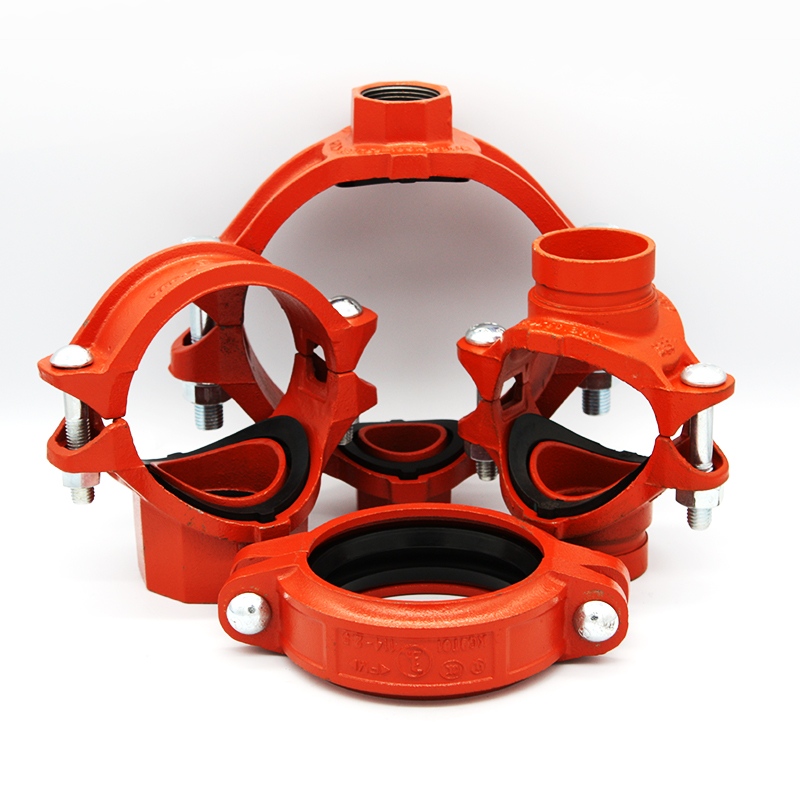
Verify the pipe diameter, system pressure, fluid temperature, and fluid type. Also, check the gasket material, groove dimensions, and necessary safety certificates. The Vicast product lineup features both rigid and flexible couplings. It also offers tees, crosses, flanges, and other grooved fittings.
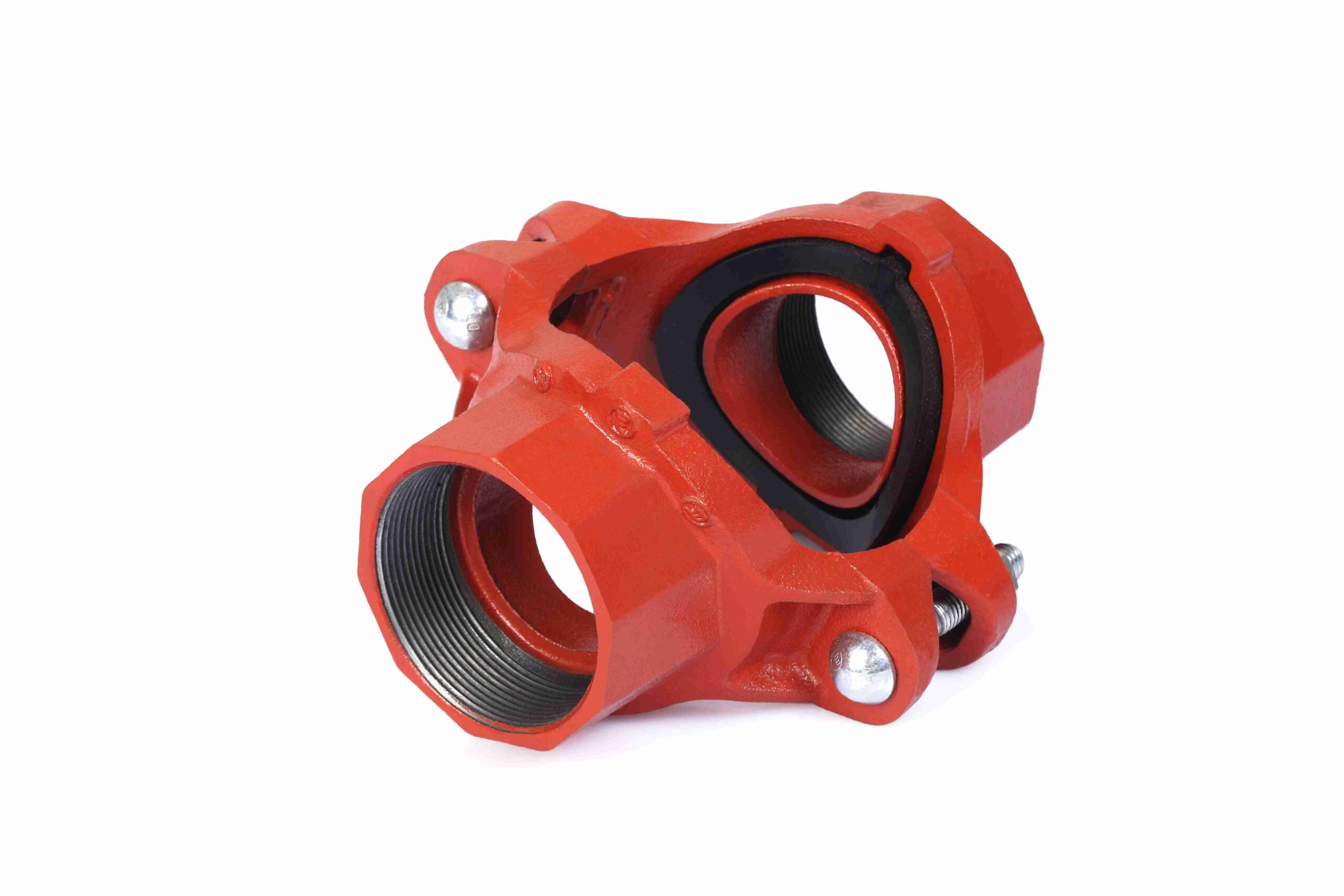
The attached documents display matching elbows, adaptor flanges, mechanical crosses, and threaded mechanical tees. These items use strong ductile-iron materials and follow design rules like ISO 6182 and AWWA C606.
How Is the Pipe Supported?
Flexible joints require accurately positioned anchors, guides, and hangers. This ensures the pipe moves only in the planned direction. Rigid joints also require correct support spacing and weight management. Always discuss the choices with the piping engineer before starting the installation.
Why Choose Hebei Jianzhi Foundry Group Co., Ltd. as a Grooved Coupling Supplier?
A trustworthy supplier should offer matching system parts, steady product quality, and helpful technical advice. They should view the coupling as part of a whole system, not just a single part.
What Makes Jianzhi a Reliable Option?
Hebei Jianzhi Gießerei Gruppe Co., Ltd. manages the Vicast brand. The company delivers rigid and flexible couplings along with grooved elbows, tees, crosses, flanges, and similar accessories. The business notes that it started in 1982. It currently employs thousands of workers and hundreds of technical experts. The brand reaches over 100 countries, helps create industry standards, and holds more than 200 patents.
This massive production facility helps customers find perfectly matched parts for HVAC, fire-protection, water-supply, and factory systems. Vicast also focuses on fast assembly, leak-free seals, tough materials, and easy maintenance for its entire grooved fitting collection.
Schlussfolgerung
Select a rigid grooved coupling for solid, perfectly straight pipe sections that must avoid turning and bending. Choose a flexible grooved coupling when you need to handle controlled shaking, heat expansion, slight alignment issues, or ground settling. Many piping designs use both types. They place rigid couplings in steady areas and flexible couplings at specific movement spots. Always double-check pressure limits, gasket types, movement ranges, pipe supports, and official approvals before you install anything.
Häufig gestellte Fragen
Can Rigid and Flexible Couplings Be Used in the Same System?
Yes. Rigid couplings work well for steady pipe sections. Meanwhile, flexible couplings are installed near machinery or at specific movement zones. Their placement must align with the overall support and movement plan.
Is a Flexible Coupling Always Better for Vibration?
No. The actual results depend on the specific coupling model, the total number used, their exact location, the pipe supports, and the machine causing the vibration. You should always use the manufacturer’s data to plan the setup.
Can a Rigid Coupling Be Replaced Directly with a Flexible One?
Not without a careful check. Swapping them might alter how the pipe moves, change the stress on hangers, affect straightness, and put new pressure on equipment. You must verify the pressure capacity, gasket suitability, groove sizes, and support rules first.