

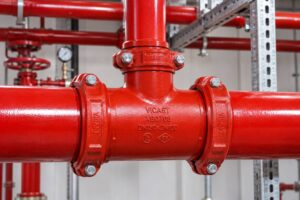
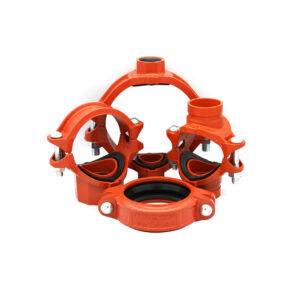
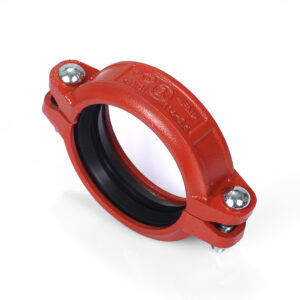
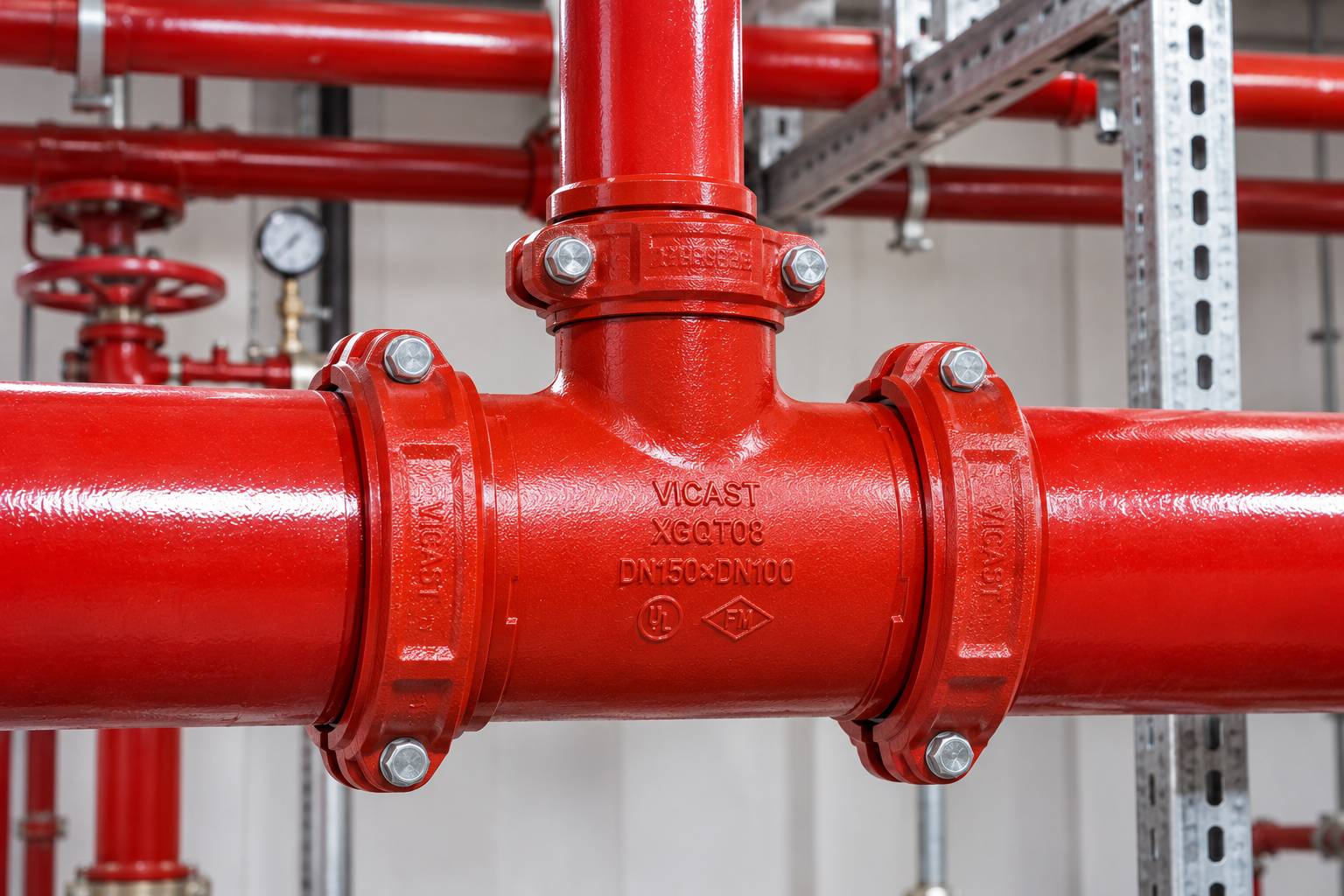
A fire sprinkler main frequently supplies branch pipes. These pipes are usually smaller than the main supply line. This size shift might seem small on a paper drawing. However, it greatly impacts which fitting you order. It also changes how workers measure the pipe spool. Furthermore, it determines if the branch connects easily without extra field rework. A grooved reducing tee creates a clear three-way connection. Its size arrangement differs from a standard equal tee. Contractors and distributors must always verify the exact run-and-branch combination. They should avoid ordering based on just one single nominal diameter. The VICAST XGQT08 grooved reducing tee provides a very reliable, product-specific starting point for this crucial selection.
Why Does a Fire Sprinkler Branch Need a Reducing Tee?
Builders consider a reducing tee when a branch line needs to leave a main pipe at a smaller nominal size. The project designer still needs to determine the overall hydraulic demand. They must also plan the fitting layout and check the approved materials. Only then can they select the final fitting.
How Does It Differ From an Equal Tee?
An equal tee features the exact same nominal size across all three of its openings. In contrast, a reducing tee features a different size setup. It usually keeps the main run size while branching off a smaller pipe. Suppose the building plan requires a larger main and a smaller branch. If you substitute an equal tee there, you might add an unnecessary extra reducer. This mistake can easily alter the available installation space. On the other hand, you cannot assume a reducing tee will match every single run-and-branch size combination. This holds true even if its overall product family covers a very wide range.
Where Is This Arrangement Useful?
You will find this setup in many common situations. These include sprinkler branch takeoffs from large distribution mains. They also include HVAC water branches and complex process piping. In these cases, a smaller line departs from a much larger run. The main benefit here is having a well-defined three-way fitting right at the planned branch spot. However, the true suitability of that specific layout still relies on careful hydraulic calculations. It also depends on available physical clearance, proper support locations, and the final project-approved design.
What Dimensions Must Buyers Confirm Before Ordering?
A simple product name alone never serves as a complete purchase specification. The final quotation must clearly identify all three connection sizes. It should also detail the mating pipe specifics. This includes any noted differences between the stated nominal size and the actual outside diameter.
Why Are Run Size and Branch Size Separate Requirements?
A basic request like “DN100 reducing tee” fails to establish the actual branch diameter. It also misses the complete fitting geometry. Buyers need to clearly show the run-end sizes along with the branch outlet. They should present this as a clear three-part size combination. They must use the specific notation found in the current supplier drawing. Sometimes a project requires multiple branches. In that scenario, every distinct combination requires its own precise quantity. This practice becomes highly important when the original material list relies on brief shorthand descriptions.
How Do Groove Dimensions Affect Fit?
The pipe outside diameter, the groove geometry, and the sealing surfaces must all be fully compatible. The mating grooved components must match as well. A product identified simply as DN100 does not automatically fit every pipe outside-diameter convention. Workshop teams should always verify the actual pipe and coupling dimensions. They must not rely solely on the brief description printed on a shipping carton. Sometimes the groove itself is simply not acceptable. If that happens, extra bolt tightening cannot fix the underlying physical mismatch.
Which VICAST Reducing Tee Specifications Are Relevant?
The VICAST’s catalog shows that the XGQT08 grooved reducing tee is available in family sizes from 2 in. to 12 in. (DN50-DN300). The published temperature range is -20°F to 180°F (-29°C to 82°C). The material standards used are ASTM A536 Grade 65-45-12 and ASTM A395 Grade 65-45-15. The design standards include ISO 6182, AWWA C606, and GB 5135.11. It should be noted that these family standards do not confirm that each three-way size combination is available.
Do Referenced Standards Prove Project Approval?
They do not prove approval by themselves. A standard cited on a web product page is quite different from a current third-party approval. That approval might not cover every size, specific configuration, coating, or field application. Fire protection buyers should always request the exact technical data sheet. They also need accurate working-pressure information. Furthermore, they should ask for all relevant certificates or listings. They must carefully check the true scope of those documents. Ultimately, the lead project engineer or the authority having jurisdiction must actively confirm full acceptability.
Could an Equal Tee Plus Reducer Be Used Instead?
Sometimes an approved piping design might permit an XGQT07 equal tee. A separate transition piece would then follow it. However, that method adds another distinct fitting and an extra joint. It also alters the required straight-pipe length and affects future service access. A grooved eccentric reducer functions as a completely separate type of in-line size transition. It certainly does not replace a true three-way branch fitting. Smart contractors should always compare the entire complete arrangement. They should never look at just the initial purchase price of one single component.
What Installation Problems Can a Reducing Tee Prevent?
Correctly specified fittings greatly reduce many common site risks. They lower the chance of an installer finding a mismatched branch centerline. They also prevent issues where the pipe end or groove fails to match the original drawing. However, picking the right tee is merely the very first step. Careful pipe preparation and precise physical alignment remain absolutely necessary for success.
Why Does Branch Orientation Matter?
Before starting prefabrication, workers must mark the precise branch direction. They should also note its exact distance from nearby elbows, heavy valves, solid walls, and pipe hangers. A tee rotated incorrectly within a spool causes major trouble. It can easily leave the branch aimed right toward a hard structural element. It might also point completely beyond the installer’s safe working space. The best solution here is proper fabrication verification beforehand. Workers must never try forcing the connected pipe into forced alignment with its metal fasteners.
What Should Be Checked Before Pressure Testing?
You must carefully inspect each prepared groove. Then, you need to confirm that workers used the correct mating components. You also must check that the installed supports carry the heavy pipe load exactly as designed. All rubber gaskets should perfectly match the intended fluid medium and the expected temperature. Furthermore, the actual installation must strictly follow the relevant manufacturer instructions. The final testing phase should utilize the official approved system procedure. It must always stay safely within the permissible pressure limits of the full pipe assembly.
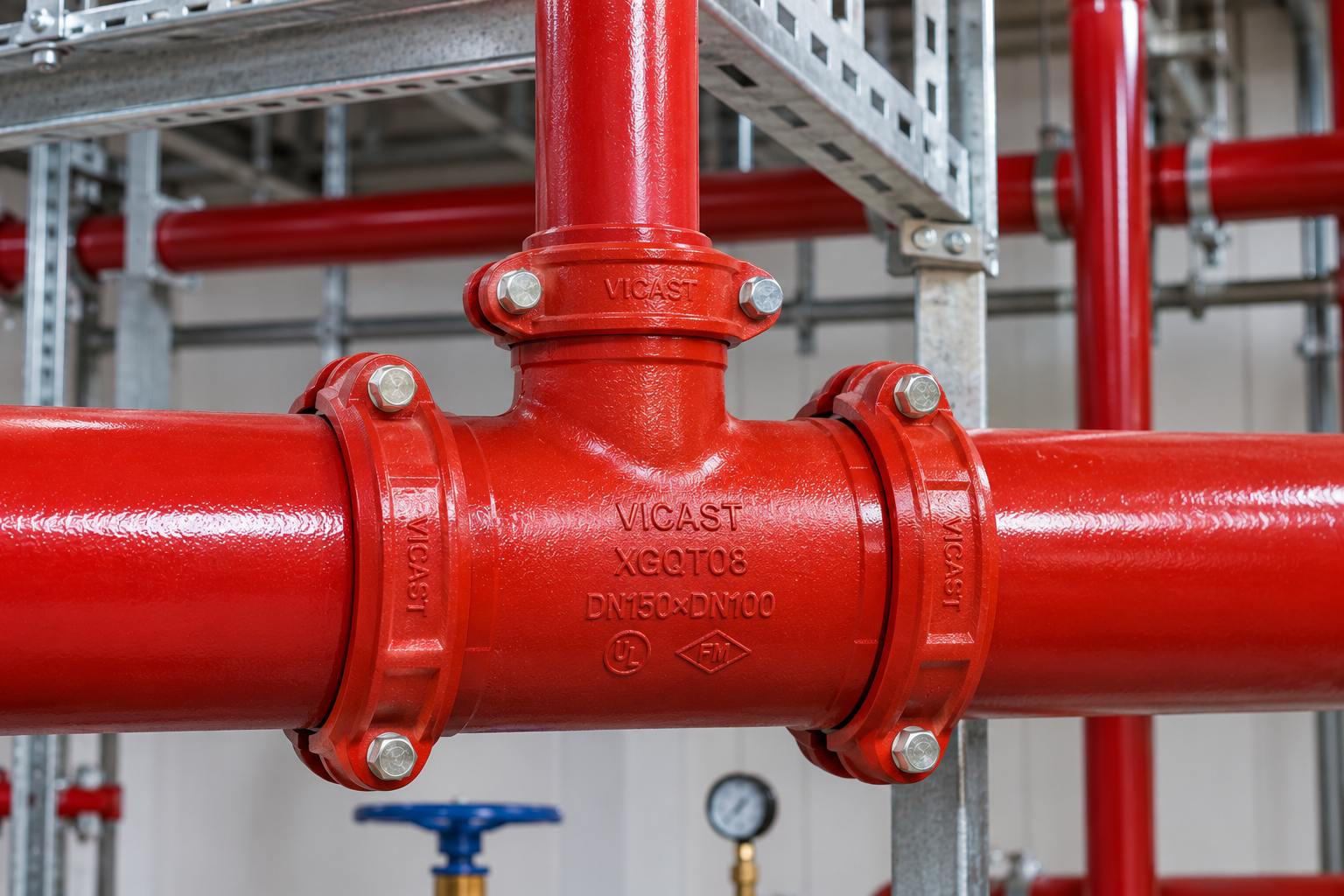
Why Source Grooved Reducing Tees From VICAST?
Hebei Jianzhi Gießerei Gruppe Co., Ltd. reliably supplies many grooved piping products. They sell these items under the well-known VICAST brand. Its comprehensive grooved fitting range includes clearly defined tee and reducer models. This variety allows project buyers to easily request exact drawings. They can also get specific technical details for their intended configuration. The company proudly states that its pipe-fitting manufacturing history dates back to 1982. For international buyers, there is a very practical advantage here. They can secure crucial model-specific information long before finalizing a complex bill of materials.
Schlussfolgerung
A grooved reducing tee proves highly useful on many jobs. It helps when a smaller branch needs to leave a much larger pipe run. However, successful selection demands much more than just naming the main pipe diameter. Buyers must specify all three distinct connection sizes. They also need to list the actual pipe outside diameters and exact groove requirements. Furthermore, they must state the pressure limits, temperature limits, required project approvals, and correct branch orientation. Buyers should evaluate the XGQT08 grooved reducing tee using its current technical drawings and detailed size tables. They should never rely on a vague, generic catalogue description. That careful approach helps busy contractors avoid unwanted substitutions. It also keeps the final branch layout perfectly aligned with the approved engineering design.
Häufig gestellte Fragen
Can a Reducing Tee Replace an Equal Tee in Every Sprinkler Layout?
No, it cannot. The required branch diameter and the available size combination matter greatly. The specific groove details and the final approved design also play a role. Together, these factors determine whether a reducing tee is truly suitable for the job.
Does DN100 Identify the Complete Tee Size?
No, it does not. Smart buyers should clearly state both run ends and the specific branch outlet. They must also provide the actual outside diameter wherever it truly matters for the connection.
Does AWWA C606 Mean Every Reducing Tee Is Approved for Fire Protection?
No, it does not mean that. It is simply a referenced groove-related standard. True project acceptability also depends heavily on the exact product model. It relies on the required safety listings and the tested pressure rating. Finally, it depends on strict local approval requirements.
SEO Keywords:
grooved reducing tee
reducing tee for fire sprinkler
XGQT08 reducing tee
grooved reducing tee vs equal tee
fire sprinkler branch line fitting