
If you’ve ever walked through a ceiling crawlspace during a fire protection installation, you know it’s not a glamorous job. Low clearance, insulation shedding everywhere, cables in the way—and a very clear message from the building owner: “Don’t disrupt business, and don’t trigger any alarms.”
That’s where the way pipes are connected suddenly matters more than most people think.
For years, welded joints were the “default” choice in fire sprinkler systems. Strong? Yes. Familiar? Absolutely. But as jobsite rules changed—especially in places like hospitals, malls, airports, and other high-traffic buildings—welded connections started to feel more like a liability.
Today, grooved flanges are steadily moving into the spotlight, and it’s not a trend based on convenience. They’re faster, safer, and frankly, far more practical for the way modern fire protection work actually happens.
Let’s take an unvarnished look at why grooved flanges are winning… and why welded connections are increasingly limited to only a few scenarios.
Why Fire Protection Installers Are Moving Away from Welding
One thing that hasn’t changed is the pressure on installers:
Fire systems have to be up and running fast, and they must stay compliant forever. But the environment installers work in has changed dramatically.
Fire protection teams now frequently deal with:
- Occupied buildings
- “No hot work” zones
- Strict safety coordinators
- Tight installation schedules
- Night-shift-only work windows
- Ceilings packed with MEP equipment
If you’ve ever tried to weld in a retail store at 2 a.m. while trying not to set off a smoke alarm, you already know welded connections aren’t always welcome.
Grooved flanges solve nearly all of these headaches.
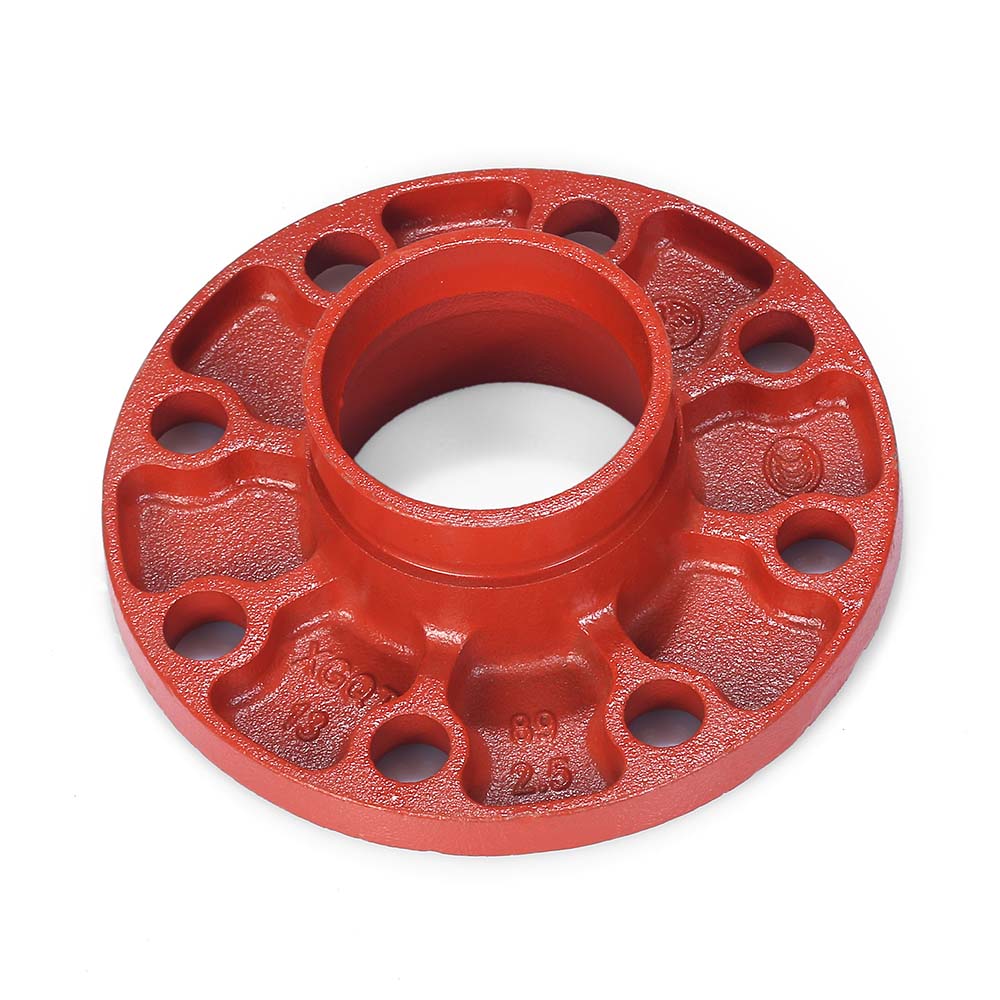
The Practical, No-Nonsense Advantages of Grooved Flanges
To understand why grooved flanges work so well in fire protection systems, it helps to step out of the design office and think like a field installer.
Installation Speed: Grooved Flanges Simply Move Faster
A welded joint can easily take half an hour—or longer—once you include:
- Surface prep
- Fit-up
- Welding
- Cooling
- Visual inspection
- Fire watch documentation
A grooved flange?
Often under five minutes start to finish.
Groove the pipe → align the flange → drop in the gasket → tighten bolts.
No sparks, no smoke, no trips to find a welding curtain.
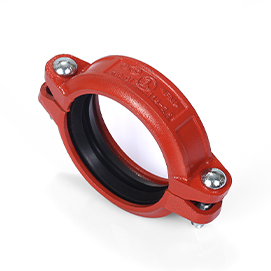
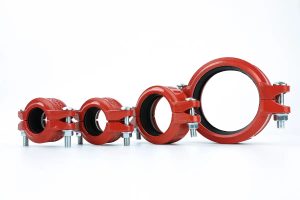
The grooved flanges shown in your uploaded technical file are cast from ASTM A536 65-45-12 and ASTM A395 65-45-15 ductile iron, built for mechanical jointing under fire-protection standards like ISO 6182 and AWWA C606.
In real jobs, that translates to cleaner installations with fewer delays.
A Much Safer Option—Especially in Occupied Buildings
Here’s the biggest practical difference:
Welding introduces risks that building owners no longer tolerate.
In hospitals, schools, data centers, supermarkets, and malls, you’ll often hear:
“No open flame. No sparks. No exceptions.”
It’s not hard to understand why:
- Sparks can ignite ceiling insulation
- Weld fumes can drift into air systems
- Fire alarms can trigger evacuations
- Hot work increases insurance liability
- Welding requires shutdown permits and fire watch teams
When you switch to grooved flanges, the risk disappears. Installers keep working during the day, tenants stay inside, and no one has to chase fire marshals for signatures.
This alone explains why grooved flanges dominate in renovation and retrofit projects.
Faster Repairs and Less Downtime for Critical Buildings
Imagine repairing a welded joint in a children’s hospital.
Or in an airport terminal where flights can’t stop.
Or in a mall during holiday season.
Welding slows everything down because:
- The area must be isolated
- People must be cleared from the vicinity
- Alarms may need to be put into bypass
- Fire watches must be scheduled
- Cleanup is required
Grooved flanges allow quick cut-in repairs:
- Shut down a branch
- Remove the damaged section
- Reinstall with grooved flanges
- Bring the system back online
No need to evacuate anyone.
No “return after hours.”
No fire alarm reprogramming.
Strong, Reliable, and Designed for Fire-System Pressure
Sprinkler mains aren’t gentle systems. They experience static pressure, surge pressure, pump startup vibration, and occasional shock loads.
Grooved flanges built under fire protection standards feature:
- High-strength ductile iron
- Machined grooves with tight tolerances
- Robust gasket compression
- Excellent mechanical engagement under pressure
The result is a connection that performs exceptionally well under typical sprinkler pressures (175–300 psi).
Fire protection engineers appreciate a joint that behaves predictably even after decades of service.
Maintenance and System Changes Are Simpler
Every fire protection system eventually needs modifications:
- New tenants alter layouts
- Storefronts get remodeled
- Hospitals add diagnostic equipment
- Warehouses add storage height
Cutting out welded joints feels like surgery.
Removing grooved flanges feels more like normal maintenance.
Unbolt → swap component → tighten bolts.
The simplicity becomes a huge long-term advantage—especially in buildings that constantly evolve.
Where Welded Connections Still Make Sense (But Rarely for Sprinklers)
Welding still has a place in:
- High-temperature industrial processes
- Specialized high-pressure steam lines
- Custom fabrications or transitions
But fire sprinkler systems are not high-temperature environments, and their pressure requirements fit perfectly within the performance range grooved flanges are engineered for.
Given that grooved joints are faster, safer, and easier to maintain, it’s no surprise that the fire protection industry increasingly favors mechanical connections.
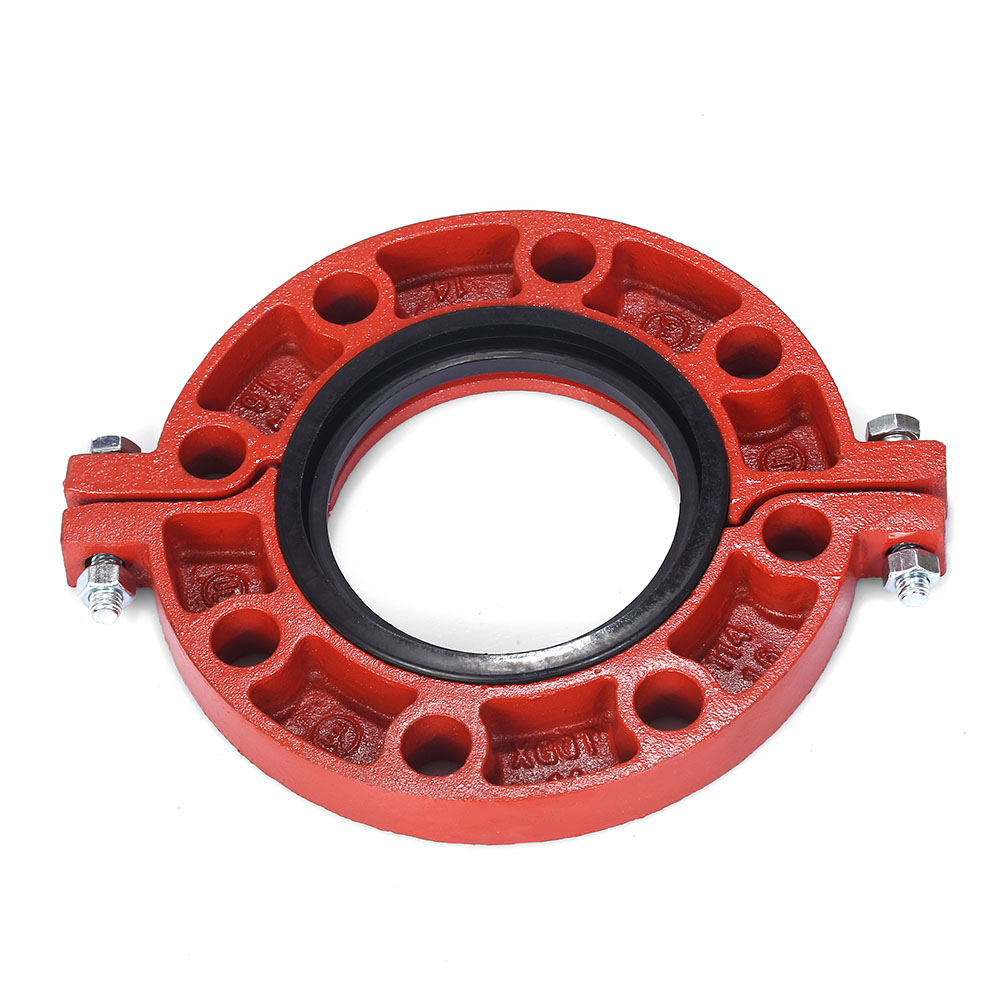
About Hebei Jianzhi Foundry Group Co., Ltd
Founded in 1982, Hebei Jianzhi Foundry Group Co., Ltd has grown into a trusted manufacturer of ductile iron grooved piping components serving fire protection, HVAC, water supply, and industrial piping projects worldwide.
What sets the company apart is its combination of:
- Deep foundry expertise
- High-quality ductile iron materials
- Precision machining
- Consistent casting control
- Compliance with international standards
- Production scale that supports large commercial projects
Jianzhi’s grooved flanges offer the durability, dimensional accuracy, and long-term stability needed in systems where leaks simply aren’t acceptable.
For engineers, contractors, and system designers looking for reliability with a long service life, Jianzhi remains a dependable partner.
Conclusion
Fire protection systems are built to save lives, and every component—from pipes to pumps to joints—must function without fail. Welded connections have served the industry well for decades, but the demands on installers have changed dramatically. Today’s environments call for faster installation, greater safety, and easier maintenance—all strengths of grooved flanges.
They eliminate hot work.
They reduce project downtime.
They make fire protection upgrades more manageable.
And with high-quality products from manufacturers like Hebei Jianzhi Foundry Group Co., Ltd, they offer the long-term reliability modern buildings require.
Grooved flanges are no longer just an alternative—they’re becoming the preferred standard.
FAQs
Why are grooved flanges considered safer than welded connections in fire protection systems?
They eliminate hot work, which means no sparks, flames, or welding hazards—ideal for hospitals, malls, and other occupied buildings.
Do grooved flanges work well under high sprinkler-system pressure?
Yes. Ductile iron grooved flanges designed to ISO and AWWA fire-system standards offer strong sealing and mechanical performance.
Are grooved flanges faster to install than welded joints?
Much faster. Grooved connections often take only minutes, compared to the lengthy prep and inspection required for welding.
Can grooved flanges simplify fire system repairs?
Absolutely. They can be disassembled with basic tools, allowing faster upgrades and reducing downtime for critical buildings.
What makes Hebei Jianzhi a reliable source for grooved flanges?
Their casting quality, material consistency, and strict adherence to fire protection standards make their products dependable for long-term use.