
When crews tackle industrial pipe retrofits, the pressure hits hard: upgrade old lines without shutting down operations for long, squeeze into tight spots around existing equipment, deal with misaligned or worn-out sections, and keep budgets in check. Grooved couplings versus flanged connections often becomes the deciding factor in these upgrades. Grooved couplings join pipes through pre-grooved ends, a compressed gasket, and bolted housings that lock everything together mechanically. Flanged connections bolt flat faces with gaskets in between. Across many industrial pipe retrofits heading into 2026, grooved couplings deliver noticeable edges in installation speed, system flexibility, and total ownership cost, although flanged setups still hold firm in extreme high-pressure or fully rigid requirements.
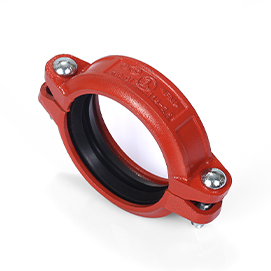
Grooved Couplings vs Flanged Connections: Core Dimension Comparison
Breaking down the key differences side by side reveals patterns seen repeatedly on job sites. The following table pulls from field experience and standard observations on how these joints perform during upgrades.
| Dimension | Grooved Couplings | Flanged Connections | Retrofit Winner & Reasoning |
| Installation Time | Usually 3–6 times quicker; frequently just 2–4 bolts per connection | Involves numerous bolts, precise alignment, and sequential torquing | Grooved – dramatically shortens shutdown periods in operating facilities |
| Space Requirements | Compact housings stay close to pipe diameter | Flanges extend roughly twice the pipe OD; bolt access needs extra room | Grooved – fits better in congested mechanical rooms or overhead racks |
| Alignment Tolerance | Substantial; full 360° rotation handles offsets easily | Minimal; bolt holes demand near-perfect matching | Grooved – copes with settled or deformed legacy piping typical in retrofits |
| Vibration & Thermal Movement | Flexible versions dampen shocks and allow expansion | Rigid transfer of forces; prone to bolt loosening over cycles | Grooved – cuts down on gradual leaks from pumps or temperature swings |
| Maintenance & Disassembly | Straightforward; release a couple bolts for access | Labor-intensive; multiple bolts require re-torquing | Grooved – speeds up frequent pump or valve servicing |
| Initial Material Cost | Moderate; ductile iron varieties competitive in volume | Often lower piece price | Varies by project scale; grooved gains ground through labor reductions |
| Total Ownership Cost | Reduced from faster work and fewer follow-up fixes | Elevated due to extended install and periodic tightening | Grooved prevails in most retrofits |
| Pressure/Temperature Range | Covers up to around 1000 psi commonly; gasket limits apply | Excels in very high-pressure extremes | Flanged for ultra-high cases; grooved meets standard industrial medium-pressure demands |
| Hybrid System Transitions | Straightforward via grooved flange adapters | More involved without transition pieces | Grooved – simplifies tying into existing flanged valves or pumps |
These contrasts explain why grooved couplings frequently surface as the go-to for upgrading industrial piping.
Why Grooved Couplings Often Excel in Retrofit Scenarios
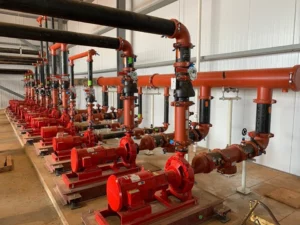
Retrofits carry unique headaches compared to greenfield work. Pipes have settled over years, flanges warp from heat cycles, access gets blocked by machinery, and every extra hour offline costs production. Grooved couplings tackle these head-on with their mechanical design.
The joint assembles without forcing bolt-hole alignment—pipe ends butt together, gasket seats, housings clamp, and bolts tighten. In one wastewater facility upgrade, teams replaced corroded feed lines to pumps; slight misalignments from decades of operation posed no issue since grooved allowed rotation and offset tolerance, skipping extensive cutting and re-preparation that would have dragged the outage longer.
Vibration handling proves another strong point. Flexible grooved couplings use elastomeric gaskets that span pipe gaps and absorb movement from compressors, mixers, or flow surges. Flanged joints pass those forces straight through, leading to bolt relaxation and eventual leaks that require scheduled re-torquing—disruptive in continuous-run plants.
Tight spaces amplify the difference. Flange OD balloons out, making routing awkward near ceilings or racks. Grooved housings hug the pipe more closely, often avoiding the need for rerouting or structural tweaks.
No hot work required stands out in occupied sites. Roll-grooving tools prep ends quickly—no welding means skipping fire permits, watchmen, and ventilation hassles in food plants or chemical areas during modifications.
Transitions shine too. Grooved flange adapters link new grooved runs directly to old flanged boilers or valves. During a steam line modernization in a processing plant, adapters bridged the gap without tearing apart large sections.
Flanged connections maintain an edge in ultra-high-pressure lines beyond common grooved ratings or where complete rigidity blocks any deflection. Yet for typical medium-pressure industrial retrofits—HVAC loops, water circulation, process utilities—grooved delivers solid sealing with far less hassle.
Looking toward 2026, stable ductile iron supply from established producers keeps pricing predictable. Regulations favoring reduced emissions push flame-free methods, and the push for minimal-downtime upgrades aligns squarely with grooved characteristics.
Real-World Examples and Supporting Data
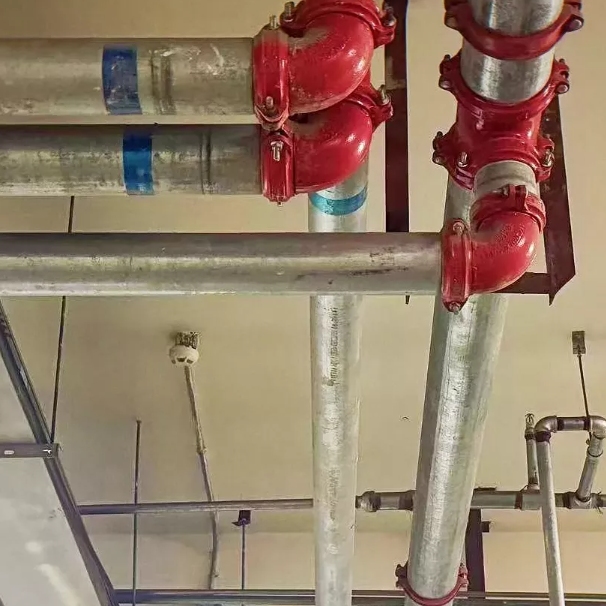
Field results back up the patterns. In a chemical plant cooling water retrofit, original flanged joints had loosened from thermal stress. Switching sections to grooved halved installation time per run—crews wrapped shifts without overtime, and nearby agitator vibration stopped causing issues thanks to flexible damping.
Wastewater pump swaps illustrate downtime cuts. One operation dropped replacement from multi-day to hours using grooved connections—quick disassembly and reassembly minimized flushing and recommissioning.
Installation benchmarks show clear gaps: smaller grooved joints finish in minutes where flanged take nearly an hour. For 6-inch lines, grooved often clocks under 20 minutes versus longer for flanged. These translate to 25–40% project cost reductions in retrofits, driven by labor hours and avoided production losses.
Visual confirmation helps too—when housing pads seat metal-to-metal, the joint registers properly, reducing guesswork compared to torque-only checks.
Actionable Solutions: Choosing and Implementing in Your Retrofit Project
Selection follows a practical sequence on site.
Start with system specs: pressure class, temperature range, vibration exposure. Most retrofits sit in medium zones where grooved handles reliably.
Inspect conditions: gauge clearance, assess alignment and corrosion, note any deformation.
Run total cost numbers: include labor rates, downtime value per hour, expected maintenance intervals.
Map transitions: identify where adapters bridge to flanged components.
For grooved rollout:
- Check pipe ends for groove readiness; roll-groove clean sections or cut if necessary.
- Position adapters for hybrid tie-ins to legacy flanged gear.
- Assemble methodically: clean surfaces, seat gasket correctly, align housings, tighten bolts in cross pattern to manufacturer torque.
- Steer clear of errors: verify gasket placement, confirm full housing contact, conduct pressure tests post-assembly.
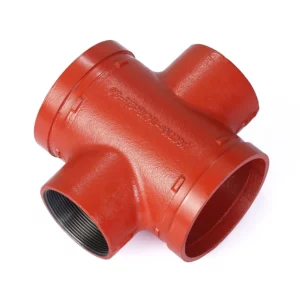
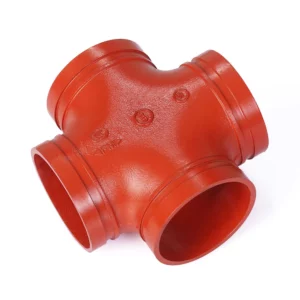
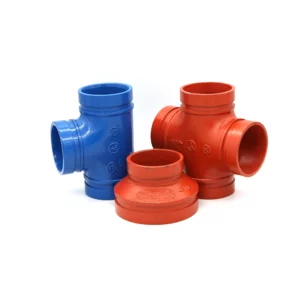
Ductile iron grooved couplings from proven sources provide the backbone here. Hebei Jianzhi Foundry Group Co., Ltd., operating under the Vicast brand, has manufactured Jianzhi pipe fittings since 1982, accumulating over four decades of specialized production. Spanning large facilities in Hebei and Inner Mongolia, the company produces ductile iron grooved couplings, mechanical tees, crosses, grooved flanges, and connect fittings at scale. Certified to ISO 9001 for quality and ISO 14001 for environment, Vicast holds numerous patents, contributes to national and industry standards, and qualifies as a high-tech enterprise. Products reach distributors in more than 100 countries, emphasizing consistent performance for industrial demands.
Conclusion
Across the majority of industrial pipe retrofits, grooved couplings emerge as the stronger practical option entering 2026. They slash installation durations, accommodate imperfections in aging systems, manage vibration effectively, and drive down lifetime costs without compromising joint integrity. Flanged connections remain appropriate for extreme pressures or zero-movement needs, but grooved strikes the right balance of efficiency, adaptability, and reliability for upgrade work. Project details—pressure demands, spatial constraints, allowable downtime—ultimately shape the choice, yet grooved consistently yields tangible benefits.
Hebei Jianzhi Foundry Group Co., Ltd. (Vicast) supplies field-tested ductile iron grooved solutions, equipping engineers and contractors with fittings rooted in long-term manufacturing expertise.
FAQs
Are grooved couplings suitable for industrial pipe retrofits involving old flanged systems?
Yes, grooved flange adapters handle transitions effectively in most cases. They connect new grooved sections to existing flanged equipment directly, reducing modifications and preserving legacy components during upgrades.
How much faster is grooved coupling installation compared to flanged in retrofits?
Grooved joints commonly install 3–6 times faster, varying by diameter. Smaller sizes finish in minutes, while flanged equivalents approach an hour, substantially lowering overall downtime in active industrial settings.
What are the main advantages of grooved couplings over flanged for vibration-heavy industrial retrofits?
Flexible grooved couplings absorb shocks and thermal shifts via gasket design, minimizing leak risks from loosened bolts. Flanged joints transmit vibration more directly, often necessitating regular re-tightening to sustain seals.
When should flanged connections still be chosen over grooved in industrial pipe retrofits?
Choose flanged for ultra-high-pressure applications exceeding standard grooved limits or where absolute rigidity prevents deflection. In typical medium-pressure retrofits, grooved supplies adequate strength alongside greater practicality.
Do grooved couplings reduce total costs in industrial pipe retrofits?
They generally do. While material pricing may run slightly higher initially, reductions in labor time, shorter outages, and decreased maintenance often result in 25–40% lower overall project expenses for retrofit scenarios.