
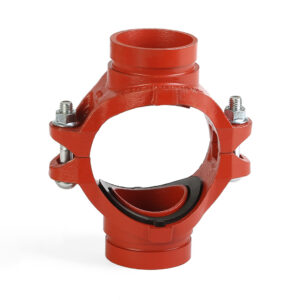


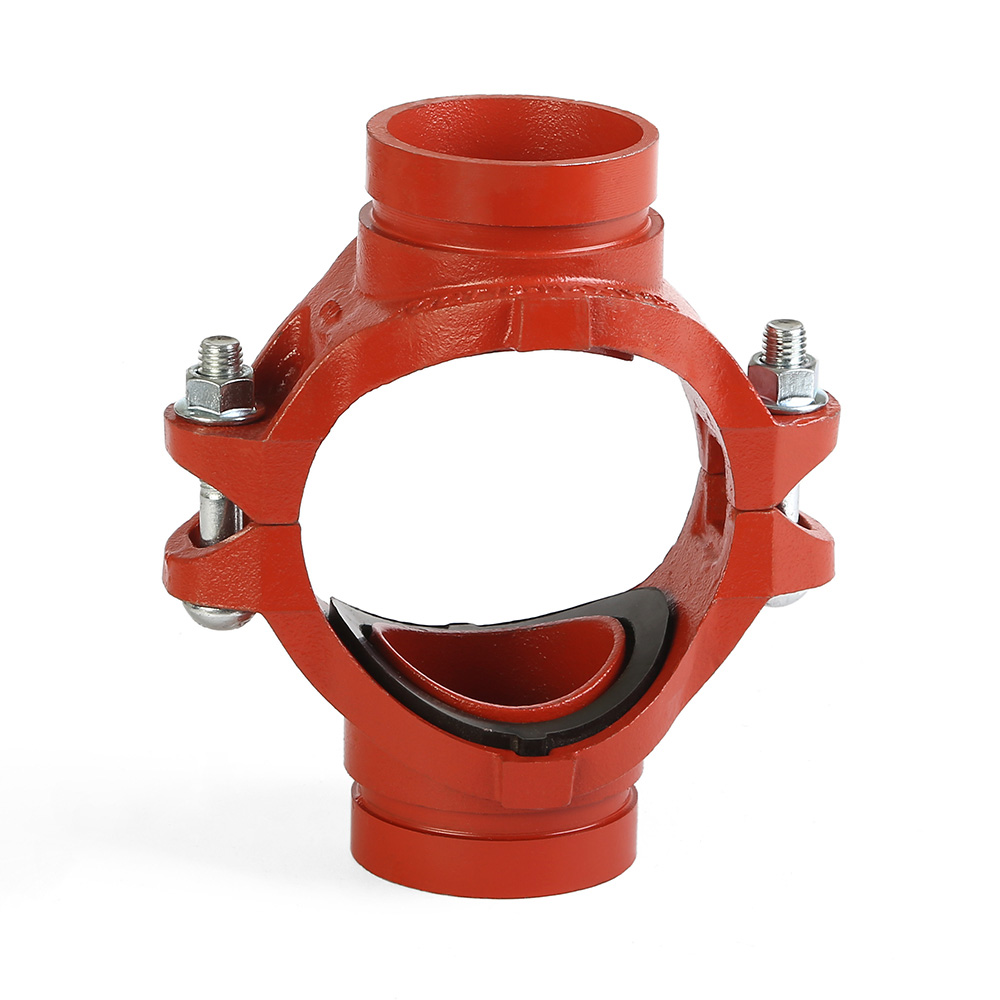
A mechanical cross forms two opposing branch outlets from one section of a run pipe. That compact arrangement can simplify a crowded fire protection or HVAC layout, but it places unusual importance on pipe opening preparation. The two openings must be positioned correctly, their edges must be suitable for sealing, and the housings must seat without forcing the branches out of alignment. Contractors should follow the instructions for the exact product and size rather than relying on a generic hole dimension or visual estimate.
Why Is Opposite-Hole Alignment Critical for a Mechanical Cross?
A mechanical cross must locate two outlet necks or sealing areas around opposite openings in the same run pipe. If the openings are not centered as required, one side may appear seated while the other side is displaced. This can interfere with gasket contact, housing fit, branch alignment, and the effective opening available to the flow path.
What Can Happen When the Openings Are Misaligned?
Misalignment can make the housing difficult to assemble evenly. It may pull a branch off its intended centerline, place uneven compression around the sealing area, or leave a locating feature unable to enter the opening correctly. Tightening the bolts harder is not a proper correction. The pipe and openings should be inspected before the fitting is assembled.
Should Contractors Use the Outlet Size as the Hole Size?
No. Nominal branch size describes the connection, not necessarily the required opening in the run pipe. Hole dimensions are specific to the manufacturer, model, run size, and outlet combination. Using an assumed hole saw can create an opening that is too small, too large, or unsuitable for the locating and sealing geometry.
How Should the Pipe Be Marked Before Cutting?
Begin with the approved coordinated drawing and the current installation information for the selected mechanical cross. Confirm run-pipe size and outside diameter, branch sizes, fitting orientation, and available clearance. Support and stabilize the pipe before measuring so that movement does not change the marks during cutting.
How Can Opposite Centerlines Be Established?
Mark the first branch centerline and transfer the reference around the pipe using a suitable wraparound, square, template, or manufacturer-approved tool. Establish the opposite point from the same reference rather than measuring each side independently from nearby building features. The method should produce opposite marks on the required pipe plane and preserve the intended branch direction.
Why Should Clearance Be Checked Before Drilling?
The completed cross needs room for both housings, bolts, tools, gaskets, connected branches, and inspection. A theoretically correct centerline may still be unusable if one outlet faces structure, ductwork, cable tray, or another fitting. Checking the full assembly envelope before cutting prevents an opening from being placed where the product cannot be installed or serviced.
What Should Contractors Check While Preparing the Openings?
Use the cutting method and opening dimensions specified for the exact fitting. Keep the tool stable and square to the pipe surface. After cutting, account for both removed pipe coupons and all loose chips so that debris does not remain inside the system. The work area should be safe, accessible, and isolated according to the project procedure.
Why Must Burrs and Sharp Edges Be Removed?
Burrs, rough edges, and projections can damage the gasket or prevent the outlet area from seating properly. Clean the opening and the surrounding pipe surface without enlarging the hole beyond the permitted limit. Heavy coating buildup, scale, dents, or deep scratches near the sealing area should also be evaluated before assembly.
How Should the Two Openings Be Compared?
Verify each opening against the manufacturer’s permitted dimensions, then check their relative position. A template, approved gauge, or trial location check can reveal whether both sides align before final assembly. If an opening is outside tolerance, stop and follow the approved corrective procedure. Do not reshape it casually or rely on bolt force to hide the error.
How Should the Mechanical Cross Be Positioned and Assembled?
Inspect the fitting, gaskets, bolts, and prepared pipe surface before installation. Position the outlet sections so their locating features engage the openings as designed. Keep the two branch connections on the intended centerline and bring the housings together evenly. Pipe supports should maintain alignment without transferring equipment weight or major side load into the cross.
What Should Be Checked Before Final Tightening?
Confirm that both sides are seated, gaskets are correctly positioned, housings are not rocking, hardware is properly installed, and branches remain aligned. Tighten only according to the instructions for the exact product. Generic torque values from another fitting or manufacturer should not be used. Inspect the completed assembly from both sides before the system test.
What Does VICAST Document for the XGQT18?
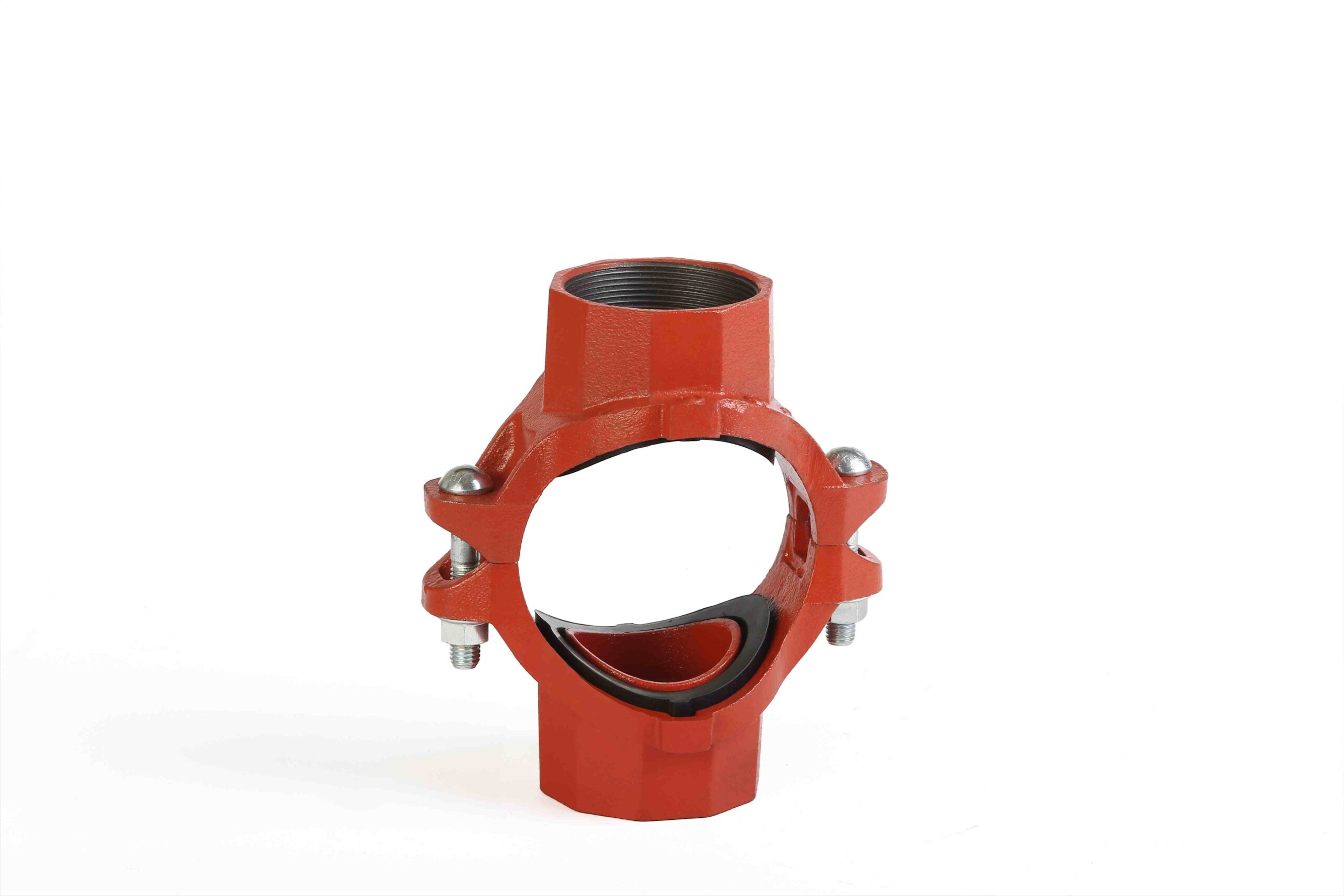
The VICAST XGQT18 grooved mechanical cross is documented in sizes from 2 to 10 inches, or DN50 to DN250, for HVAC, fire protection, and industrial systems. Its product information lists ASTM A536 Grade 65-45-12 and ASTM A395 Grade 65-45-15 and references ISO 6182, AWWA C606, and GB 5135.11. Exact opening dimensions, size combinations, pressure limits, gasket requirements, and installation criteria should be taken from the current data for the ordered configuration.
Why Consider VICAST for Mechanical Crosses?
Hebei Jianzhi Foundry Group Co., Ltd. supplies grooved pipe fittings under the VICAST brand. Buyers and contractors can use the documented mechanical cross product range together with project specifications when selecting a branch configuration. For product selection beyond installation geometry, VICAST also provides guidance on mechanical cross pressure ratings and materials.
Conclusion
Reliable mechanical cross installation begins before the fitting reaches the pipe. Contractors must confirm the exact product and size, establish one accurate pipe reference, transfer the opposing centerline, verify assembly clearance, cut both openings to manufacturer requirements, remove debris and burrs, and check relative alignment before tightening. If either opening is outside tolerance, the correct response is to stop and follow an approved repair or replacement procedure. Careful preparation protects the gasket, housing fit, branch alignment, and final inspection outcome.
Questions fréquentes
Can two mechanical cross openings be marked separately?
They should be established from the same controlled pipe reference so that the required opposite alignment is maintained. Follow the manufacturer’s marking and installation procedure.
Can bolts pull a misaligned mechanical cross into position?
No. Bolts should not be used to correct inaccurate openings, major branch misalignment, or poor support. Inspect and correct the pipe preparation through an approved procedure before assembly.
What should be checked before pressure testing?
Verify both housings and locating features, gasket position, hardware installation, branch alignment, pipe supports, opening preparation, and all manufacturer inspection criteria before testing under the approved project procedure.