
In fire protection systems, picking the proper joints often determines whether a setup holds up during emergencies or falters when pressures peak. Rigid vs flexible grooved coupling emerges as a pivotal choice for those designing or maintaining sprinkler networks. These mechanical connections link pipes without the hassle of welding, delivering speed in assembly while meeting demands for either rock-solid hold or some give under strain. Grasping what sets them apart aids in hitting code requirements and boosting performance in critical setups.
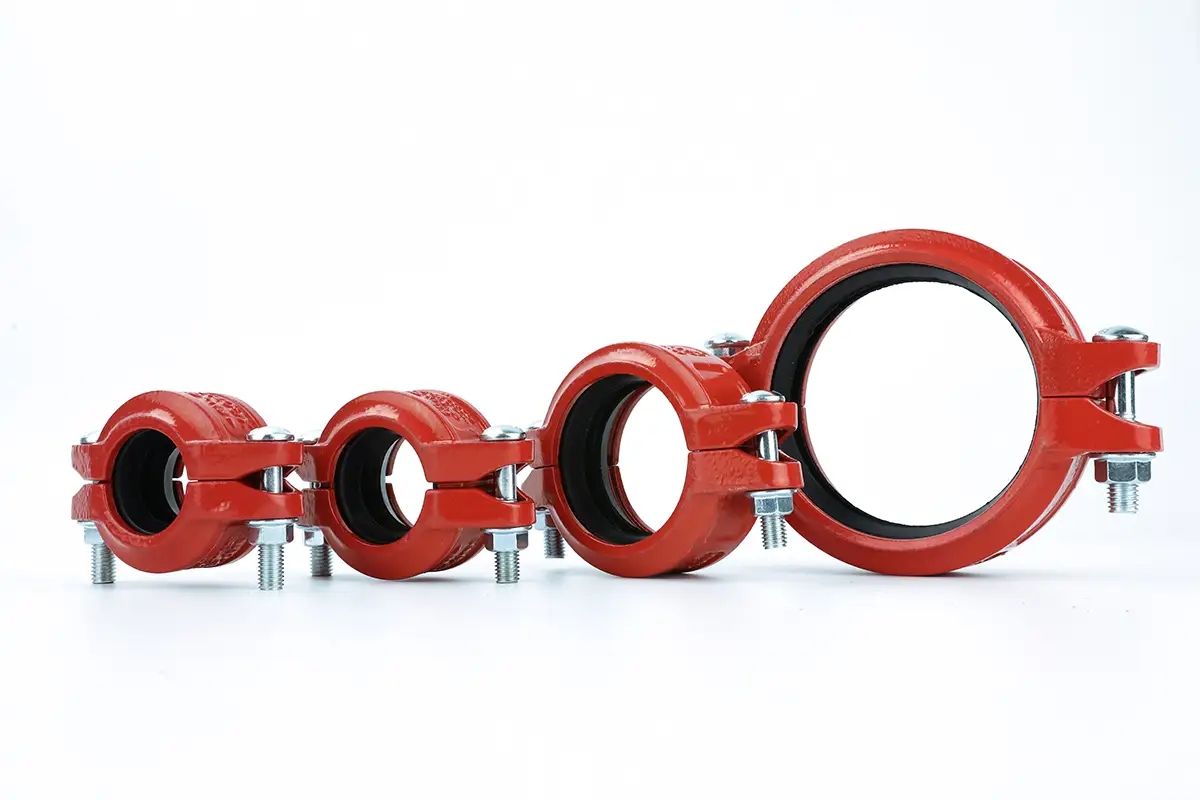
What Are Grooved Couplings? Essential Basics
Grooved couplings form a key element in today’s piping arrangements, especially for fire suppression tasks. The setup involves a housing that clamps over grooved ends of pipes, fastened with bolts to seal the joint. Those grooves get rolled or machined into the pipe, providing a secure mechanical bite that stands up to internal forces. In fire protection scenarios, where water must surge through without delay, these couplings bypass welding on site, which might weaken materials from heat or slow down the job.
Professionals lean toward grooved systems since they slash setup times—frequently by as much as half against older approaches. Envision a sprawling industrial plant in build phase: teams piece together segments fast, running leak checks right there. The configuration permits taking apart for upkeep, a real advantage in spots like data centers where interruptions need to be brief. Built from ductile iron, they hold strong, with protective layers fending off rust in moist sprinkler conduits.
Digging deeper, these couplings mesh with strict regulations. They endure hydrostatic pressures well beyond everyday ops, say testing at 200 psi for a 175 psi rated line, verifying strength prior to go-live. That dependability comes from exact specs, including groove depths around 0.06 inches, which directly impact how well the joint grips.
Rigid vs Flexible Grooved Couplings: Core Differences
Diving into rigid and flexible grooved couplings, the main split centers on managing pipe shifts. Rigid models secure pipes in place without budge, echoing the firmness of welded bonds. This locks out any lengthwise, angled, or twisting motions, fitting spots where lines must stay aligned no matter what. Flexible variants permit slight bends—maybe a couple degrees—and a bit of end-to-end slide, soaking up shakes or stretches that might otherwise wear down the network.
Break it down mechanically: the rigid housing clamps grooves snug, compressing gaskets into an unyielding seal. Lab data reveals they sustain 2.5 MPa without warping. Flexible designs feature a more forgiving housing fit, letting pipes adjust as gaskets flex. This eases fatigue risks in thermal swing cases, with pipes potentially lengthening 0.01 inches per foot for every 100°F jump.
On force handling, rigid couplings transfer loads straight through, ideal for suspending weights in overhead sprinkler trunks. Flexible ones spread tensions broadly, crucial in structures humming with equipment vibrations. Setup details vary: rigid demands spot-on pipe matching, down to 1/16 inch, whereas flexible tolerates small misalignments, hastening work in cramped quarters.
Metrics from tests underline these gaps. In a typical fire riser build, rigid might take 300 psi leak-free, while flexible matches that but adds room for 2-degree angles. Insights like these arise from lab runs simulating real stresses, cycling loads to mirror decades of use.
When to Use Rigid Grooved Couplings in Fire Protection
Rigid grooved couplings perform best in steady, unchanging fire protection layouts. Consider a tall office tower’s upright riser: pipes stay put, supporting filled lines overhead. These joints deliver the stiffness to stop droops or drifts, guaranteeing water hits heads uninterrupted. In low-earthquake locales, the solid connection cuts down leak chances long-term.
Choosing rigid starts with site review. For a building in calm Midwest terrain—like a storage depot—these offer solid value. They suit simple designs, such as extended ceiling horizontals where alignment holds. Field stats suggest rigid reduces service visits by 20% in fixed systems, thanks to less motion-induced wear.
Assembly proceeds step by step. Crews groove ends, position housing, fit gasket, and tighten bolts to set torques—30-40 ft-lbs on 4-inch units. Pressure checks follow: pump up and scan for falls. Traps include bolt overkill, warping seals, or missing groove inspections. Counter that by ensuring ends are debris-free and grooves hit specs, dodging expensive fixes.
For upgrades in existing structures, rigid eases swaps. In a retail complex adding sprinkler zones, teams replace threaded bits with grooved, securing extensions sans shutdowns. This trims labor and fits rules demanding short outages for changes.
When to Use Flexible Grooved Couplings in Fire Protection
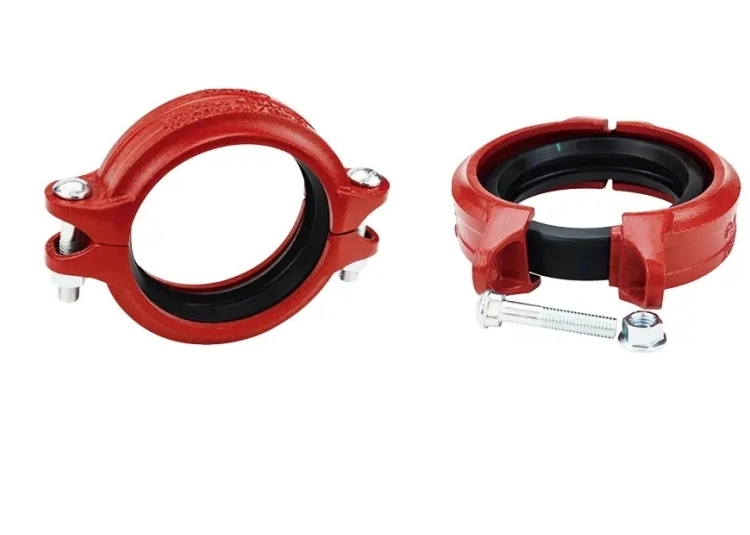
Flexible grooved couplings step up where shifts are unavoidable, like quake-vulnerable spots or lines hit by heat changes. In a West Coast skyscraper, they cushion light jolts, averting breaks that could knock out heads. Built to allow end expansion—0.06 inches in certain builds—and bends, they shield against settling or air-system hums.
Selection boils down to hazard assessment. High-seismic classes require flexible at mains and risers per codes. This disperses concentrations, with research noting 40% fewer breaks in quake mocks. In factories with running gear, they mute vibrations, prolonging seal life and hold.
Installation calls for minding boundaries. Match pipes inside deflection specs, even out bolt twists—starting low at 20 ft-lbs—and test under motion. Oversights like skipping expansion bends strain even flexible. Ward off by yearly bolt scans, vital in wet areas for rust speedup.
Field uses highlight benefits. During a clinic seismic overhaul, flexible blended with rigid runs, flexing without flow hits. This combo shows how flexible boosts toughness, especially in varied-floor builds under mixed pressures.
Choosing the Right Grooved Coupling: Critical Factors and Pitfalls
Weighing rigid against flexible grooved couplings means factoring in system needs first. Surroundings lead: map quakes via official charts, tilting to flexible in active bands. Costs factor—flexible may run 10-15% higher initially but trim fixes in lively spots.
Rules stay firm. Pull from NFPA 13 on flexible deflection mandates. Pipe type and scale count; big 8-inch lines gain from flexible on bigger stretches. Mistakes like rigid in pump vibrators lead to early breakdowns. Judge smartly with tailored lists: plot motions, figure heat shifts, model weights.
Safeguards emphasize training and trials. Drill crews on bend caps—1-4 degrees by size—and run practice fits in plans. Better calls come from history: examine cases of rigid cracks from surprise moves, stressing flexible for iffy zones.
Real-World Applications and Case Studies in Fire Protection
In diverse jobs, grooved couplings show versatility. A Southeast Asia factory facing rains and tremors used flexible to lock sprinklers, enduring swells leak-free. Teams saw 25% fewer fixes after, linked to shift absorption.
In Europe, a depot growth anchored risers with rigid, ensuring steady high-flow feeds. It aced inspections, with sensors logging no shifts months on, backing the static pick.
Stateside, a development in mid-quake territory mixed types. Flexible managed roof gear in winds, rigid backed inside trunks. Audits pegged 15% savings, meeting codes across dynamics.
Patterns emerge: flexible leads in city refits with structure dictates. Rigid rules new controlled builds. Each job stresses early deep dives—soil, age, use—to skip misses.
Introduction to Hebei Jianzhi Foundry Group Co., Ltd.
Hebei Jianzhi Foundry Group Co., Ltd., founded back in 1982, ranks among leading makers of grooved fittings, boasting over 40 years in the game. Spanning a million square meters with 2.5 billion yuan in assets, it staffs about 4,500, including 350-plus engineers. As a national high-tech outfit, it shaped six national, five industry, and four group standards, holding 200+ patents. Certified under ISO 9001 quality and ISO 14001 environment, the group ships to over 100 countries, focusing on tough solutions for fire setups and piping.
Conclusion
Sorting through rigid and flexible grooved couplings in fire protection calls for weighing hold, flex, and rules. Applying insights on variances wisely builds sturdier, lasting systems. From steady weights to shifting trials, these parts underpin solid suppression, guarding assets and safety via tested design.
Questions fréquentes
What are the main differences between rigid and flexible grooved couplings in fire protection systems?
Rigid grooved couplings lock in a firm, no-shift joint that keeps lines straight and steady, similar to welds, fitting static runs without expected motion. Flexible grooved couplings permit small bends and slides, handling heat swells or shakes in active spots like quake areas. For fire protection, this split impacts setup strength: rigid halts drifts in risers, flexible eases tensions in branches, matching NFPA 13 deflection rules in installs.
When should I use flexible grooved couplings instead of rigid ones in a sprinkler setup?
Go for flexible grooved couplings where motion lurks, like quake-hit buildings or by humming machines, to take in shifts and dodge pipe harm. Say your lines face temp swings—stretching 0.01 inches per foot—flexible keeps seals intact sans breaks. Rigid suits stable mains otherwise; always scan codes on quake levels to steer the choice.
How do I prevent leaks in grooved couplings for fire protection piping?
Leaks trace to wrong bolt twists or groove mismatches, so torque even to specs like 30-40 ft-lbs on standards, checking ends clean. In fire protection, run 200 psi hydro tests to spot early. Prevent with yearly corrosion hunts, key in damp zones, and flexible grooved couplings in vibe-heavy areas to cut stress fails.
What factors determine if a rigid grooved coupling is better for my fire riser?
Look at surroundings: rigid grooved couplings fit low-quake, steady risers where alignment stops sags from water loads. With minor heat or settle, they deliver 2.5 MPa leak-proof runs. But deflection risks call for flexible; use quake maps and load figs to comply and skip refits.
Can flexible grooved couplings handle high-pressure fire protection demands?
Flexible grooved couplings take 1.6 MPa or more with motion room, suiting intense sprinklers in plants. Ductile housings and flex gaskets manage -29°C to +82°C sans seal loss. Simulate tests confirm, but they shine averting expansion fails in pressured conduits.