
Fuites d'accouplement de tuyaux d'aspersion: causes et solutions pour les systèmes d'aspersion incendie. Si vous avez déjà vu une « transpiration » articulaire lors d’un test hydrostatique ou trouvé une goutte lente après que le système soit de retour en service, vous connaissez déjà la partie frustrante: la fuite semble souvent petite, mais les temps d’arrêt, le retravail et la responsabilité peuvent être importants. Cet article décrit le problème de la façon dont les équipes de terrain et les équipes de mise en service le résolvent réellement, en commençant par des contrôles rapides et non destructifs et en passant par des preuves solides. Vous obtiendrez des méthodes de vérification pratiques avec les bons outils, des critères clairs de réussite / échec et les erreurs les plus courantes qui perdent du temps.
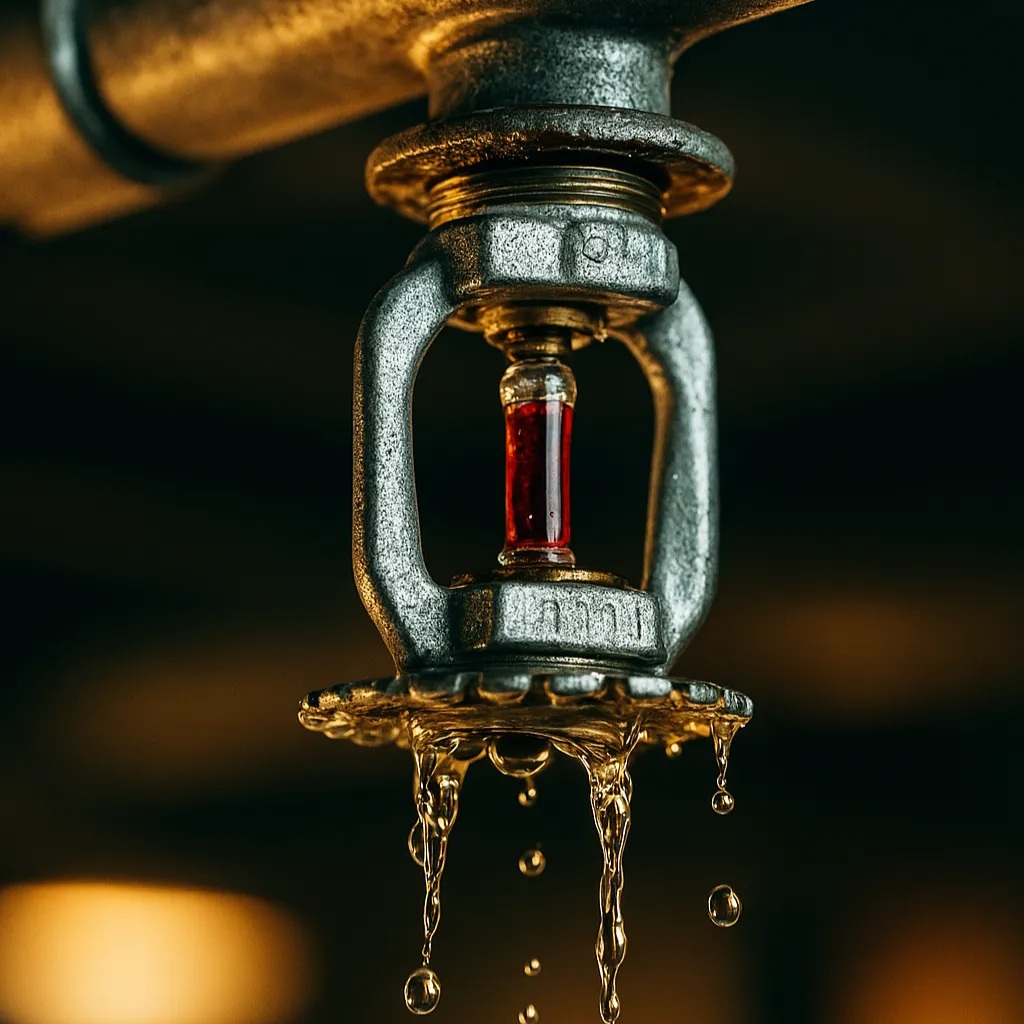
Réponse: Fuites de couplage de tuyaux d'aspersion: causes et solutions pour les systèmes d'aspersion incendie
Un couplage de tuyau d'aspersion fuit généralement pour l'une des quatre raisons: le joint est pincé ou roulé lors d'un serrage inégal, le couple de boulon est hors de la plage prévue de l'couplage (trop bas ou trop couplé), la rainure ou l'extrémité du tuyau est hors de tolérance (rebures, ovalité, rainure peu profonde / profonde, surface endommagée), ou le joint est sous tension constante du désalignement ou du mauvais support. La solution consiste à arrêter de «poursuivre» la fuite avec un serrage aléatoire et à vérifier plutôt l'état de l'installation dans un ordre répétitif: confirmer la source de fuite, serrer uniformement à l'état final correct, mesurer le couple final avec une clé de couple, inspecter le joint pour détecter des dommages, mesurer la géométrie de la rainure / de l'extrémité du tuyau, corriger l'alignement et la tension du tuyau, puis réexaminer et documenter.
Confirmez que c’est vraiment le couplage (pas le suivi de l’eau ou la condensation)
Un nombre surprenant de « fuites d’accouplement » s’avère être la traçage de l’eau d’un raccord supérieur, d’une vanne à pleurs ou d’eau d’essai qui coule le long des coutures d’isolation. Avant de toucher le matériel, séchez l'extérieur de l'accouplement et le tuyau des deux côtés avec un chiffon propre. Ensuite, enveloppez une bande de serviette en papier autour de l'articulation et regardez où elle devient mouillée d'abord. Si la première tache humide apparaît au-dessus du couplage et migre ensuite vers le bas, vous ne résolvez pas encore le vrai problème.
Pour un contrôle plus fiable, utilisez une lampe de poche et cherchez une perle se formant à un point constant, souvent le long de la lèvre inférieure où l'eau se recueille. Une vraie fuite d'accouplement réapparaît généralement au même endroit après l'essuyement, surtout si la pression du système est constante. Si vous pouvez reproduire la fuite à une pression stable sans écouler de l'eau en haut, continuez.
Stabilisez le système pour pouvoir mesurer n'importe quoi
Même un excellent dépannage échoue si la pression et la température rebondissent. Si vous travaillez pendant les tests, maintenez une pression constante assez longtemps pour voir si le taux de fuite change. Une « fuite à pic de pression » se comporte différemment d’une « fuite à état stable ». Lorsque le joint ne fuit que lors du démarrage de la pompe ou du fonctionnement rapide de la vanne, vous pouvez observer un mouvement, une tension de tuyau ou un joint qui est à peine étanche et qui est perturbé par les vibrations.
Si la fuite est importante, isoler et dépressurer la zone touchée avant le démontage. Ce n'est pas seulement un théâtre de sécurité, c'est la seule façon d'inspecter le joint et la rainure avec précision sans endommager les pièces ou introduire de nouvelles fuites.
La cause n ° 1: serrage inégal qui pince le joint
La plupart des fuites de champ remontent à la technique de serrage, en particulier lorsqu'une clé d'impact est utilisée rapidement et qu'un côté se serre avant l'autre. Lorsque cela se produit, le joint peut pincer, rouler ou déplacer. L'articulation peut goutter immédiatement, ou il peut paraître bien et ensuite commencer à fuir après que le tuyau se réchauffe, se refroidit ou voit des vibrations.
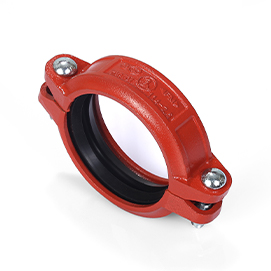
Comment vérifier que le serrage est uniforme (rapide et non destructif)
Utilisez un marqueur pour tracer une ligne courte à travers chaque écrou et l'extrémité du boulon afin que vous puissiez voir le mouvement. Ensuite serrer par petits incréments, côtés alternatifs. Ne pas faire descendre un écrou jusqu'à "terminé" avant de toucher l'autre côté. Après chaque petit incrément, comparez visuellement l'état des deux côtés de l'accouplement. Beaucoup de conceptions d'accouplement rainuré utilisent des coussinets à boulons qui approchent d'une condition finale définie (contact métal-métal ou un espace de coussinet uniforme spécifié). La clé est la cohérence: les deux côtés devraient atteindre cette condition finale de manière uniforme, sans que l'un des côtés aboutisse alors que l'autre a encore un grand écart.
Vos critères de réussite/échec ici sont simples. Si un côté est serré au point que les moitiés du boîtier sont dures les unes contre les autres et que l'autre côté présente toujours un écart visible, c'est une condition de défaillance. Vous pincez très probablement le joint ou forcez les boîtiers dans un siège inégal.
Erreur commune qui aggrave les fuites
L'erreur classique est de serrer plus fort sur le côté de fuite seulement. Cela semble logique en ce moment, mais il torde souvent les boîtiers et aggrave la distorsion du joint. Lorsqu'un couplage fuit, la solution est rarement "manivelle un écrou un autre tour". Il est presque toujours "réinitialiser le joint pour que les deux côtés chargent le joint de manière uniforme".
Mesurer le couple du boulon de la bonne manière (et traiter le couple comme preuve)
Le couple est l'une des rares choses que vous pouvez mesurer rapidement et enregistrer. C’est aussi l’un des plus mal compris. Le but n'est pas le couple maximum; c'est la charge de pince correcte pour la conception et le profil de joint de ce couplage.
Outils dont vous avez besoin
Utilisez une clé de couple calibrée qui couvre la plage attendue pour la taille du boulon, ainsi que la prise profonde correcte. Si vous mesurez après le fait, une clé de couple vous donne un nombre que vous pouvez écrire et comparer entre les joints.
Méthode de vérification étape par étape du couple
Commencez par marquer les deux écrous afin que vous puissiez voir tout mouvement pendant votre contrôle. Réglez votre clé de couple à la valeur requise spécifiée pour votre modèle et taille d'accouplement. Serrer dans un motif alternatif et ramener les deux côtés progressivement. Une fois que vous avez atteint votre couple cible, arrêtez-vous et vérifiez si la condition finale d'accouplement est correcte et symétrique. Si votre clé de couple « clique » immédiatement à un nombre très faible d’un côté, cet écrou était déjà serré, mais vous devez toujours vérifier le côté opposé et la symétrie globale.
Si vous ne pouvez pas atteindre la condition finale requise sans dépasser le couple spécifié, c'est une information opérationnelle. Il suggère des dommages au joint, une mauvaise épaisseur de joint, un désalignement ou des problèmes de rainure / extrémité de tuyau. Le torque excessif pour "forcer l'étanchéité" est un jeu à court terme qui crée souvent des fuites retardées, des boîtiers déformés ou des boulons endommagés.
Erreurs de mesure courantes à éviter
Si vous vérifiez le couple par le « couple de rupture » (relâchement et resserrement), vous pouvez changer le siège de joint et créer un problème différent. Mesurer en serrant à la cible, pas en se relâchant d'abord. Une autre erreur courante est de compter sur un réglage de clé d'impact seul. Les outils d'impact varient en fonction du niveau de la batterie, de la pression de l'air, de la technique de l'opérateur et du frottement de la prise. Ils sont utiles pour la vitesse, mais la vérification du couple doit être faite avec une clé de couple.
Vérifiez le joint (car certaines fuites ne peuvent pas être réparées sans le voir)
Si même le serrage et le couple correct n'arrêtent pas la fuite, ne gardez pas le couple de cycle. Dégagez le joint et regardez. Un joint pincé montre généralement un pliage, une marque de morsure, une lèvre d'étanchéité roulée ou une section qui semble étirée et mince. Parfois, vous verrez des débris incrustés dans la surface d'étanchéité ou une petite coupe d'une rebure à l'extrémité du tuyau.
Lorsque vous réinstallez, prenez le temps de nettoyer le joint et la surface du tuyau où il est scellé. Un film mince de lubrifiant compatible peut aider le siège de joint sans torsion, mais "plus" n'est pas mieux. La lubrification excessive peut permettre au joint de glisser lorsque les boîtiers se rapprochent, en particulier si un côté se serre plus rapidement.
Vos critères de réussite/échec après le remontage devraient être plus stricts qu'auparavant. Si la fuite revient au même endroit après une nouvelle inspection du joint et un nouveau siège, les chances sont élevées que la géométrie de la rainure, la surface de l'extrémité du tuyau ou la tension des joints soient à l'origine du problème.
Vérifiez la géométrie de la rainure et de l'extrémité du tuyau (mesure, ne devinez pas)
Un joint rainuré obture parce que le joint est comprimé uniformement et que les clés du boîtier engagent correctement la rainure. Si la rainure est trop peu profonde, trop profonde, endommagée ou incohérente autour de la circonférence, l'accouplement peut "sembler installé" mais toujours fuir sous pression ou mouvement.
Outils pour la vérification des rainures
Le meilleur outil est un gage de rainure conçu pour le système de rainure que vous utilisez, associé à un étrier pour des contrôles rapides et à une ligne droite pour repérer la déformation de l'extrémité du tuyau. Si vous n'avez pas de rainure, un étrier peut toujours vous aider à identifier des problèmes évidents tels qu'une rainure qui n'est pas cohérente autour du tuyau.
Procédure de mesure pratique que vous pouvez faire sur place
Mesurer et enregistrer à trois positions autour du tuyau (pensez à un cadran d’horloge : 12h, 4h, 8h). À chaque position, vérifiez que la rainure est uniforme et qu'il n'y a pas de rebures ou de bords soulevés près de l'extrémité de coupe. Ensuite, courez soigneusement votre bout du doigt le long de l'extrémité du tuyau. Si vous ressentez une rebure pointue, c’est un vrai risque de fuite. Les bornes coupent les joints et empêchent également le joint de s'asseoir au niveau.
Utilisez le bord droit le long de l'extrémité du tuyau pour voir si le tuyau est hors-rond. Une extrémité de tuyau légèrement ovale peut créer un motif de compression de joint inégal qui apparaît sous forme de goutte à goutte à un point cohérent.
Sources courantes d'erreur de mesure
Une mauvaise habitude consiste à mesurer une seule fois et à supposer qu’elle représente toute la circonférence. Les défauts de rainure sont souvent localisés. Un autre est d'utiliser un étrier sur une surface peinte ou revêtue sans tenir compte de l'épaisseur du revêtement. Si le tuyau a une accumulation de revêtement lourd dans la zone de rainure, le joint peut ne pas s'asseoir de la même manière qu'il le serait sur une surface métallique propre.
Vérifiez l'alignement et la tension du tuyau (la fuite qui revient plus tard)
Parfois, le couplage est assemblé correctement, passe un court test, puis fuit une semaine plus tard. C’est souvent un problème de tension. Si le tuyau doit être forcé en position lors de l'assemblage, l'accouplement devient un point d'articulation sous charge constante. Les cycles thermiques, les vibrations ou un petit mouvement du bâtiment peuvent alors perturber le siège de joint.
Un contrôle rapide sur le terrain consiste à regarder les supports et les accroches à proximité. Si un accouplement prend le poids d'une section verticale ou d'une longue course horizontale sans support adéquat, il fait du travail qu'il n'était jamais censé faire. Corriger l'espacement du support et éliminer l'ajustement forcé peut arrêter les fuites répétées qu'aucun serrage ne résoudra.
Confirmer la compatibilité du service de joint (humide vs sec, température et environnement)
Dans les tuyaux de protection contre l'incendie, toutes les classes de joint ne sont pas destinées à toutes les conditions de service. Un joint parfaitement assemblé peut encore échouer si le matériau de joint n'est pas adapté à la plage de température ou à l'environnement. Les systèmes de tuyauterie secs dans les climats froids peuvent contraindre les matériaux différemment qu'un système humide dans un bâtiment climatisé. Vous n'avez pas besoin d'être un chimiste en polymères, mais vous devez faire correspondre la qualité du joint au service réel.
Si vous remplacez des pièces, vérifiez que vous utilisez le bon joint pour l'entretien de l'aspersion d'incendie et que le lubrifiant, s'il est utilisé, est compatible avec ce matériau de joint. Si le joint semble gonflé, fragile ou inhabituellement doux lors de l’inspection, c’est un indice que la compatibilité est désactivée ou que le joint a vieilli au-delà de ce que l’installation peut tolérer.
Rétestez et documentez comme une équipe de mise en service
Après la réparation, maintenez la pression stable et surveillez l'articulation assez longtemps pour être sûr que ce n'est pas une fuite retardée. Essuyez le joint, puis réexaminez après dix minutes à la même pression. Si vous avez plusieurs fuites sur la même ligne, enregistrer ce que vous avez trouvé paie. Enregistrez la taille de l'accouplement, le couple mesuré final, si les plots de boulons ont atteint l'état final attendu de manière uniforme et ce que vous avez observé sur le joint et la rainure.
Cette documentation devient votre voie la plus rapide pour éviter les répétitions. Cela aide également quand un client demande pourquoi une fuite s’est produite et ce que vous avez changé pour la réparer.
Lorsque la qualité du produit et les fiches de données sont importantes
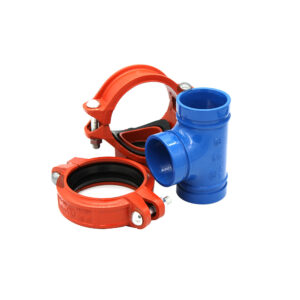
Un guide de dépannage n'est que la moitié de l'histoire. Au fil du temps, les équipes de maintenance veulent une répétibilité: géométrie cohérente du boîtier, surfaces d'étanchéité fiables et feuilles de données claires pour l'installation et l'inspection. Si vos projets reposent fortement sur des connexions rainées pour la climatisation, la protection contre l'incendie ou les tuyauteries industrielles, il est utile d'acheter des raccords et des raccords auprès d'un fabricant qui traite les systèmes rainés comme une famille de produits complète, et non comme une réflexion postérieure. Vous pouvez consulter la gamme de raccords rainurés plus large du fabricant à Solutions d'accouplement pour tuyaux rainuréset pour les applications nécessitant une tolérance contrôlée au mouvement et aux vibrations, une option d'accouplement flexible comme Coupling flexible pour tuyauterie de protection incendie peut faire partie d'une stratégie de maintenance cohérente.
Si vous normalisez sur différents sites, il vaut la peine de garder un point de référence unique pour les mises à jour de produits, le matériel de support technique et les listes de données téléchargeables. Le point de départ est le site officiel Raccords de tuyaux rainurés Vicast.
À propos de Hebei Jianzhi Foundry Group Co., Ltd.
Hebei Jianzhi Foundry Group Co., Ltd. est le groupe de fabrication derrière la marque Vicast et produit des raccords de tuyauterie depuis 1982. La société se décrit comme un fournisseur de systèmes de raccordement rainuré avec une capacité de production à grande échelle, une équipe technique importante et des systèmes de gestion alignés sur ISO 9001 pour la qualité et ISO 14001 pour la gestion environnementale. Elle indique également que son réseau de distribution touche plus de 100 pays et qu'elle a participé à l'élaboration et à la révision de multiples normes tout en détenant un vaste portefeuille de brevets. Si vous voulez le profil officiel de l'entreprise et les antécédents en un seul endroit, voir À propos de Hebei Jianzhi Foundry Group Co., Ltd..
Conclusion
Une fuite d’accouplement de tuyau d’aspersion est rarement « mystérieuse » une fois que vous la traitez comme un problème mesurable. Commencez par confirmer la source de fuite, puis vérifiez le serrage même et l'état final, mesurez le couple comme preuve, et seulement ensuite passez à l'inspection du joint et aux mesures de la rainure / de l'extrémité du tuyau. Lorsque vous documentez ce que vous voyez - le couple, l'état du joint, la cohérence de la rainure, l'alignement - vous transformez une réparation ponctuelle en une méthode répétable qui réduit les rappels et maintient les systèmes d'aspersion d'incendie fiables.
Questions fréquentes
Pourquoi mon couplage de tuyau d'aspersion fuit-il après un test de pression?
Cela se produit généralement lorsque le joint a été légèrement pincé lors du serrage ou lorsque le joint a été assemblé sous tension et que le mouvement apparaît une fois que la pression est appliquée. Vérifiez le serrage même des deux côtés, vérifiez le couple final avec une clé de couple, et si la fuite persiste, démontez pour inspecter le joint pour détecter des plis ou des coupures et mesurer la rainure pour la cohérence.
Comment savoir si mon joint d'accouplement rainé est pincé?
Un joint pincé laisse souvent une ligne de pliage, une lèvre d'étanchéité roulée ou une section aplatie qui semble plus mince que le reste. Si vous voyez l'un de ces signes, la réinitialisation du même joint est risquée; remplacer et réinstaller en utilisant un serrage uniforme et alternatif.
Quel couple dois-je utiliser lorsqu'un couplage d'aspersion est en fuite?
Utilisez le couple spécifié pour votre modèle d'accouplement, taille et ensemble de boulons, puis vérifiez que les deux côtés atteignent l'état final souhaité de manière uniforme. Si vous avez besoin d’un couple excessif pour arrêter une fuite, c’est un signe que le joint est endommagé, que l’extrémité de la rainure/tuyau est hors tolérance ou que le joint est mal aligné. Le couple devrait confirmer un bon assemblage, pas forcer un mauvais à se comporter.
Comment puis-je mesurer si la rainure de tuyau provoque la fuite d'accouplement?
Utilisez un gage de rainure si disponible, ou un étrier pour des contrôles rapides, et mesurez à plusieurs positions autour du tuyau. Recherchez la profondeur/largeur des rainures inconsistentes, les rebures à l'extrémité du tuyau et la géométrie du tuyau hors-rond en utilisant un bord droit. Tout défaut localisé peut déformer la compression du joint et créer une fuite à un point répétable.
Pourquoi mon couplage cesse-t-il de fuir lorsque je le serre, puis fuit-il à nouveau plus tard?
Ce modèle indique généralement la contrainte de tuyau, la vibration ou le cycle thermique. L'accouplement peut agir comme une charnière sous charge parce que le tuyau a été forcé en position ou les supports sont inadéquats. La correction des conditions d'alignement et de soutien est souvent la vraie solution, le serrage ne fournissant que un soulagement temporaire.