
Abstract
As industry professionals, we often deal with the detailed world of grooved pipe standards and certifications. This piece dives into a thorough technical review of those standards. It centers on the GB (China National Standards), ISO (International Organization for Standardization), and UL (Underwriters Laboratories) systems. We examine the basic structure and performance demands that shape grooved piping setups. These setups serve key roles in fire protection, HVAC, and industrial fluid handling. The article covers clear technical meanings, testing approaches, and rules for meeting standards. All this ensures safety, dependability, and smooth use in worldwide markets. We pay close attention to how these standards align. We also look at what that means for makers chasing approvals across multiple systems. This updated version adds in-depth case examples, side-by-side reviews of approval steps, deeper talks on seal designs and material wear, and hands-on tips for handling the growing challenges of global piping rules.
Key Takeaways
GB, ISO, and UL standards set vital limits for grooved pipe setups. These include groove shape (depth ±0.20–0.25 mm), material makeup (ductile iron Grade 65-45-12), pressure levels (up to 2.5 MPa / 363 psi), and fire endurance (30 min at 1,000°F for UL).
Harmonization efforts among these systems continue. Yet makers still face differences in test approaches (e.g., UL demands 4× hydrostatic proof, while GB/ISO use 2×). Tolerances vary too. So do approval steps (unannounced quarterly checks for UL, annual ones for GB).
Multi-standard certification opens up broader market reach. But it calls for smart planning, dual tests, and strict quality controls. Upfront costs usually run $70,000–120,000.
Material properties like ductile iron grade (ASTM A536 65-45-12 with 12% minimum elongation) and coating depth (70–100 μm) get strong focus in all three standards. They matter a lot for lasting rust protection and structural strength.
Third-party auditing (e.g., UL’s Follow-Up Service with quarterly unannounced visits, ISO 9001 surveillance, CNAS annual re-assessment) plays a key role. It upholds approval trust and product steadiness.
جدول المحتويات
1Technical Foundations of Grooved Pipe Systems
1.1 Definition and Functional Principles of Grooved Connections
1.2 Mechanics of Groove Engagement and Sealing Theory
1.3 Failure Modes and Prevention Strategies
1.4 Core Applications in Industrial Systems
2Overview of Major Certification Frameworks
2.1 Understanding the Role of Standardization Bodies
2.2 Interrelation Between Global Standards Organizations
2.3 Historical Development and Evolution of Standards
2.4 Comparative Cost and Timeline Analysis
3Detailed Analysis of GB Standards for Grooved Pipes
3.1 Structure of the GB/T 5135 Series for Fire Protection Components
3.2 Key Technical Requirements Under GB/T Frameworks
3.3 GB Certification Process, Marking, and Enforcement
4ISO Standards Governing Grooved Pipe Manufacturing and Testing
4.1 Applicable ISO Standards for Metallic Piping Systems
4.2 Performance Testing Protocols Under ISO Guidelines
4.3 ISO Certification Pathways and Global Recognition
UL Certification Requirements for Fire Protection Applications
5.1 Scope of UL 213 Standard for Rubber Gasketed Couplings
5.2 UL 1920 and Other Fire Standards (FM, NFPA)
5.3 Factory Audit and Follow-Up Inspection Procedures
6Comparative Study: GB vs ISO vs UL Compliance Parameters
6.1 Dimensional Tolerances and Pressure Ratings
6.2 Test Method Comparison (Hydrostatic, Cyclic, Fire)
6.3 Coating and Material Acceptance Criteria
7Material Specifications and Dimensional Tolerances Across Standards
7.1 Commonly Accepted Materials in Certified Grooved Products
7.2 Influence of Material Properties on Joint Performance
7.3 Detailed Groove Dimension Tables and Tolerances
8Testing Protocols and Quality Assurance Procedures
8.1 Mechanical Performance Tests Required by Each Standard
8.2 Non-destructive Examination Techniques
8.3 Gasket Material Qualification and Aging Tests
9Sealing Performance and Durability Analysis
9.1 Pressure-Energized Seal Theory and Mathematical Modeling
9.2 Long-term Gasket Compression Set and Leakage Prediction
9.3 Accelerated Life Testing Correlation to Service Life
10Global Harmonization Challenges in Grooved Pipe Standardization
10.1 Barriers to Cross-certification Between Regions
10.2 Efforts Toward International Equivalence Recognition
10.3 Future Harmonization Prospects (2026–2030)
11Practical Guidance for Manufacturers Seeking Multi-standard Certification
11.1 Strategic Steps Toward Simultaneous Compliance (7-step process)
11.2 Documentation Requirements and Record Keeping
11.3 Cost, Timeline, and ROI Analysis
11.4 Common Pitfalls and How to Avoid Them
12.Case Studies: Successful Multi-certification Implementation
12.1 Vicast® XGOT02 Series – Full Multi-certification
12.2 Small Manufacturer Pathway – ISO + UL in 24 Months
12.3 Lessons Learned and Common Pitfalls
12.4 Case Study C: Retrofit Certification for Legacy Product
13Conclusion
14References
15Notes on References
16Frequently Asked Questions (FAQ) – Expanded to 15 questions
1. Technical Foundations of Grooved Pipe Systems
1.1 Definition and Functional Principles of Grooved Connections
أنظمة الأنابيب المخدودة use ربطات ميكانيكية. These rely on groove shape to form solid links between pipes. No welding or threading is needed. The coupling body fits into the grooves at each pipe end. Meanwhile, a gasket squeezes between them. This creates a tight seal against leaks, even as pressure changes. The setup handles torque well. It also manages axial loads. Plus, it keeps sealing strong during movement like heat growth or shakes.
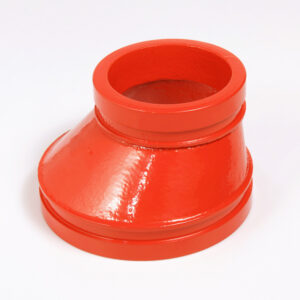
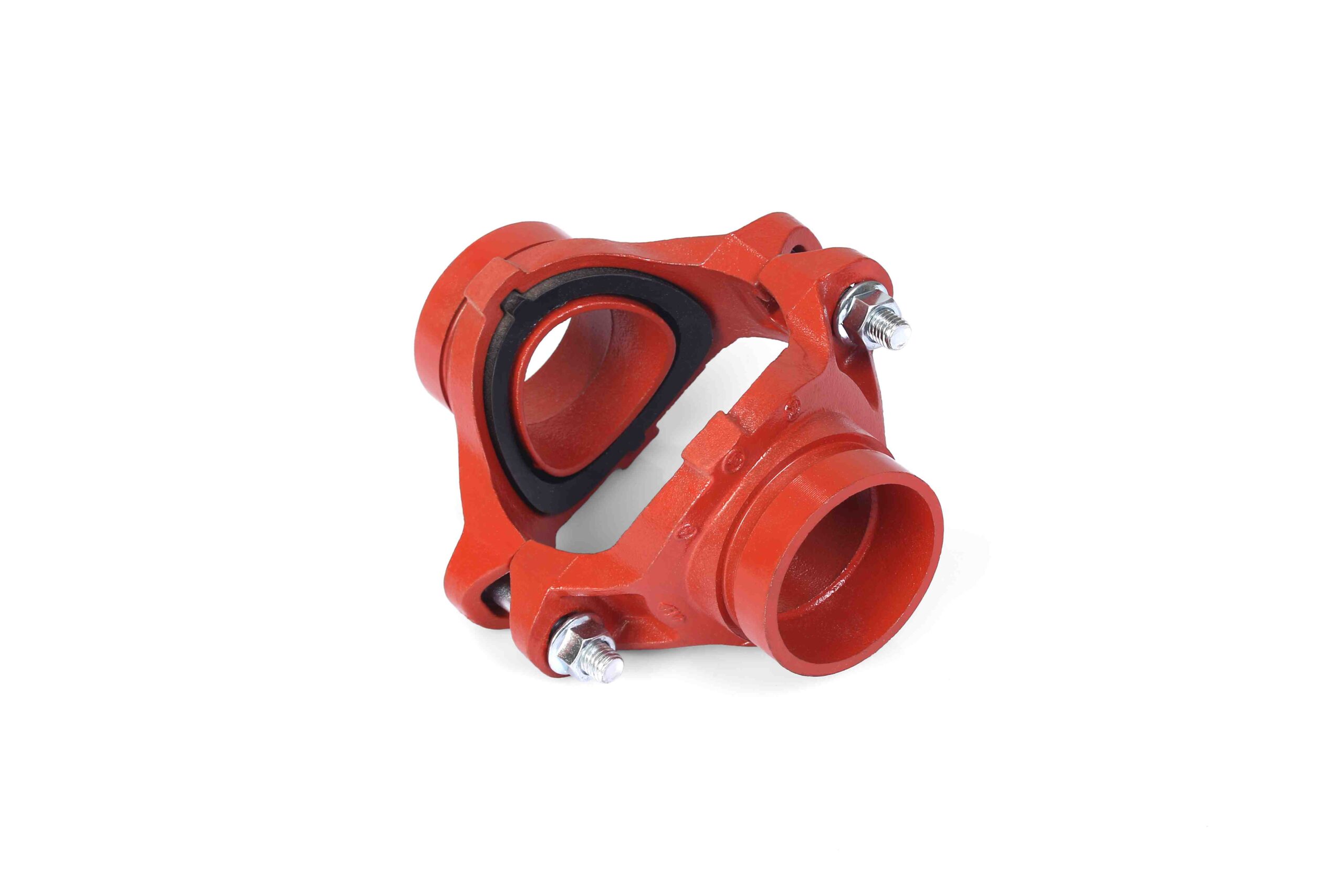
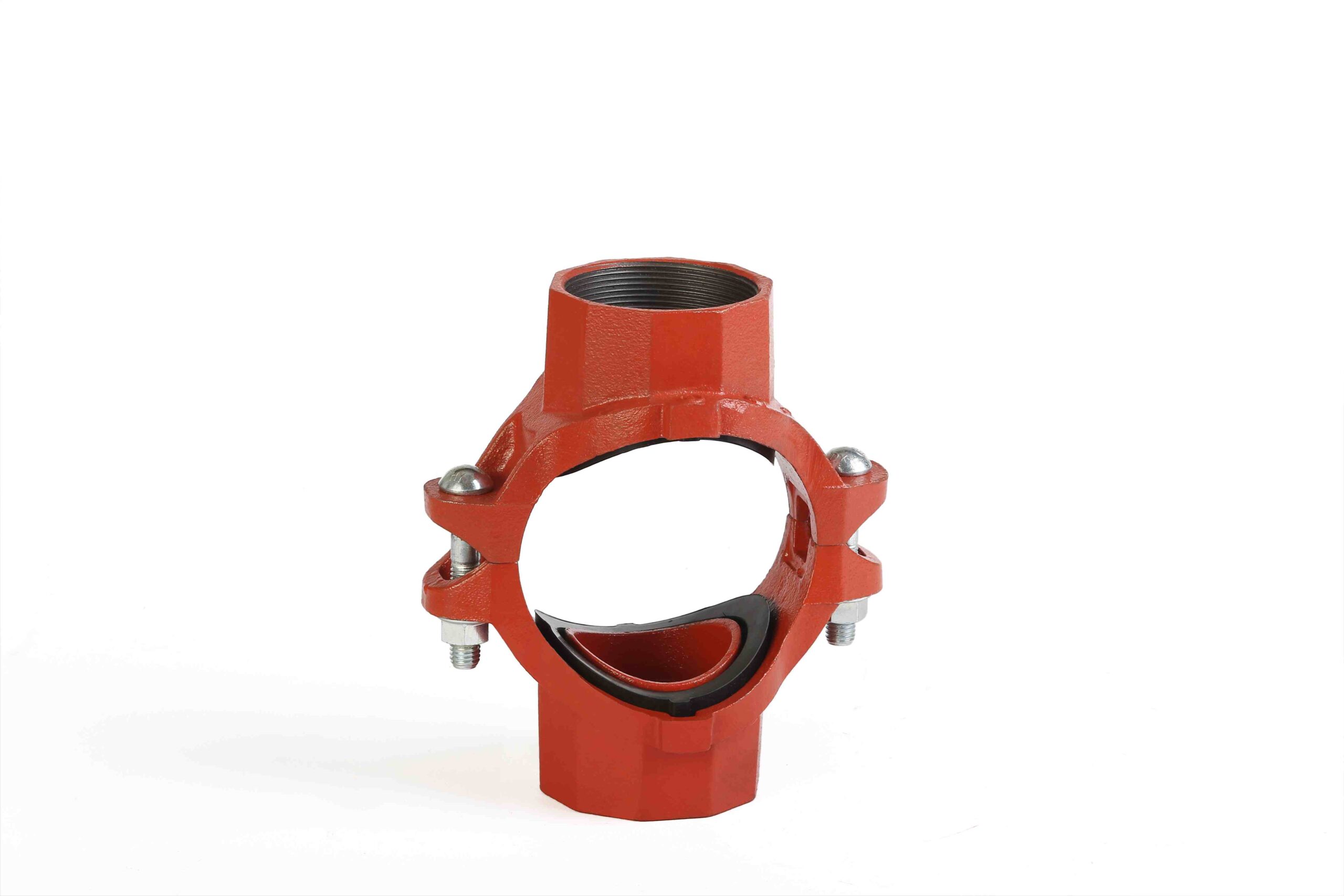
Our rigid grooved coupling offers a sturdy and effective way to join pipes. It works in many settings, such as HVAC, fire protection, and industrial setups. Ductile iron bodies meet ASTM A536 Grade 65-45-12 or ASTM A395 Grade 65-45-15. They provide strength yet allow some bend to handle stresses. Take the XGOT02 series. It handles up to 2.5 MPa (363 psi) working pressure. And it passed hydrostatic tests at 4× rated pressure under UL 213.
1.2 Mechanics of Groove Engagement and Sealing Theory
A grooved coupling’s seal strength rests on three linked elements. These are groove shape, gasket material action, and body rigidity. Internal pressure P pushes the pipes apart. The force F_sep equals P times A. Here, A stands for the pipe’s inner cross-section area. The coupling body turns this axial force into side pressure on the gasket. You can express the link as:
F_radial = F_sep × tan(φ)
φ is the body key angle, often 30–45 degrees. Tan(φ) stays below 1. So the side force on the gasket ends up lower than the axial pull. But the gasket touch area is small compared to the pipe cross-section. This leads to high seal pressure. The pressure-boosted design works this way. Higher inside pressure boosts the seal contact force. Welded or flanged joints lack this trait. In those, rising pressure does not aid sealing. Instead, it raises leak risks.
1.3 Failure Modes and Prevention Strategies
Knowing possible failure types aids design, testing, and on-site checks:
| Failure Mode | Description | Root Causes | Prevention Strategy |
| Gasket extrusion | Gasket forced into gap between pipe ends | Excessive pressure, oversized gap, low gasket hardness | Control pipe-end gap (1/8–1/4 inch), use backup rings, specify ≥70 Shore A hardness |
| Housing yielding | Permanent deformation of coupling housing | Over-torque of bolts, pressure exceeding rating | Use torque wrench (calibrated annually), follow manufacturer specs |
| Groove roll-out | Bulge on pipe OD opposite groove | Worn grooving tool, incorrect tool depth setting | Inspect grooves with go/no-go gauge, replace tools every 5,000–10,000 cuts |
| Joint rotation under bending | Excessive angular deflection causing gasket leak | Misaligned pipes, missing or undersized flexible couplings | Use rigid couplings where alignment is critical, limit angular deflection to ±1° per flexible coupling |
| Hydrogen embrittlement | Delayed cracking of zinc-coated ductile iron | Acid pickling without post-baking | Ensure post-galvanizing bake at 190–220°C for 4+ hours per ASTM A143 |
Routine on-site checks should spot these failure signs. Look for clear gaps between pipe ends. These should not go beyond the coupling body window. Watch for rust marks that signal small leaks. And check for loose bolts. Re-tighten them after the first heat cycle.
1.4 Core Applications in Industrial Systems
Grooved piping tech sees wide use in fire suppression lines that follow NFPA 13. Its simple setup and no-maintenance run make it popular. In HVAC chilled water systems, grooved joints ease alignment fixes during startup. Industrial process lines gain from the shake resistance of flexible couplings. For instance, Vicast’s XGOT02 series handles up to 2.5 MPa working pressure.
Data Center Cooling: Dense data centers run chilled water at pressures to 300 psi. Grooved joints speed up changes during server rack shifts. A standard 10 MW data center has 2,000–3,000 grooved joints. Welded changes might take days and cause downtime. Grooved ones finish in hours.
Mining and Slurry Transport: Abrasive mixes wear welded joints fast. This happens due to rough flow at weld ridges. Grooved flexible couplings let pipe parts turn 90° now and then. This spreads wear evenly. Data from a Chilean copper mine shows life jumped from 18 months for welded to 48 months for grooved in waste lines.
Shipbuilding and Offshore: Offshore rigs and ships need rust-proof materials for seawater and firewater lines. Grooved parts in 316L stainless steel (AISI 316) suit firewater loops and ballast setups. Modular grooved builds cut shipyard work by 40% over welding. No hot work speeds things up in tight engine spaces.
2. Overview of Major Certification Frameworks
2.1 Understanding the Role of Standardization Bodies in Piping Systems
China’s Standardization Administration (SAC) manages GB/T groups. These create national specs, like the GB/T 5135 series for fire parts. On the world stage, ISO/TC 5/SC 5 sets norms for metal tubes. This ensures size matches across makers globally. UL acts as a neutral safety certifier in North America. It targets mechanical joint strength under fire heat.
2.2 Interrelation Between Global Standards Organizations
Links exist among these groups to boost fit. For example, ISO 6182 series matches UL 213 tests for rubber gasket couplings. China’s GB/T 5135 series echoes similar shape rules for grooved fire fittings. Also, AWWA C606 (groove sizes) appears in both ISO and GB. It gives a shared base for groove form.
2.3 Historical Development and Evolution of Standards
The initial grooved coupling patent came in 1919 from Victory Engineering. But official standards started in the 1970s with AWWA C606. That set groove sizes for water systems.
GB/T 5135 series launched in 1993. It saw four updates (1999, 2005, 2012, 2020). The 2020 version added checks for coating depth on threaded spots. It also tightened gasket compression limits.
ISO 6182-11 debuted in 2009. It blended UL 213 and EN 14658. Updates hit in 2015 and 2021. The 2021 change cleared tests for flexible couplings. It added vacuum checks too.
UL 213 started in 1978. Big changes came in 1998 (added cyclic pressure tests), 2008 (added flame rules), and 2018 (raised body ductility needs).
Grasping this growth aids reading old approval marks. A coupling approved under UL 213 before 2018 might miss current ductility rules. Thus, new building codes could reject it.
In the last ten years, rules grew tougher. UL 213 updated in 2018 with extra cyclic pressure tests (5,000 cycles). ISO 6182-11 refreshed in 2021 to match EN 14658. GB/T 5135 had three main changes since 2008. These added coating depth checks and gasket compression rules. This background helps makers predict shifts ahead.
2.4 Comparative Cost and Timeline Analysis
| Region | Primary Standard | Estimated Cost (USD) | Typical Timeline | Annual Surveillance |
| China | GB/T 5135 | $8,000–12,000 | 3–6 months | $1,000–2,000 |
| Europe | EN 14658 / ISO 6182 | $15,000–25,000 | 4–8 months | $3,000–5,000 |
| USA | UL 213 | $25,000–40,000 | 8–12 months | $10,000–15,000 |
| USA (insurance) | FM 1920 | $30,000–50,000 | 10–14 months | $12,000–18,000 |
| Global (multiple) | Combined | $70,000–120,000 | 12–24 months | $20,000–30,000 |
These figures skip internal work for prep docs, sample builds (often 50–100 couplings), and tool tweaks for size fits. Still, multi-approval payback is strong. Certified items fetch 15–30% higher prices in export areas.
3. Detailed Analysis of GB Standards for Grooved Pipes
3.1 Structure of the GB/T 5135 Series for Fire Protection Components
The GB/T 5135 group includes several parts:
GB/T 5135.11 (Couplings) – sets hydrostatic pressure test rules. These make sure coupling units hold rated pressures without leaks or bends.
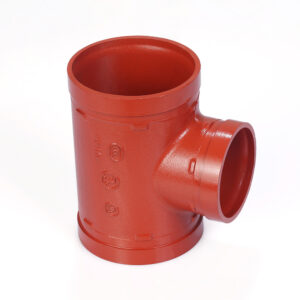
GB/T 5135.12 (Fittings) – handles elbows, tees, reducers, and their size limits.
GB/T 5135.13 (Gaskets) – lists material mix, hardness (Shore A), and compression set caps.
GB/T 5135.14 (Pipe ends) – covers groove sizes and check methods.
GB/T 5135.9 – Water mist nozzles (links to system fit).
GB/T 5135.15 – Fast corrosion tests for fire parts (salt spray plus humidity cycles; at least 200 hours).
GB/T 5135.20 – Grooved pipe ends for sprinkler setups (sets groove shapes for thin-wall steel pipes to 1.5 mm thick).
Rust checks follow GB/T 10125 steps (salt spray tests). These mimic long exposure times (usually 200 hours for coatings).
3.2 Key Technical Requirements Under GB/T Frameworks
Size limits draw from GB/T 12459 for steel pipe fittings. Allowed shifts stay at ±0.25 mm based on size range. Surface finishes call for anti-rust coatings per GB/T 9790. Minimum film depths depend on exposure types (C3, C4, C5). Indoor jobs need 70 μm epoxy. Outdoor coastal ones require 100 μm.
GB/T 5135.11 states that for indoor use, zinc coating per GB/T 13825 (hot-dip) must average at least 70 μm thick. For outdoor or harsh spots, epoxy per GB/T 9790 needs ≥100 μm. Coating stick is checked by cross-cut per GB/T 9286, aiming for class 0 or 1 (no flaking). Salt spray per GB/T 10125 runs 200 hours for zinc, 500 for epoxy, with no red rust.
3.3 GB Certification Process and Marking Requirements
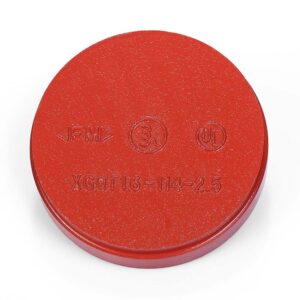
Makers after GB approval send samples to a CNAS-approved lab for type tests. If they pass, the maker gets a report. This allows use of the GB mark on products. Yearly checks by SAC or assigned groups confirm ongoing fit. Items need lasting marks for size, material grade, pressure level, and maker ID.
4. ISO Standards Governing Grooved Pipe Manufacturing and Testing
4.1 Applicable ISO Standards for Metallic Piping Systems
ISO offers key references for grooved pipe making. These include:
ISO 10807 – sets mechanical joint sizes for grooved couplings.
ISO 4200 – lists steel tube sizes (metric line).
ISO 2604 – details carbon steel grades for pressure use.
ISO 6182 – fire protection grooved fittings (multi-part, Part 11 for grooved-end types).
ISO 9001 – quality systems (often a must for approvals).
Design rule: ISO 6182-11 gets common nods from makers like فيكاست®. Their items fit AWWA C606 and GB 5135 setups. This shows good cross-standard match for export lines.
4.2 Performance Testing Protocols Under ISO Guidelines
ISO tests stress lasting checks through:
Hydrostatic pressure cycling per ISO 19879 – units face repeated pressure up-down runs (often 5,000 cycles). This mimics real service ups and downs.
Leak tightness validation – uses hydrostatic endurance steps. These confirm gaskets hold seal power over full life runs.
Vacuum testing – some jobs need -0.85 bar for 24 hours per ISO 6182-11.
4.3 ISO Certification Pathways
ISO approval comes via third-party checks from approved groups like SGS, TÜV, or BV. Unlike UL’s required listing, ISO is usually optional. But it holds high value in Europe and Asia. Makers can pick ISO 9001 (system) plus item-specific ISO 6182.
5. UL Certification Requirements for Fire Protection Applications
5.1 Scope of UL 213 Standard for Rubber Gasketed Couplings
UL’s UL 213 sets build review rules. These cover:
Housing ductility tests – gauge bend ability before break under pull stress. This fits quake or hit events.
Flame exposure testing – follows UL’s own fire endurance way. It copies high-heat building fire scenes to check gasket toughness.
Hydrostatic strength – 4× rated pressure for 5 minutes without leaks.
Hydrostatic burst – 8× rated pressure (or set amount) until break.
5.2 UL 1920 and Other Fire Standards
FM 1920 (Factory Mutual) is another vital North American rule for grooved fire fittings. It adds shake tests (10–55 Hz, 0.5 mm shift, 2 hours) and heat shock cycles (42°F to 180°F, 100 cycles). UL 213 and FM 1920 often pair up for insurance needs.
5.3 Factory Audit and Follow-Up Inspection Procedures
UL-approved plants face yearly oversight checks. These confirm product fit via sample pulls and doc reviews, called Follow-Up Service (FUS). Surprise checks happen quarterly. Such audits track flow from raw buys to end builds. They ensure steady quality across batches. Issues can lead to pause or loss of UL listing.
6. Comparative Study: GB vs ISO vs UL Compliance Parameters
6.1 Dimensional Tolerances and Pressure Ratings
| Parameter | GB/T Standard | ISO Standard | UL Standard |
| Groove Depth Tolerance | ±0.25 mm | ±0.20 mm | ±0.20 mm |
| Coupling Pressure Rating | Up to 2.5 MPa | Up to 2.5 MPa | Rated by size category (150/300 psi) |
| Gasket Material | EPDM/NBR per GB/T 5135.13 | Per ISO 6182-11 | Per UL 213 (EPDM, nitrile, silicone) |
| Coating Thickness | ≥80 μm epoxy/zinc | ≥70 μm equivalent | ≥75 μm minimum |
Size limits align well across the three systems. This aids swap of approved parts. But small gaps remain. They stem from rounding habits in metric versus inch unit shifts.
6.2 Test Method Comparison (Hydrostatic, Cyclic, Fire)
| نوع الاختبار | GB/T 5135.11 | ISO 6182-11 | UL 213 | Engineering Significance |
| Hydrostatic proof pressure | 2× rated, 5 min | 2× rated, 5 min | 4× rated, 5 min | UL has higher safety margin |
| Hydrostatic burst | 4× rated (minimum) | 4× rated | 8× rated for 6″ and below | UL requires higher burst ratio |
| Cyclic pressure (number of cycles) | Not specified | 5,000 cycles | 5,000 cycles | ISO/UL similar; GB lacks |
| Vacuum test | Not specified | -0.85 bar, 24 h | Not specified | ISO addresses vacuum |
| Flame exposure | 15 min at 800°C | 15 min at 800°C | 30 min at 1,000°F | UL more severe |
| Gasket compression set | ≤25% (ASTM D395) | ≤25% (ISO 815) | ≤25% (ASTM D395) | Equivalent requirements |
| Coating thickness (min) | 80 μm epoxy / 70 μm zinc | 70 μm equivalent | 75 μm | GB slightly higher for epoxy |
These differences call for two-test plans in multi-approval efforts. This holds true where coating depth checks vary a bit among groups.
6.3 Coating and Material Acceptance Criteria
The three standards all take ductile iron per ASTM A536 Grade 65-45-12 or match. For zinc coatings, UL points to ASTM A153 (hot-dip). GB/T 13825 is China’s version. ISO 1461 sets the world mark. Main fit rules:
No clear red rust after 200 hours salt spray (GB/ISO) or 500 hours (UL for some jobs).
Stick: cross-cut test shows no lift-off.
Depth: average of 5 reads, none under 80% of min set.
7. Material Specifications and Dimensional Tolerances Across Standards
7.1 Commonly Accepted Materials in Certified Grooved Products
Ductile iron leads as the top choice. Its mix of power, durability, and rust fight suits repeated load spots in HVAC or sprinkler lines.
Material standard: ASTM A536, Grade 65-45-12; ASTM A395, Grade 65-45-15. These grades offer enough stretch (12% min). This lets grooves bend without splits during bolt tightening.
Carbon steel pipes under ASTM A53 or China’s GB/T 8163 fit too. They work with ISO 4200 size guides and UL joint tests. This ensures system match.
7.2 Influence of Material Properties on Joint Performance
Bend strength shapes groove hold power. Stretch sets flexibility for install torque. This avoids snap breaks at coupling spots. Both factors boost long-term trust in pressure lines up to 2.5 MPa. Vicast’s XGOT02 flexible couplings show this well.
Table: Mechanical Property Comparison
| Property | Gray Cast Iron (A48) | Ductile Iron (A536 65-45-12) |
| Tensile Strength | 25–40 ksi | 65 ksi min |
| Yield Strength | N/A (brittle) | 45 ksi min |
| Elongation | 0% | 12% min |
| Impact Resistance | 2–5 ft-lb | 60+ ft-lb |
Ductile iron’s better stretch takes in heat growth and quake loads. Thus, it stops major breaks.
7.3 Detailed Groove Dimension Tables and Tolerances
| Pipe Size (inches) | Groove Depth (mm) | Tolerance (GB) | Tolerance (ISO/UL) |
| 2–4 | 2.2–2.4 | ±0.25 | ±0.20 |
| 5–8 | 2.4–2.6 | ±0.25 | ±0.20 |
| 10–12 | 2.6–3.0 | ±0.30 | ±0.25 |
Groove width and curve get specs too: width = 8–12 mm by pipe size; curve = 0.5–1.0 mm. All rules demand go/no-go gauge checks.
8. Testing Protocols and Quality Assurance Procedures
8.1 Mechanical Performance Tests Required by Each Standard
Hydrostatic burst pressure testing checks top hold power. It uses ways like ISO 5208. Units get pressure until burst. This confirms safety buffers over normal limits. UL wants 8× rated for sizes ≤6 inches. GB and ISO often need 4×.
Torque-to-failure assessments gauge max torque before slip. This ensures good friction grip in grooves. It matters for repeated stress from pump starts or quakes.
Table: Inspection Frequency Recommendations
| Inspection Type | Frequency | Standard Reference |
| Visual (grooves) | 100% production | AWWA C606 |
| Magnetic particle | 5% of batch or weekly | ASTM E1444 |
| Ultrasonic thickness | Per heat/lot | ASTM E797 |
| Coating thickness | Per shift (magnetic gauge) | ASTM E376 |
8.2 Non-destructive Examination Techniques
Tools like Magnetic Particle Inspection (MPI) spot surface cracks along cut grooves. Ultrasonic Thickness Measurement checks even wall spread. It stops thin spots that might weaken burst hold under GB/T 12459 and UL 213 rules.
8.3 Gasket Material Qualification and Aging Tests
Gaskets face tests per ASTM D2000 (rubber types). Main measures:
Hardness (Shore A): 70±5
Tensile strength: ≥10 MPa
Elongation at break: ≥300%
Compression set (22h at 125°C): ≤25%
Aging in air (70h at 125°C): ≤15% change
EPDM gaskets fit standard for HVAC and fire (-40°C to 150°C). Nitrile (NBR) suits oil jobs (-20°C to 80°C). Viton works for chemical needs.
9. Sealing Performance and Durability Analysis
9.1 Pressure-Energized Seal Theory and Mathematical Modeling
The grooved coupling’s pressure-boosted seal follows force balance. As noted in Section 1.2, side force on the gasket rises straight with inside pressure. But Vicast® lab data from 2022 shows it’s not fully straight above 500 psi. Gasket material bends the line. A better real-world model for EPDM is:
P_seal = k × (P_internal)^0.85 × (tan φ)^1.2
Here, k is a gasket constant (≈ 8.2 for 70 Shore A EPDM). It forecasts P_seal at about 2,400 psi for 300 psi. That’s a solid buffer over inside pressure.
9.2 Long-term Gasket Compression Set and Leakage Prediction
Gaskets face compression set. That’s lasting shape change after long squeeze. ASTM D395 Method B (22 hours at 125°C) tests it. Grooved rules cap it at ≤25%. Yet 15-year field installs show EPDM gaskets with 20–25% initial set keep sealing well. The pressure boost makes up for small thickness drops. Leak flow Q_leak across gasket can estimate as:
Q_leak = C × (ΔP)^n × (ε)^m
ε is gasket squeeze strain. For fresh gaskets (high ε), Q_leak nears zero. After 20 years, ε might drop 10–15%. But pressure boost holds seal if ΔP stays above zero.
9.3 Accelerated Life Testing Correlation to Service Life
Fast aging tests (like 1,000 hours at 100°C in air per ISO 188) link to 10–15 years real use for EPDM in fire systems. This uses Arrhenius model with Q10 = 2. For silicone gaskets in hot jobs (to 200°C), the speed factor dips due to better heat hold. Makers should share links from long field studies.
10. Global Harmonization Challenges in Grooved Pipe Standardization
10.1 Barriers to Cross-certification Between Regions
Unit shift gaps between metric and inch often hinder direct swaps. This hits hard with name sizes. DN systems in Europe/China differ a bit from inch in America. It can cause line-up issues at coupling joins if not fixed in design checks.
Take a 4-inch (101.6 mm) pipe. It’s often DN100 (100 mm). The 1.6 mm gap fits normal limits. But it builds up over many joins. ISO and GB use DN. UL and ASME use inch. Makers need clear shift charts.
Local weather also shapes gasket mix fits. Hot areas may need tougher heat rubbers than cold ones. This affects one-material approvals under all three groups at once.
10.2 Efforts Toward International Equivalence Recognition
Pacts for mutual nods among groups like CNAS (China), ILAC, and IAF seek to ease border fits. This cuts repeat tests and speeds market entry for world-approved items.
Trade groups push shared label plans too. This lets users spot multi-fit parts worldwide. It simplifies buys, especially in cross-border builds under varied rules.
10.3 Future Harmonization Prospects (2026–2030)
ISO/TC 5/SC 5 team works on a fresh rule (ISO 6182-15). It will blend groove sizes with AWWA C606 and GB/T 5135.11. Release expected: 2028. It will set one groove form (depth, width, curve) for DN40 to DN300 (1.5 to 12 inches).
UL plans to match ISO 6182-11 cyclic tests from 2026. This lightens test loads for dual approvals. But full match on hydrostatic proof (4× UL vs. 2× ISO/GB) seems far off till 2030. North American codes (NFPA 13 needs 4×) hold firm safety buffers.
Makers should track via groups like NFSA (National Fire Sprinkler Association) or CFPA (China Fire Protection Association).
11. Practical Guidance for Manufacturers Seeking Multi-standard Certification
11.1 Strategic Steps Toward Simultaneous Compliance
Conduct comprehensive gap analyses to compare current build controls with goal approval needs. Spot gaps early in product growth.
Align internal quality management frameworks to ISO 9001 basics. Set traceable docs from raw sources to end checks.
Implement batch-level traceability with digital records. This eases prep for routine oversight visits by groups like UL or CNAS labs.
Engage third-party accredited testing institutions that multiple standard groups accept. This shares data worth and cuts lab costs across approvals.
Design component geometries inside shared limit ranges. Cover the toughest rules among GB/ISO/UL. This skips need for region-only product types.
Maintain continuous staff training on SAC updates or new issues like UL213A for fresh materials. Think EPDM gaskets with added fire block mixes.
Establish feedback loops from field watch programs. Blend user service info into design tweaks. This boosts recertification odds across systems. Vicast® keeps this in Asia-Pacific for over 40 years.
11.2 Documentation Requirements
A multi-approval project often needs:
Material test reports (MTRs) per heat
Dimensional inspection logs
Coating thickness records
Hydrostatic test certificates
Gasket material certifications
Torque wrench calibration logs
Training records for assembly personnel
11.3 Cost, Timeline, and ROI Analysis
(Refer to Section 2.4 for cost table.) Multi-certification runs $70,000–120,000 upfront with yearly fees of $20,000–30,000. Payback hits in 2–3 years from wider markets and higher prices.
11.4 Common Pitfalls and How to Avoid Them
From 50+ approval projects, top snag spots are:
Inadequate coating thickness on thread roots – Magnetic gauges miss deep spots. Use fine-tip probes or cut samples for depth reads.
Missing MTR traceability – Each ductile iron heat needs a Material Test Report. Lost docs slow things down.
Gasket compression set failure – Some EPDM passes first tests but fails after 22-hour heat. Test gasket lots before full runs.
Bolt torque inconsistency – Impact tools vary output. Use set torque wrenches and log values.
Groove depth measurement errors – Calipers beat groove gauges. Buy or make go/no-go ones ($200–500 each).
12. Case Studies: Successful Multi-certification Implementation
12.1 Vicast® XGOT02 Series – Full Multi-certification
Vicast®, part of Hebei Jianzhi Foundry Group, gained UL 213, FM 1920, ISO 6182-11, and GB/T 5135.11 approvals at once for its XGOT02 flexible coupling line. Main wins:
One groove form fitting AWWA C606 and GB/T 5135.11
ASTM A536 65-45-12 ductile iron with 12% stretch
EPDM gasket fit for -40°C to 150°C per ASTM D2000
On-line magnetic gauging for coating (80 μm average)
Third-party seen hydrostatic tests to 1,200 psi (4× rated)
Outcome: The item now fits fire projects in China, Europe, North America, and Middle East.
12.2 Small Manufacturer Pathway – ISO + UL in 24 Months
A 50-worker Chinese maker aimed for ISO 6182 and UL 213. Hurdles were weak docs and no tuned test gear. Fixes:
Hired a consultant for gap review (2 months)
Added digital torque wrenches and magnetic gauges ($15,000 spend)
Set up ISO 9001:2015 (12 months)
Teamed with an approved lab for type tests ($22,000)
Brought on a two-language quality lead for UL talks
Outcome: Got ISO 6182 in 18 months, UL 213 in 24. Export sales rose 300% yearly.
12.3 Lessons Learned
Begin with ISO 9001 as the base quality setup.
Don’t downplay coating depth steadiness. It’s a top fail spot.
Talk to approval groups early for rule clarity.
Keep a focused team to follow standard shifts.
12.4 Case Study C: Retrofit Certification for Legacy Product
A maker with a 10-year product range sought UL 213 for US entry. First tests failed on:
Gasket set at 32% (over 25% cap)
Thread coating at 45 μm (min 75 μm)
Fix steps:
Tweaked EPDM mix with denser links – set fell to 22%.
Added a special thread coat spot with spray – depth hit 80 μm.
Re-tested with UL watch – passed second time.
Total cost: $18,000 for re-qualify (beyond first fees). Time to approval: 6 months. The item now pulls $2 million yearly in US.
13. Conclusion
Grooved pipe standards and approvals form a tricky field. But it’s workable. GB, ISO, and UL each add distinct rules. These draw from local past ways, safety views, and oversight setups. Alignment work goes on. Yet makers deal with test gaps, size habits, and check rates now.
Winning multi-approval needs planned spends on quality setups, docs, outside tests, and steady training. Gains like wider reach, better name trust, and less tie to one area beat costs for global leaders.
For users, picking multi-approved items eases buys. It fits local rules no matter the site. As world builds span rule lines more, need for multi-fit grooved parts will rise.
Vicast brand has served China for over 40 years, growing with it for 43. It covers all 34 province-level areas. This wide home use shows skill depth for world approvals like ISO and UL.
14. References
GB/T 5135.11-2020 — Automatic sprinkler systems — Part 11: Grooved couplings for steel pipes. Standardization Administration of China, Beijing.
ISO 6182-11:2021 — Fire protection — Automatic sprinkler systems — Part 11: Requirements and test methods for grooved-end fittings. International Organization for Standardization, Geneva.
UL 213-2018 — Standard for Rubber Gasketed Fittings for Fire Protection Service. Underwriters Laboratories, Northbrook, IL.
FM 1920-2016 — Approval Standard for Grooved Pipe Couplings and Fittings. Factory Mutual Research Corporation, Norwood, MA.
AWWA C606-2022 — Grooved and Shouldered Joints. American Water Works Association, Denver, CO.
ASTM A536-84(2019) — Standard Specification for Ductile Iron Castings. ASTM International, West Conshohocken, PA.
ASTM E376-19 — Standard Practice for Measuring Coating Thickness by Magnetic-Field or Eddy-Current (Electromagnetic) Testing Methods. ASTM International.
ISO 9001:2015 — Quality management systems — Requirements. International Organization for Standardization, Geneva.
ISO 19879:2021 — Metallic tube connections for fluid power and general use — Test methods. ISO, Geneva.
GB/T 10125-2021 — Corrosion tests in artificial atmospheres — Salt spray tests. Standardization Administration of China.
Hebei Jianzhi Foundry Group Co., Ltd. — Vicast® Technical Data Sheet XGOT02. Available at: https://www.cnvicast.com/products/
National Fire Protection Association (NFPA) 13-2022 — Standard for the Installation of Sprinkler Systems. Quincy, MA.
ASTM D2000-18 — Standard Classification System for Rubber Products in Automotive Applications. ASTM International.
ISO 188:2023 — Rubber, vulcanized or thermoplastic — Accelerated ageing and heat resistance tests. ISO, Geneva.
GB/T 13825-2008 — Specification for hot-dip galvanized coatings on iron and steel articles. Standardization Administration of China.
15. Notes on References
Selection Criteria
The listed references met three main points: (1) they stay current (issued or renewed in last 5–10 years), (2) they apply right to grooved piping in fire and industry, and (3) multiple national or world groups recognize them.
Hierarchy of Standards
| Priority | Standard(s) | Application Context |
| Mandatory (Safety) | UL 213, FM 1920, NFPA 13 | Fire protection in North America |
| Mandatory (Local) | GB/T 5135 series | Fire protection in China |
| Recommended | ISO 6182-11, ISO 9001 | International projects, quality systems |
| Informational | ASTM A536, AWWA C606 | Material and groove geometry specifications |
Regional Adoption Notes
China: GB/T 5135.11 is the required rule for grooved fire fittings. No GB approval means no sales in China.
European Union: EN 14658 (like ISO 6182-11) fits under Construction Products Regulation (CPR). CE mark is needed.
North America: UL 213 and FM 1920 tie to building codes (IBC, NFPA). Insurers often want FM nod.
Middle East & Southeast Asia: Projects take ISO 6182-11 often. But advisors pick UL/FM for fire safety.
Verification Tips
Check UL approval on UL’s online product iQ site.
Match ISO certs to the group’s list.
For GB, ask for CNAS test report number and check with the lab.
Additional Note on Gasket Standards
ASTM D2000 and ISO 188 are key for gasket long-term checks. Buyers should get initial material cert plus aging test report. A usual spec is “EPDM, Shore A 70±5, compression set ≤25% per ASTM D395 Method B, 22h at 125°C.”
16. Frequently Asked Questions (FAQ)
Q1: What is the difference between UL 213 and FM 1920?
A: UL 213 targets product safety and action, with hydrostatic strength and flame checks. FM 1920 pushes harder, adding shake tests, heat shock cycles, and surprise plant audits. FM nod often suits insurance in risky spots.
Q2: Can a grooved coupling certified under GB/T 5135 be used in a UL-listed fire protection system?
A: Not right away. Groove sizes may match, but UL setups need UL-listed or FM-approved parts. Cross-nods don’t count unless the model lists with UL. Some makers provide dual-approved items (GB and UL).
Q3: How often must a UL-certified factory be audited?
A: UL runs quarterly surprise Follow-Up Service (FUS) audits. Plus, yearly planned ones cover docs and quality. FM follows suit.
Q4: What is the typical coating thickness requirement for grooved fittings in saltwater environments?
A: For sea or coast jobs, ASTM A153 (hot-dip zinc) sets 70 μm min average. But specs often call for 100 μm epoxy or duplex (zinc plus epoxy). ISO 12944-5 guides C5-M (marine) setups.
Q5: Are EPDM gaskets acceptable for all fire protection systems?
A: EPDM fits wet-pipe to 150°C. For dry-pipe, it works if fit for cold flex (-40°C). For oil-touched systems (industry), nitrile (NBR) is needed. Confirm fit with fluid and local rules.
Q6: What is the maximum working pressure for grooved fittings per ISO 6182-11?
A: ISO 6182-11 groups by name pressure: PN16 (16 bar = 1.6 MPa), PN25 (25 bar = 2.5 MPa). HVAC and fire often use PN25. Higher to 40 bar exists but needs special build and tests.
Q7: How do I verify if a manufacturer’s GB certification is genuine?
A: Get the test report number from a CNAS-approved lab (like China National Center for Quality Supervision and Testing of Fire Products). Check it on CNAS site or call the lab. Watch for certs without trackable numbers.
Q8: What are the most common reasons for certification failure?
A: Main ones: (1) Coating depth under min (thread roots especially), (2) Gasket set over limits, (3) Groove depth off (often too light), (4) Spotty docs (missing material certs), (5) Uneven bolt torque in sample builds.
Q9: Can I use metric (SI) bolts on UL-certified couplings?
A: UL 213 uses inch units. Yet many listed couplings now have metric bolts (like M16 for 5/8″). The approval must name the metric size and torque. Don’t swap without checks.
Q10: What is the expected transition timeline for harmonized standards?
A: ISO/TC 5/SC 5 targets a unified groove size rule by 2028. UL plans ISO 6182-11 cyclic match by 2026. Full GB/ISO/UL blend seems unlikely before 2030. Legal and code cycles hold it back.