
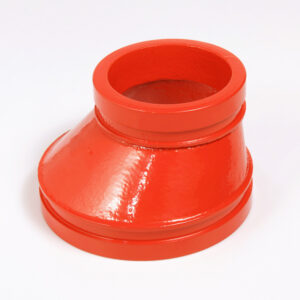
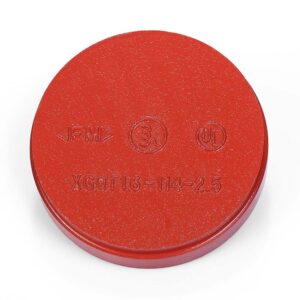
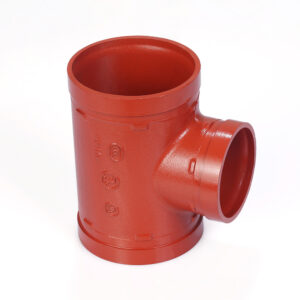
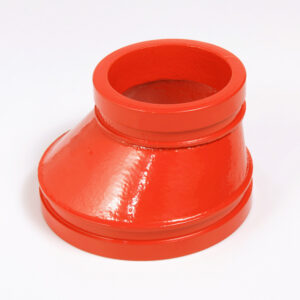
A grooved eccentric reducer connects two pipe sizes while keeping the transition offset rather than centered. That geometry can help a pipe route preserve a preferred elevation, maintain clearance, or follow an approved layout around structure and equipment. Selecting the correct reducer requires more than matching the large and small nominal sizes. Engineers and buyers must also check orientation, groove compatibility, service limits, support, and the complete piping arrangement.
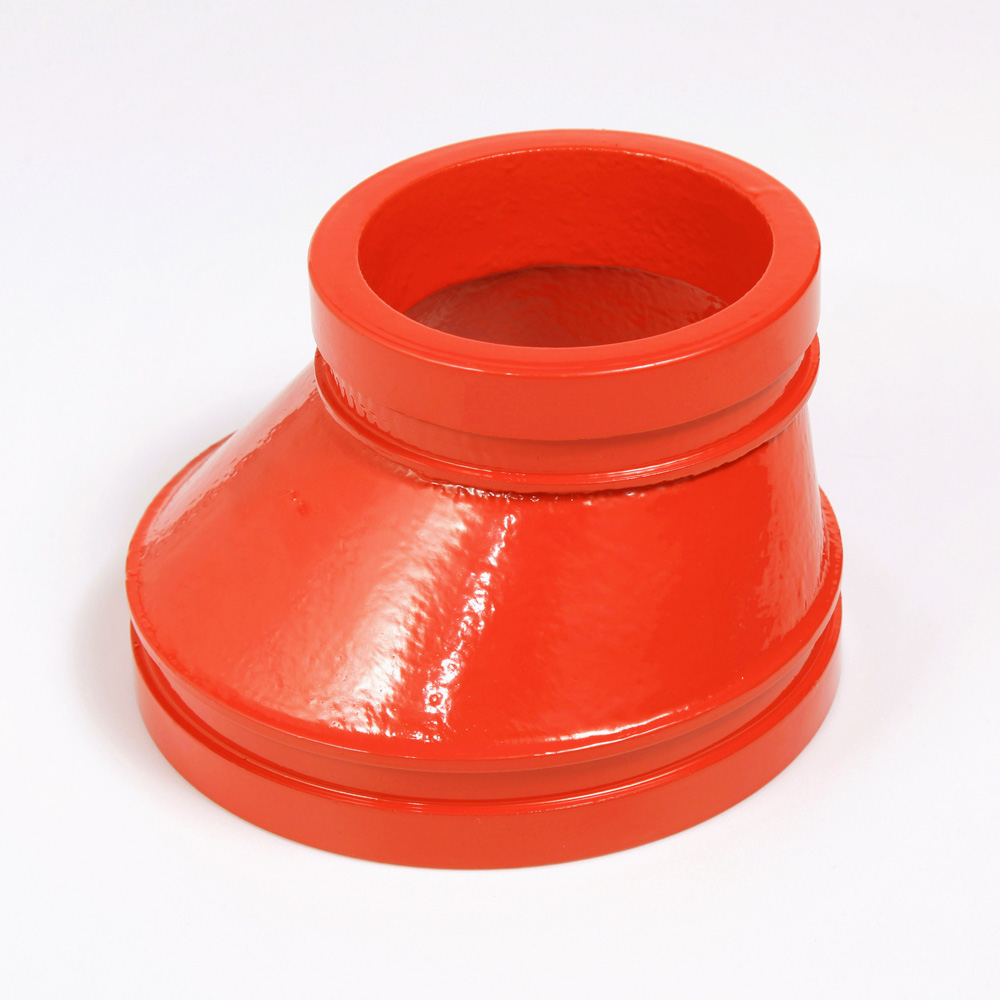
What does an eccentric grooved reducer do
A reducer changes the diameter between two connected pipes. A concentric reducer keeps the transition centered around the same axis, while an eccentric reducer places the change toward one side. The offset can be useful when the top or bottom of a pipe needs to remain aligned with a ceiling, support, drain route, or equipment connection.
The required orientation depends on the approved drawing and the service. A field team should not rotate the fitting simply because another direction appears easier to assemble. The selected position may affect drainage, air pockets, insulation clearance, access, and the forces carried by nearby supports.
Before approval, compare the reducer with the adjacent pipe schedule and the isometric drawing. Note the centerline, face-to-face dimension, and clearance needed for coupling installation. If the route passes close to a pump, valve, duct, or structural member, resolve the clash during coordination rather than using an unverified fitting substitution on site.
When is an eccentric reducer useful in HVAC piping
HVAC layouts often pass through crowded plant rooms, ceiling voids, and service corridors. An eccentric transition can help maintain a useful elevation while the line changes size, reducing clashes with ducts, cable trays, structural members, and equipment. It can also make the route easier to coordinate with valves and maintenance access.
What should the HVAC drawing identify
The drawing should show both pipe sizes, the transition direction, the reference elevation or edge, the reducer length, and the surrounding fittings. Check the connection space at both ends before fabrication. Confirm that coupling housings, bolts, insulation, and inspection access will remain available after installation.
How can it be used in fire protection piping
In fire protection work, an eccentric reducer may be considered when a size transition is part of an approved sprinkler or riser arrangement. The fitting must match the hydraulic design, pipe dimensions, pressure requirements, and applicable project approvals. The article topic should help buyers understand selection, while the project engineer and current manufacturer data remain responsible for final suitability.
What should buyers check for XGQT12
The VICAST Grooved Eccentric Reducer XGQT12 product page lists a 2 to 10 inch / DN50 to DN250 size range, a stated temperature range of -20°F to +180°F, ASTM A536 and ASTM A395 material standards, and ISO 6182, AWWA C606, and GB 5135.11 design standards. Confirm the exact size combination and dimensions in the current technical data before ordering.
Also verify the connected pipe outside diameter, groove profile, coupling compatibility, gasket requirements, working pressure, coating, and documentation. A catalog size range does not by itself confirm every possible reducer combination or project approval.
A useful procurement record should show the large end, small end, orientation, and drawing reference in the same notation used by the engineering team. This allows the warehouse and installation crew to distinguish the eccentric reducer from a concentric alternative before the pipe is lifted into place.
How should the reducer be installed and supported
Prepare both pipe ends according to the approved groove specification. Inspect the grooves, use compatible gaskets and couplings, and align the reducer with the drawing before tightening. Support and restraint should be checked as part of the full system because the transition connects pipes of different sizes and can transfer loads into adjacent components.
Coordinate the reducer with the rest of the VICAST grooved pipe fitting range when the same line includes elbows, tees, crosses, couplings, or end caps. Consistent product information can reduce mismatched substitutions during procurement. Related grooved pipe fitting components can be checked alongside the selected reducer.
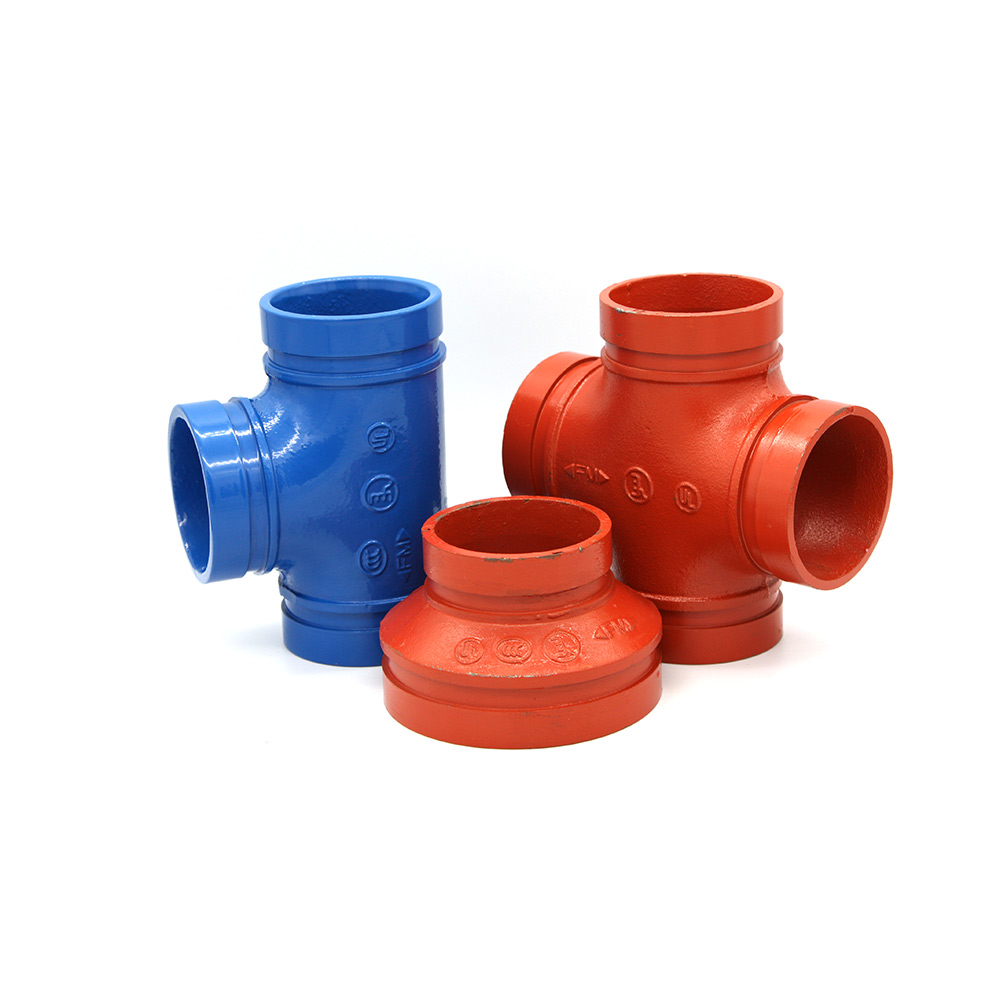
What should a procurement request include
State the model or reducer type, large and small pipe sizes, quantity, pipe outside diameter, service, pressure and temperature limits, required standards, gasket requirements, coating, and documentation. Include the intended eccentric orientation or a drawing reference whenever the offset affects elevation or clearance.
VICAST supplies grooved pipe fitting products for fire protection, HVAC, and industrial piping applications. Buyers should compare the current product data with the project drawings and applicable requirements before placing an order.
Conclusion
Choose an eccentric grooved reducer when the pipe transition must preserve an offset, clearance, or elevation relationship defined by the layout. Confirm the exact size combination, orientation, groove compatibility, service limits, and support conditions before approving the fitting.
FAQs
Is an eccentric reducer the same as a concentric reducer
No. An eccentric reducer keeps the transition offset to one side, while a concentric reducer keeps the transition centered. Select the geometry shown in the approved design.
Can XGQT12 be rotated in the field
Do not assume so. Confirm the required orientation and any drainage, clearance, or support condition with the drawing and current product instructions.
What information does a supplier need for an eccentric reducer quote
Provide the model or type, both pipe sizes, outside diameter, quantity, service, pressure and temperature limits, orientation, standards, and required documentation.