
A horizontal piping run may need to change from a larger nominal diameter to a smaller one without shifting both sides of the line by the same amount. At a pump suction, a utility corridor, or a crowded mechanical room, that geometric detail can affect air pockets, drainage, supports, and access to adjoining equipment. A grooved eccentric reducer changes pipe size while keeping one side of the fitting relatively straight. Choosing the correct reducer therefore requires more than reading the two end sizes: the designer must establish the permitted orientation and check the complete connection arrangement.
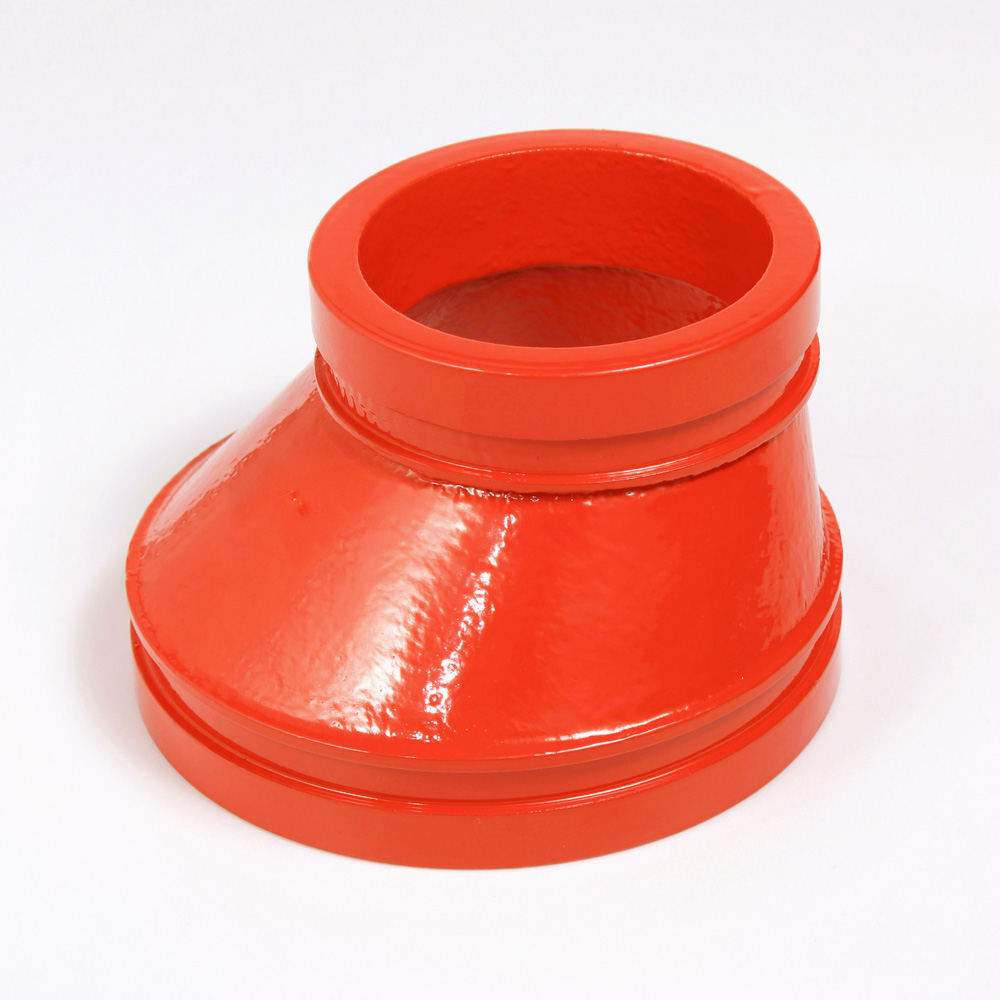
What Does an Eccentric Reducer Change in a Horizontal Pipe Run?
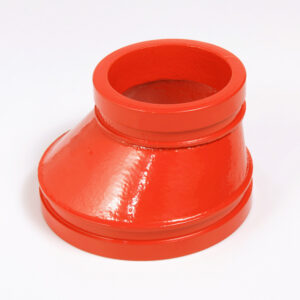
An eccentric reducer joins different pipe diameters with offset centerlines. The flatter side can be oriented according to the specific hydraulic and layout requirement.
How Is It Different From a Concentric Reducer?
A concentric reducer tapers evenly around a common centerline. An eccentric reducer has one side arranged to maintain a comparatively straight line through the change in diameter. That geometry can matter where the top or bottom elevation of a horizontal line must be controlled. Neither type is universally preferable: the correct selection follows the piping arrangement, flow conditions, and relevant equipment instructions. Before ordering, compare the planned reducer against the approved isometric rather than treating any fitting with the same large and small ends as equivalent.
What Should Be Confirmed About the Two End Sizes?
Record both nominal sizes, actual pipe outside diameters, groove profiles, and the intended flow direction if the design specifies one. The VICAST Grooved Eccentric Reducer XGQT12 is listed for 2–10 inches (DN50–DN250) and has published material and design-standard references. The product page does not, by itself, establish every available large-end/small-end combination or a universal pressure rating for every installation. Confirm the required pair of sizes and request the applicable dimensional drawing and project documents before releasing the purchase order.
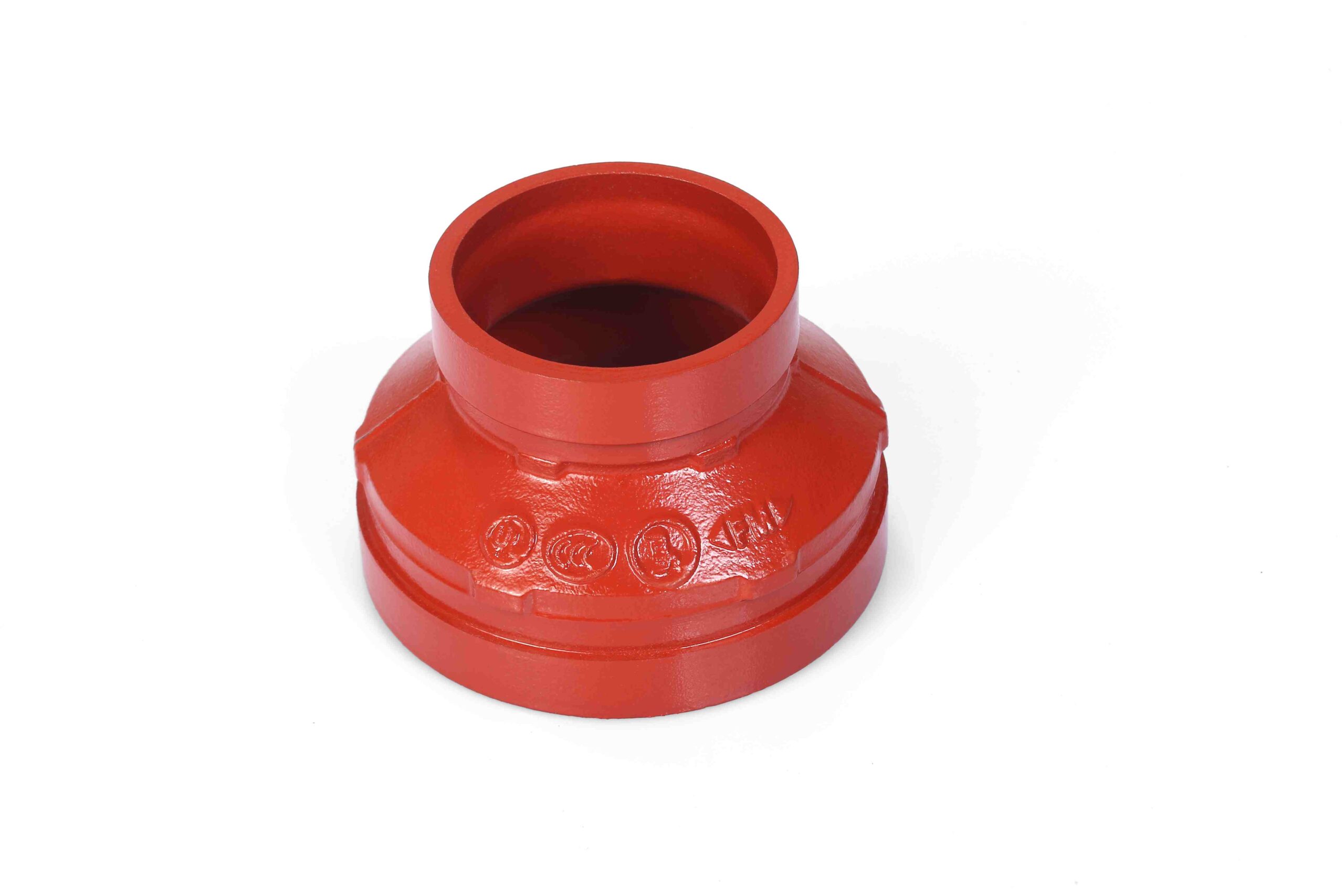
How Should the Flat Side Be Oriented?
There is no single orientation rule that fits every service. The design engineer must check whether the installation needs to manage air, avoid a low point, maintain a floor clearance, or meet equipment requirements.
When Might a Flat-Top Arrangement Be Specified?
In some horizontal liquid services, especially where a pump manufacturer or piping design requires avoiding a local high point, a flat-top orientation may help preserve a continuous upper profile. This should not be presented as a universal rule for every pump connection: suction piping geometry, straight-run needs, velocity, and manufacturer instructions still govern the arrangement. Mark the approved top elevation on the installation drawing and verify that the assembled reducer has the intended orientation after the coupling is fitted.
When Might a Flat-Bottom Arrangement Be Specified?
A flat-bottom installation may be used when maintaining the pipe’s lower elevation or a planned drainage profile is the controlling requirement. The relevant fluid, flow regime, venting points, and connected equipment can change that decision. Do not ask the fitter to rotate an eccentric reducer based on appearance alone. A brief orientation note on the spool drawing is much easier to follow than an ambiguous instruction to install the reducer ‘the usual way.’
What Connection and Support Checks Matter Before Installation?
The reducer is only one part of the joint. A compatible pipe end, coupling, gasket, and support arrangement are needed on both sides.
How Should Groove Compatibility Be Verified?
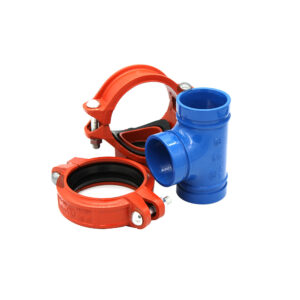
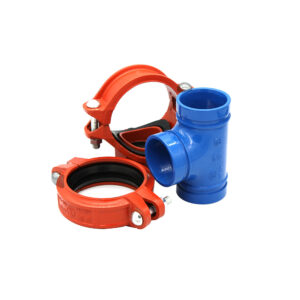
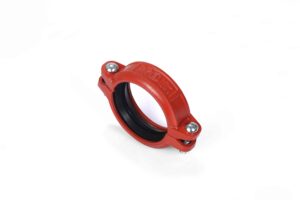
Check the groove dimensions and outside diameter at both ends and match each side to the correct coupling. The reducer should not be forced into an alignment that the surrounding pipework cannot maintain. For example, the specified accoppiamento a scanalatura flessibile has its own published size range and operating information; that does not mean it is approved for every material, gasket, or joint arrangement. Confirm the exact coupling and reducer combination, the required pressure rating, and the approved sealing materials before installation.
Can the Reducer Carry the Pipework or Correct a Bad Offset?
No. An eccentric reducer is a transition fitting, not a substitute for a correctly designed support system or an improvised misalignment repair. Check support positions and the loads imposed by connected valves, pumps, and adjoining pipe. Leave enough room to install housing bolts, inspect the gasket area, and service equipment later. Where a change in pipe size also shifts elevation, verify the actual spool dimensions before prefabrication; a nominal size change alone does not tell the contractor where the next pipe centerline will land.
Which Technical Details Should a Buyer Include in the Request?
A purchase request should make both the geometry and the service conditions clear so the supplier can identify the fitting and associated documents.
What Belongs in the Reducer Specification?
Include large-end and small-end sizes, actual pipe dimensions where needed, groove specification, intended orientation, operating medium, temperature, required system pressure, coating, quantity, and drawing revision. VICAST lists XGQT12 with a -20°F to +180°F (-29°C to +82°C) temperature range and material references ASTM A536 Grade 65-45-12 and ASTM A395 Grade 65-45-15. Its website also references ISO 6182, AWWA C606, and GB 5135.11. These product-page entries are not proof that a particular project approval or gasket selection has been satisfied.
Why Review the Whole Fitting Schedule?
A reducer may sit beside an elbow, a branch, or a flanged equipment connection. Check the approved grooved piping product range for the surrounding components, but keep each item on its own specification line so the contractor cannot accidentally substitute a centered transition for an eccentric one. A general grooved pipe fittings buyer’s guide can support document review, while the project drawing should remain the source of the required orientation and end-size combination.
Why Consider VICAST for Grooved Reducer Supply?
Buyers can use a manufacturer’s product range to coordinate fitting selection, provided the individual items are verified against the project.
What Does the XGQT12 Listing Provide?
VICAST publishes a dedicated eccentric reducer product page with an identifiable model, size range, temperature range, material references, and design standards. This makes it possible to begin an informed technical inquiry rather than ordering from a generic reducer description. For horizontal service, request the exact drawing, compatible coupling information, pressure data, and required submittals before approving the purchase.
Conclusione
A grooved eccentric reducer changes more than pipe diameter: it establishes a new relationship between the two pipe centerlines. Engineers should choose the orientation around the actual hydraulic and equipment requirements, then verify end sizes, groove compatibility, supports, and access. A detailed purchase specification and an unambiguous spool drawing help the field crew install the intended transition rather than a merely similar-looking fitting.
Domande frequenti
1. Is an eccentric reducer always installed flat on top?
No. Orientation depends on the service, hydraulic design, drainage or air-management requirements, and connected equipment instructions.
2. Can a concentric reducer replace an eccentric reducer of the same sizes?
Not without design review. The end sizes may match, but the centerline geometry and intended function differ.
3. What are the first two dimensions to specify when ordering?
Specify the large-end and small-end sizes, then confirm the actual pipe outside diameters, groove profile, orientation, and applicable project requirements.