
La plupart problèmes de coulée Ne vous présentez pas soudainement. Ils construisent en silence, pendant les examens de conception qui se déroulent trop vite, pendant les ajustements de processus qui semblent inoffensifs ou pendant les rampes de production où le rendement compte plus que la discipline.
Retrit, porosité, inclusions, fissurement.
Tout le monde dans l'industrie connaît les noms. Moins de gens sont d’accord sur la raison pour laquelle ils continuent de se produire.
Cet article n'est pas un catalogue de définitions de défauts. Il s'agit d'un regard pratique sur l'origine réelle de ces échecs, comment ils sont souvent mal diagnostiqués, et ce qui peut être fait plus tôt- parfois beaucoup plus tôt - pour éviter de répéter les mêmes problèmes à travers les projets.
L'accent reste mis sur la résolution de problèmes et le jugement des processus, pas sur la métallurgie des manuels scolaires.
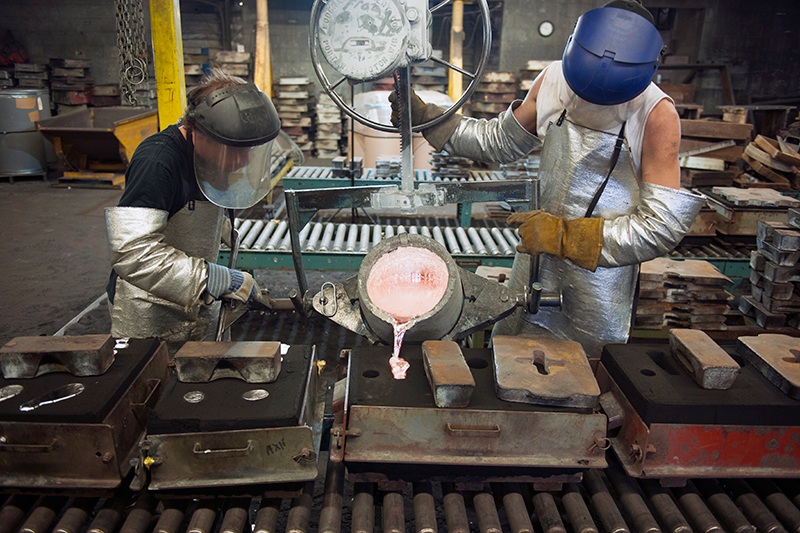
Pourquoi les défauts de coulée sont généralement un problème de processus, pas un problème matériel
Il est tentant de blâmer le métal. La chimie est mesurable. La discipline du processus ne l’est pas.
En réalité, la plupart des échecs remontent à des décisions prises avant la première fusion - choix de géométrie, hypothèses d'alimentation, raccourcis de porte ou pression de calendrier. Une fois que le métal est liquide, de nombreux résultats sont déjà verrouillés.
Un modèle commun apparaît à travers les industries :
Les pièces sont reconsidérées pour le poids ou le coût, l’outillage est ajusté pour suivre le rythme, et soudainement des défauts apparaissent qui « n’y étaient pas auparavant ».
Ils étaient là. J'attends juste.
Retrit: Lorsque la logique d'alimentation se casse
Les cavités de rétrécissement sont rarement mystérieuses. Ils se produisent lorsque les chemins de solidification sont mal compris ou ignorés.
Les sections épaisses refroidissent en dernier. Cette partie est évidente.
Ce qui est moins évident est la fréquence à laquelle les montants sont dimensionnés pour la théorie, pas la réalité.
En pratique, le rétrécissement a tendance à apparaître lorsque:
- Les transitions de section sont plus nettes que prévu
- Les hypothèses de distance d'alimentation sont copiées des parties précédentes
- Les objectifs de rendement dépassent silencieusement les marges de sécurité
Les corrections à court terme - plus grandes hausses, frissons supplémentaires - peuvent aider. Mais à moins que la séquence de solidification ne soit corrigée, le même problème revient après le prochain ajustement de conception.
C'est pourquoi la coordination précoce entre la géométrie de la pièce et la stratégie d'alimentation est plus importante que tout seul calcul.
Parfois, la solution la moins chère est d'admettre que la forme de la pièce lutte contre le processus.
La porosité gazeuse: un symptôme chez de nombreux parents
Les défauts liés au gaz sont souvent traités comme un problème de fusion. Le dégazage est blâmé. L'humidité est blâmée. Les opérateurs sont blâmés.
Parfois, ils le méritent. Souvent, ils ne le font pas.
La porosité provient souvent d'une combinaison de facteurs qui se rangent simplement mal:
remplissements plus lents, moules plus chauds, vents plus serrés ou traitements de surface qui modifient la perméabilité.
Un facteur négligé est la confiance excessive.
Les processus qui ont fonctionné pendant des années peuvent dériver – lentement – jusqu’à ce que la marge disparaisse.
Lorsque la porosité apparaît de façon intermittente, elle est rarement aléatoire. Cela signifie généralement que plusieurs petites tolérances sont empilées ensemble.
La solution n'est pas toujours plus d'équipement.
Parfois, il est tout simplement ralentir et demander ce qui a tranquillement changé.
Inclusions: Lorsque la propreté est présumée au lieu de vérifiée
Les inclusions sont rarement annoncées tôt. Ils attendent l'usinage, l'essai de pression ou l'inspection finale.
À ce moment-là, le coût est déjà couvert.
Ils entrent souvent dans le système par des endroits où les gens arrêtent de regarder:
des chaudières qui "semblent bien", des filtres qui sont réutilisés un cycle trop long, ou des systèmes de porte-portes qui ne sont plus alignés sur le comportement réel du flux.
Un motif apparaît à plusieurs reprises dans les autopsies :
Le processus était propre, jusqu'à ce que le volume augmente.
Un débit plus élevé agrandit chaque raccourci.
Le métal propre n'est pas une seule étape. C’est une habitude qui doit survivre à la pression du calendrier.
Cracking: le stress trouve le moment le plus faible
Les fissures ne signifient pas toujours que l'alliage a échoué. Ils signifient souvent que le timing a échoué.
La déchirure à chaud et la fissuration à froid vivent à des extrémités opposées de la courbe de refroidissement, mais les deux sont influencés par la retenue interne ou externe.
Coins tranchants, noyaux rigides, refroidissement inégal.
Ce sont des décisions de conception, pas des accidents en atelier.
La fissuration devient plus probable lorsque les gradients thermiques sont sous-estimés ou lorsque la retenue de pièce est considérée comme inévitable plutôt que réglable.
Les bonnes fonderies passent plus de temps à demander quand le stress se développe que là où il se manifeste.
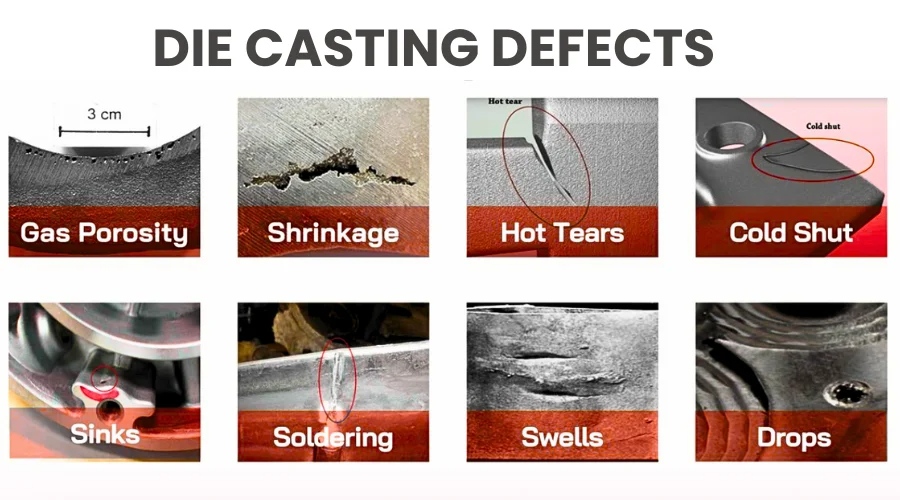
Le rôle silencieux des décisions de conception
De nombreux défauts sont déjà inévitables au moment où l'outillage est terminé.
Des sauts d'épaisseur de paroi, des emplacements de montée inaccessibles, des allocations d'usinage qui ignorent le comportement de solidification - ces choix ne causent pas de problèmes immédiatement. Ils les provoquent plus tard.
C'est là que la prévention des défauts se chevauche directement avec la planification des coûts et des processus.
Une pièce qui semble bien sur le papier peut coûter cher à garder à l'échelle sans défaut.
Si vous évaluez différentes voies de processus ou des compromis géométriques, cette discussion est étroitement liée à la question plus large de la façon dont les choix de coulée influent sur la fabricabilité et le risque, qui est abordée plus en détail dans
[comment choisir le bon processus de coulée pour les composants industriels et éviter les pièges courants]
Plus tôt ces liens sont compris, moins de « défauts mystérieux » apparaissent en aval.
La prévention commence avant la simulation
La simulation aide. Il ne remplace pas le jugement.
De nombreuses erreurs récurrentes se produisent dans des projets où les résultats de simulation sont techniquement corrects mais pratiquement incomplets. Les conditions frontalières sont simplifiées. La variabilité du monde réel est ignorée.
Les ingénieurs expérimentés traitent la simulation comme un début de conversation, pas un verdict.
Ils demandent encore :
- Que se passe-t-il si la vitesse de remplissage varie légèrement?
- Et si le sable se comporte pire que prévu ?
- Et si la production repousse le temps de cycle ?
La prévention des défauts vit dans ces questions inconfortables.
Scénarios du monde réel qui se répètent dans toutes les industries
Un boîtier à section lourde qui finit bien - jusqu'à ce qu'un changement mineur de géométrie introduise un rétrécissement près d'un patron.
Un composant à pression qui réussit les tests de fuite à faible volume, jusqu'à ce que la porosité s'infiltre pendant la rampe.
Une pièce qui ne se fissure que lors de la production hivernale, parce que les conditions ambiantes ont tranquillement changé le comportement de refroidissement.
Ce ne sont pas des cas exotiques. Ils sont normaux.
Ce qui sépare les fournisseurs fiables n'est pas d'éviter tous les défauts, mais de reconnaître les schémas assez tôt pour arrêter de les répéter.
Où le contrôle de processus paie réellement
L'inspection repère des problèmes. Cela ne les empêche pas.
Le contrôle réel provient de la pratique stable de la fusion, de la préparation cohérente des moules, de normes disciplinaires de porte-porte et de boucles de rétroaction qui ne reposent pas uniquement sur la ferraille.
Les petites corrections – faites tôt – se traduisent par de grandes économies plus tard.
Et lorsque des défauts apparaissent, la question passe de « Qui a causé cela ? » à « Quelle hypothèse a échoué ? »
Ce changement d'esprit compte.
À propos de Hebei Jianzhi Foundry Group Co., Ltd.
Hebei Jianzhi Foundry Group Co., Ltd. se concentre sur les coulées industrielles où la cohérence, la stabilité du processus et les performances à long terme comptent autant que la conformité aux spécifications dimensionnelles.
Grâce à son expérience dans différents alliages, complexités de pièces et échelles de production, l'entreprise met l'accent sur l'alignement des processus à un stade précoce, aidant les clients à réduire les risques en aval plutôt que de réagir aux défauts après leur apparition.
Cette approche reflète une compréhension plus large: la prévention des défauts n’est pas une solution unique, mais un système construit au fil du temps.
Conclusion
Les défauts de coulée sont rarement des surprises.
Ce sont des conséquences retardées.
La plupart des échecs peuvent être attribués à des hypothèses qui semblaient raisonnables à l'époque. Changer ce résultat ne nécessite pas la perfection, juste des décisions plus tôt et plus honnêtes.
Lorsque la conception, le processus et les attentes s’alignent, les taux de défauts diminuent naturellement.
Pas à zéro. Mais assez bas pour arrêter de dominer la conversation.
Questions fréquentes
Pourquoi les mêmes défauts continuent-ils à apparaître même après des ajustements de processus ?
Parce que la cause racine se trouve souvent en amont. Les correctifs locaux aident, mais ils ne réécrivent pas les hypothèses originales.
Les défauts de coulée sont-ils plus fréquents à des volumes plus élevés?
Pas intrinsèquement, mais un volume plus élevé réduit la tolérance à la dérive. Les petites variations qui étaient inoffensives avant deviennent visibles.
Une meilleure inspection peut-elle éliminer les défaillances de coulée?
L'inspection détecte les problèmes plus rapidement. Cela ne les empêche pas. La prévention vit plus tôt dans le processus.
Quand les risques de défaut doivent-ils être discutés avec les fournisseurs?
Avant que l'outillage soit finalisé. Après cela, les options se rétrécissent rapidement.
La simulation est-elle suffisante pour éviter les défauts ?
La simulation est utile, mais elle fonctionne mieux avec l'expérience et le jugement conservateur.